










 Deutsch
 Français
 Italiano
 Español
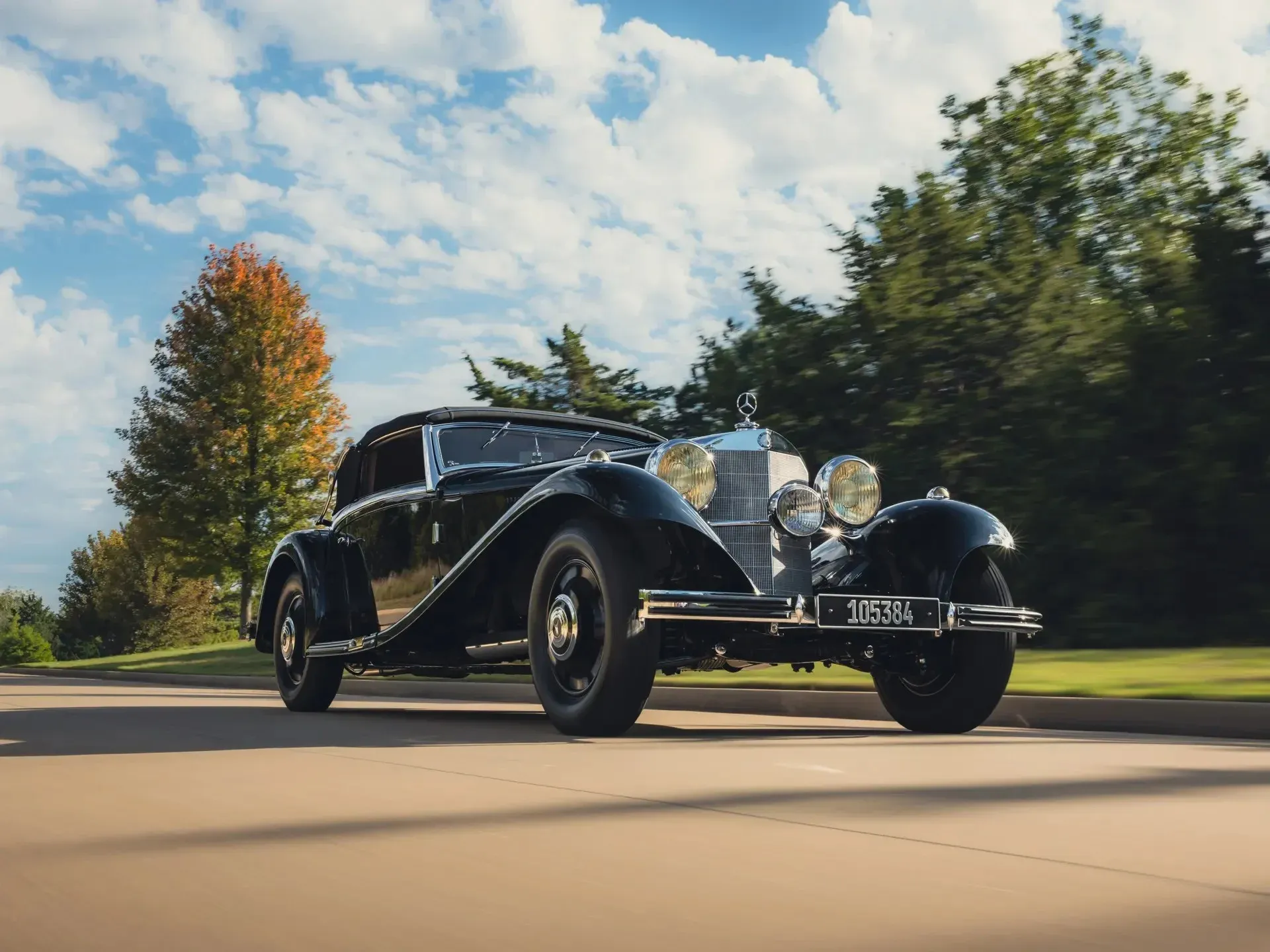
On 28 and 29 January 2027, RM Sotheby's returns to the Arizona Biltmore in Phoenix for the 29th consecutive year, with 50 lots on its list. The highest published estimate belongs to a 1935 Mercedes-Benz 500/540 K Cabriolet A by Sindelfingen, chassis 105384, offered at $3.75 million to $4.5 million. Around it, The Groendyke Collection brings five Cadillac V-16s, a Marmon Sixteen, an Auburn Speedster and a Cord, while a 2022 Lamborghini Countach LPI 800-4 is estimated at $1.75 million to $2.5 million. Here are the cars, their owners and what the catalogue says about each.
The Phoenix headliners in detail
What is on offer in Phoenix on 28 and 29 January?
The Arizona Auction is RM Sotheby's sale during Arizona Car Week, the gathering that brings collectors to the Phoenix and Scottsdale area every January. In 2027 the auction house returns to the Arizona Biltmore Resort & Spa for the 29th consecutive year. Its online list counts 50 lots, including a 1999 Ferrari Formula 1 V-10 test engine on a stand and bronze sculptures by Stanley Wanlass.
Two collections shape the sale. The Groendyke Collection, assembled in Oklahoma by John Groendyke, supplies its pre-war heart: the Mercedes, five Cadillac V-16s, the Marmon, the Auburn and the Cord, plus a 1929 Rolls-Royce Phantom I. The Vehicle Vault Collection supplies a second group, among them a 1954 Mercedes-Benz 300 SL Gullwing, a 2007 Mercedes-Benz SLR McLaren 722 Edition and a 2005 Ferrari Superamerica. Those three appear on the list without a published estimate or lot description, so no figure can be given for them yet.
Who owned the 1935 Mercedes-Benz 500/540 K?
Chassis 105384 was completed as a 500 K with Cabriolet A coachwork by Sindelfingen, one of 33 built, finished in black with a black top. Its first owner was Adolf Busch, the German violinist, conductor and composer who founded the Busch Quartet. Factory records show the car ordered on 4 April 1935 and delivered to Hamburg on 25 May, after Busch had publicly left Germany for Switzerland.
About a year later Busch traded the car back to the factory. The next owner was Millicent Rogers, the American socialite and jewellery designer, granddaughter of Standard Oil co-founder Henry Huttleston Rogers, who had settled in Austria. With her husband Ronald Balcom she ran it on Austrian export plate “5058”, fitted with a Packard Twelve front bumper and an extra fog light. When she left Austria in 1938 the car stayed behind. By 31 October 1938 it was with Dr. Gavin, head of the Daimler-Benz export department, recorded as “a present handed over” to a recipient who has never been identified.
Around 1960, Captain Dean V. Weihe, a US Air Force fighter pilot stationed in France, found the Mercedes on a farm near Paris, where it is believed to have arrived before the end of the Second World War. He imported it to the United States in 1961, restored it in red and black and kept it for more than three decades.
A 500 K with a 540 K engine: what the catalogue confirms
Before delivery, the factory fitted the new 5.4-litre engine, then still in development, that would go on to power the 540 K. According to RM Sotheby's, the car still carries that factory-installed engine, whose casting number corresponds to 8 April 1935, four days after Busch placed his order. Chassis and engine both carry the number 105384; the body number is 817605.
A Florida collector who bought the car in 1997 had it returned to its 1935 specification. The French firm Francois Cointreau handled the all-black cosmetic restoration, and Reifen-Wagner, near Munich, rebuilt the engine and mechanicals.
John Groendyke bought it in spring 2006 and showed it at Pebble Beach that year. It drove the 1,000-mile Colorado Grand in 2009 and won Best in Class Mercedes-Benz Supercharged at Amelia Island in 2013. Groendyke sold it in March 2015 to Wolfgang Liebig of Naples, Florida, then bought it back in March 2021. The estimate of $3.75 million to $4.5 million corresponds to roughly €3.4 million to €4.1 million at RM Sotheby's indicative conversion.
Why does one sale hold five Cadillac V-16s?
Because they all come from the same garage. The five V-16s in Phoenix, built in 1930, 1933, 1936 and 1938, are all offered from The Groendyke Collection, which RM Sotheby's describes as known for its Duesenbergs and V-16 Cadillacs. In 2019, at the Concours d'Elegance of America at St. John's, John Groendyke was named Collector of the Year and displayed six of his Cadillacs, the 1930 roadster and the 1933 convertible coupe among them.
The engine explains the devotion. Cadillac unveiled its V-16 in January 1930 at the New York show: 452 cubic inches (7.4 litres), overhead valves, 175 hp and 320 lb-ft, developed in secret by chief engineer Owen Nacker. At its debut it was the only 16-cylinder passenger car engine in production anywhere. Cadillac had hoped to build 400 a year; the Depression cut that to 126 for 1933 and 52 for 1936.
Taken together, the five estimates add up to $4.5 million to $5.9 million.
Five Cadillac V-16s, from the 1930 roadster to the 1938 coupe
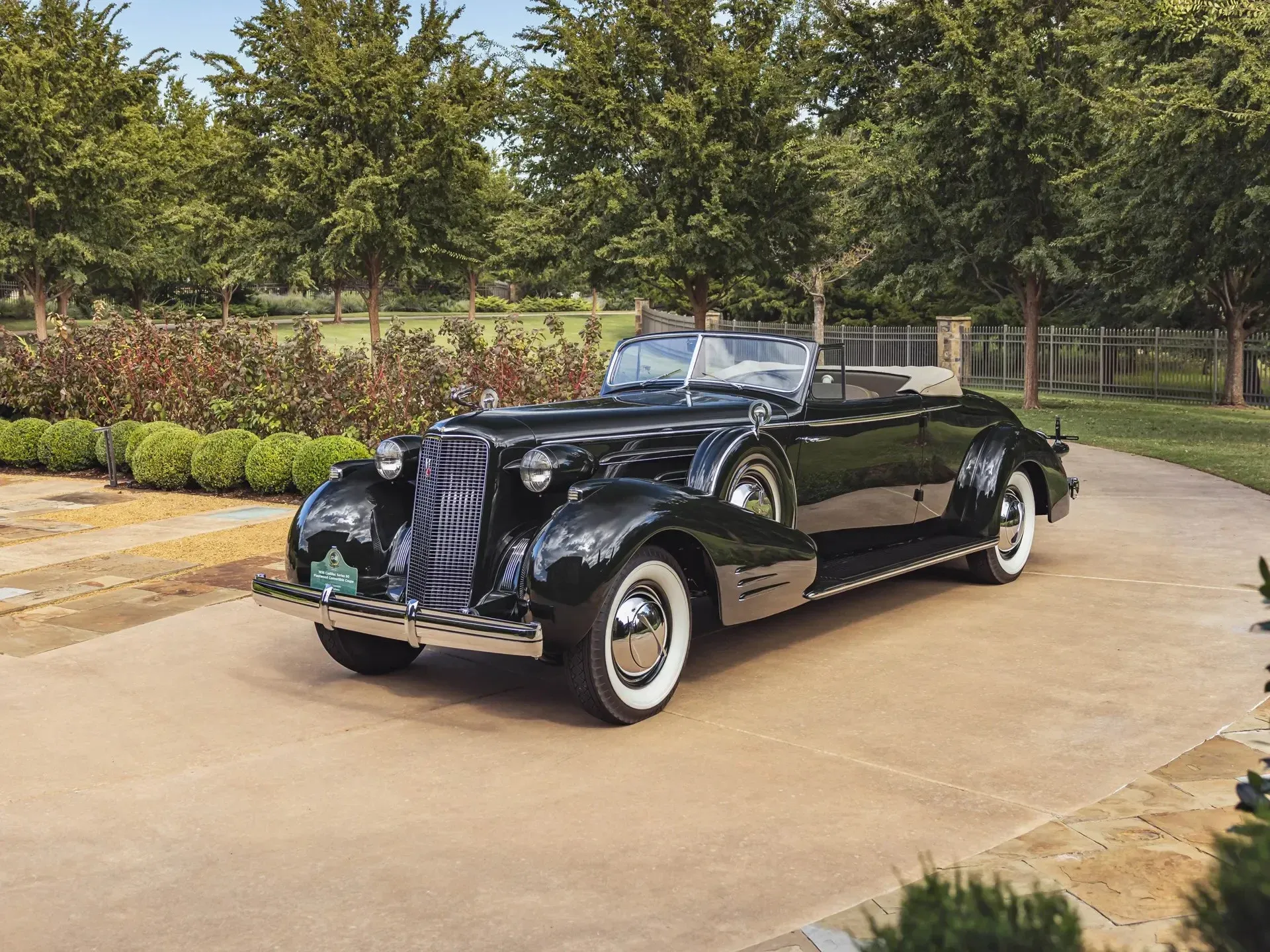
The highest of the five estimates, $1.6 million to $2 million, goes to the 1936 Convertible Coupe by Fleetwood, one of 52 V-16s built that year. Ordered on 13 February 1936 through Druck Cadillac in Trenton, New Jersey, it left the factory in Thessalon Green down to the wheels, with a rumble seat specified in place of the usual opera seats. Restored by Steve Babinsky's Automotive Restorations under the eye of V-16 specialist Christopher Cummings, it won First in Class at Pebble Beach in 2019.
The 1930 All-Weather Convertible Sedan by Murphy, the Howard car, is estimated at $1 million to $1.5 million and won its class at Pebble Beach in 1997. The 1930 Roadster by Fleetwood, at $850,000 to $1.05 million, uses body style 4302, the lightest and least expensive in the catalogue: about 100 were built in 1930 and 1931, and only 10 original factory V-16 roadsters are known to survive. Bought new as a high-school graduation present for Rayford Weinstein, it was found in a North Carolina garage in 1969 showing 18,000 miles and sold for $5,000.
The 1933 Convertible Coupe by Fleetwood, at $800,000 to $1 million, is number 117 of the 126 V-16s built that year. Its dashboard plaque reads “Built especially for Theodore W. Case by Fleetwood”, after the inventor of Movietone, the system that synchronised sound with film, and it is believed to be one of two survivors of this body style. The 1938 Convertible Coupe, $250,000 to $350,000 without reserve, represents the second-generation V-16, a 135-degree engine that weighed 250 pounds less; it is one of only 10 convertible coupes among the 315 V-16s built that year.
Marmon Sixteen and Duesenberg J: the rivals in the same sale
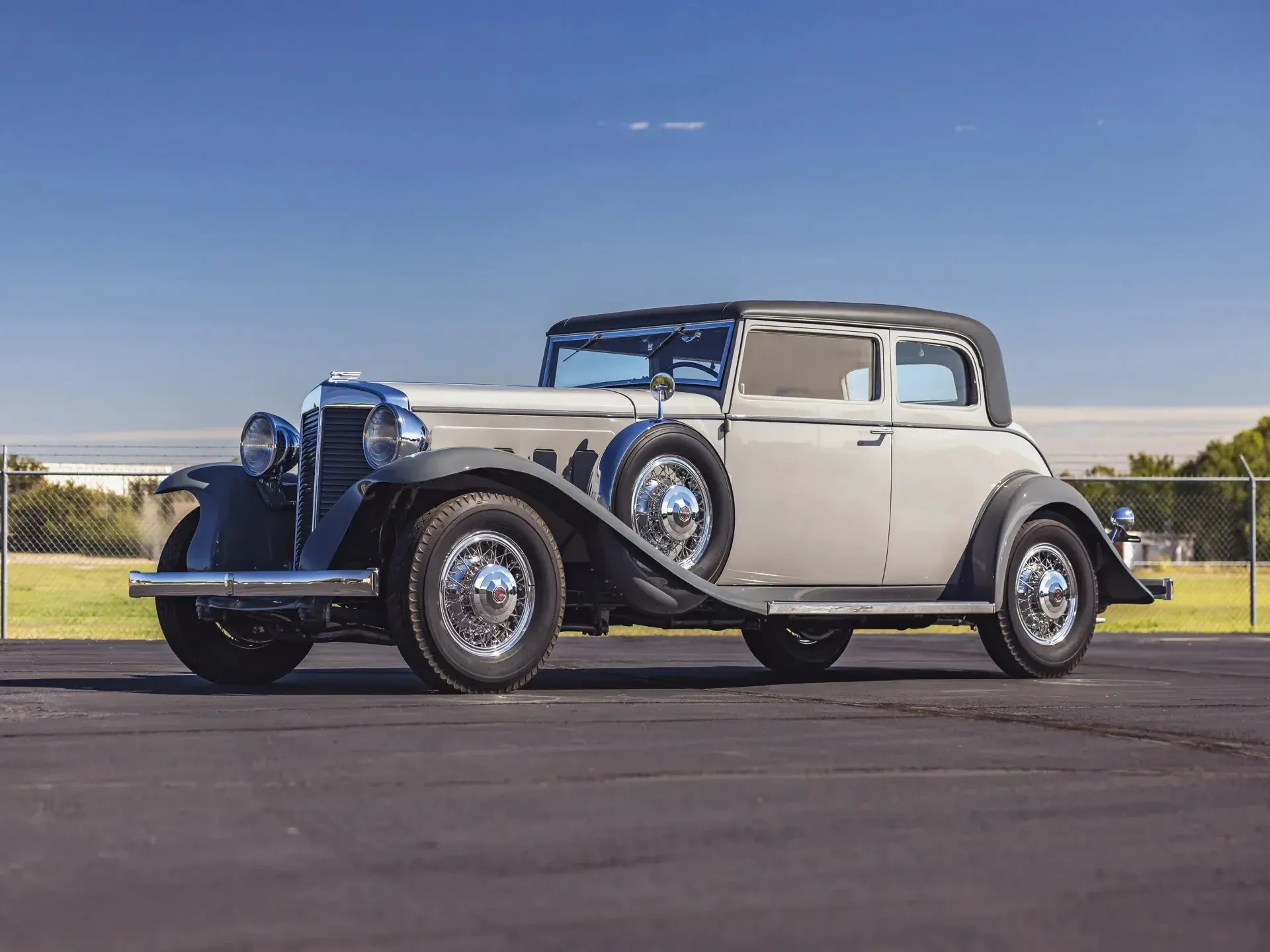
Cadillac was not alone. Marmon, the Indianapolis firm that won the first Indianapolis 500 in 1911, launched its Sixteen in 1931 with an all-alloy V-16 designed by Howard Marmon: 200 hp and an estimated 380 to 400 lb-ft, against roughly 175 hp and 320 lb-ft for the Cadillac. Every chassis was tested at the Indianapolis Motor Speedway. About 390 were built from 1931 to 1933 before the Depression ended the marque, and 75 are known to survive.
The 1932 Victoria Coupe by LeBaron in Phoenix, estimated at $300,000 to $450,000, was delivered new to Ariel Cameron of Norwalk, Connecticut, restored by Stone Barn and awarded the AACA President's Cup in 1993. John Groendyke bought it in 2004, sold it in 2007 and bought it back in June 2023.
The Duesenberg Model J, the straight-eight Cadillac set out to eclipse, is in the sale too, outside the Groendyke group. The 1930 Convertible Sedan by Murphy, engine J-329, is estimated at $1.3 million to $1.6 million. Its first known user was racing driver Leon Duray, famous for his Millers at Indianapolis, who most likely had it on loan from the factory. From 1936 to 2012 it stayed with just two families, including that of Arthur K. Watson, son of IBM founder Thomas J. Watson and later US ambassador to France, and it retains its original chassis, engine and bodywork.
Auburn, Cord and Ferrari: the rest of the classic field
The 1936 Auburn 852 Supercharged Speedster, estimated at $800,000 to $1 million, pairs a Lycoming straight-eight with a Schweitzer-Cummins centrifugal supercharger for 150 hp. Every supercharged car carried a dashboard plaque signed by Ab Jenkins claiming it had exceeded 100 mph before leaving the factory, which the catalogue calls a fanciful piece of marketing. This one is among about 150 authentic examples, holds ACD Club Category One certification A-487 for its original body, frame, engine and serial tag, and won its class at Villa d'Este in 2009.
The 1937 Cord 812 Cabriolet, $250,000 to $350,000 without reserve, is Gordon Buehrig's “coffin-nose” design with front-wheel drive and concealed headlamps. The catalogue is candid: its Lycoming engine appears to have been replaced at some point, since the block stamp does not match the original serial plate.
The 1969 Ferrari 365 GT 2+2 by Pininfarina, chassis 12941, estimated at $200,000 to $250,000, is the car nicknamed the “Queen Mary”, the largest and most luxurious Ferrari of its day. Completed in October 1969 in Grigio Ortello with beige Connolly leather and delivered through Luigi Chinetti Motors in New York, it has been blue since the early 2000s. It comes from 22 years of single ownership, retains its matching-numbers engine and showed just under 49,000 miles at cataloguing.
How much could the Countach LPI 800-4 bring?
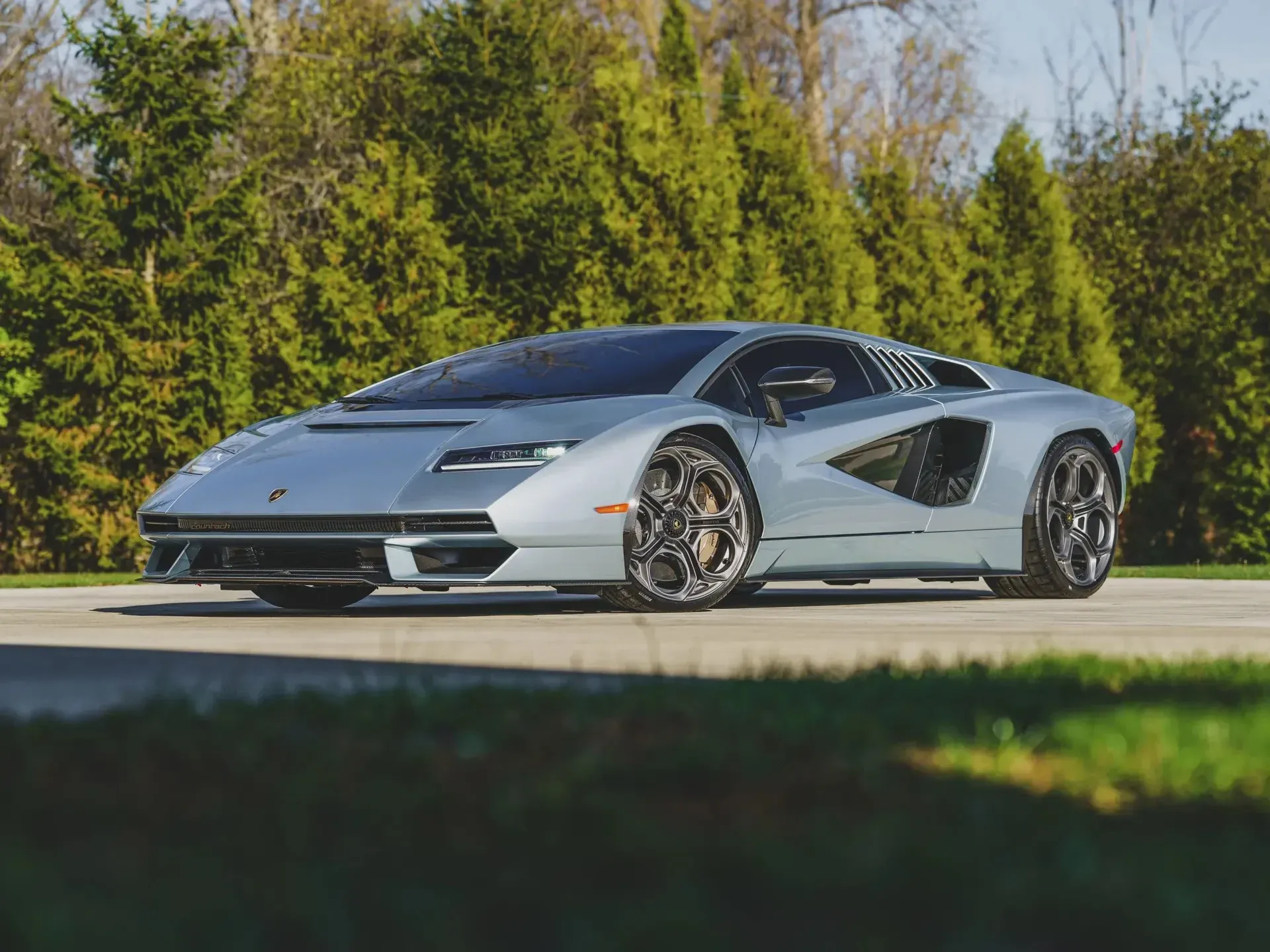
The 2022 Lamborghini Countach LPI 800-4 carries the second-highest published estimate of the sale, $1.75 million to $2.5 million, and it is not marked as offered without reserve. On the date of this article, RM Sotheby's had published its estimate, US title, Phoenix location and photographs, but not its description, which the cataloguing team is still preparing. Its mileage and specification therefore cannot yet be confirmed from the lot page.
Two other modern lots are in the same position, both without reserve and both still awaiting their descriptions: a 2023 Lamborghini Huracán Tecnica estimated at $300,000 to $400,000 and a 2023 Audi R8 GT at $250,000 to $350,000.
For the buyer, the final price adds RM Sotheby's premium to the hammer price: under the bidders' conditions published for its American sales, 12% on the first $250,000 and 10% above. On a hammer price of $2 million, that would mean $205,000 on top.
Sources
- RM Sotheby's: The Arizona Auction 2027, sale page
- RM Sotheby's: The Arizona Auction 2027, list of lots
- RM Sotheby's: 1935 Mercedes-Benz 500/540 K Cabriolet A by Sindelfingen
- RM Sotheby's: 2022 Lamborghini Countach LPI 800-4
- RM Sotheby's: 1936 Cadillac V-16 Convertible Coupe by Fleetwood
- RM Sotheby's: 1930 Duesenberg Model J Convertible Sedan by Murphy
- RM Sotheby's: 1930 Cadillac V-16 All-Weather Convertible Sedan by Murphy
- RM Sotheby's: 1930 Cadillac V-16 Roadster by Fleetwood
- RM Sotheby's: 1933 Cadillac V-16 Convertible Coupe by Fleetwood
- RM Sotheby's: 1938 Cadillac V-16 Convertible Coupe by Fleetwood
- RM Sotheby's: 1932 Marmon Sixteen Victoria Coupe by LeBaron
- RM Sotheby's: 1936 Auburn 852 Supercharged Speedster
- RM Sotheby's: 1937 Cord 812 Cabriolet
- RM Sotheby's: 1969 Ferrari 365 GT 2+2 by Pininfarina
- RM Sotheby's: 2023 Lamborghini Huracán Tecnica
- RM Sotheby's: 2023 Audi R8 GT