








 Deutsch
  Français
  Italiano
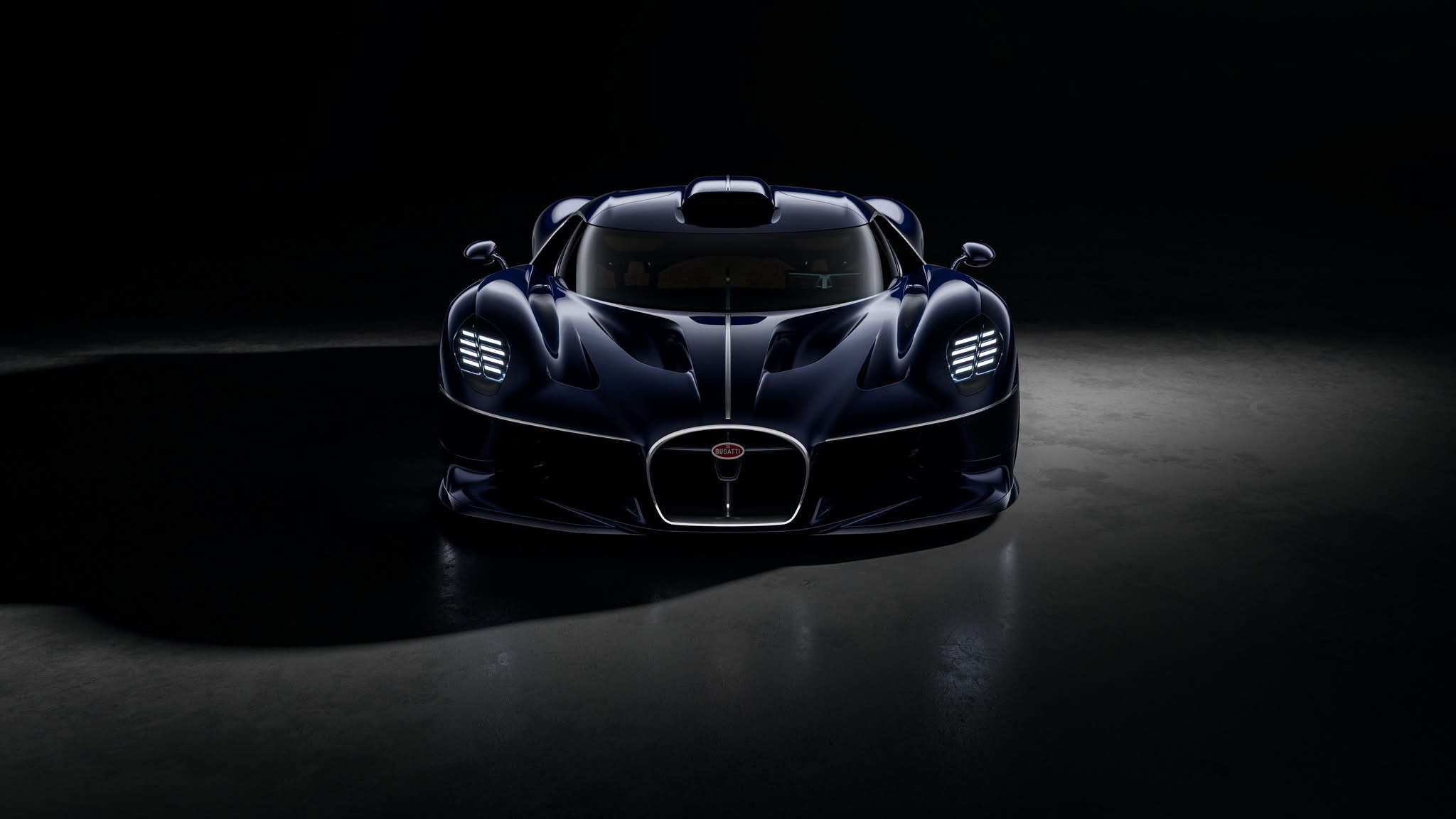
The third creation of the Programme Solitaire, the Bugatti Destrier takes the carbon chassis and the 1,600 hp W16 of the Bolide into a unique body barely one metre tall.
The Bugatti Destrier in detail




The facts confirmed by Bugatti
The Destrier is a single car, identified by Bugatti as a 1-of-1 creation and as the third project completed by the Programme Solitaire, after the Brouillard of August 2025 and the F.K.P. Hommage of January 2026. The programme is limited to two creations a year, so these two are the pair for 2026. The public presentation takes place during Monterey Car Week and culminates at the Pebble Beach Concours d'Elegance on 16 August 2026.
Underneath, the car is a Bolide. It keeps the carbon-fibre monocoque and the complete powertrain: the 8.0-litre quad-turbocharged W16 rated at 1,600 PS, which is roughly 1,578 bhp or 1,177 kW. The body, the cabin and the presentation are new, which is precisely what separates the Programme Solitaire from Sur Mesure: one personalises an existing car very deeply, the other redraws it.
It is worth being equally precise about what Bugatti has not said. There is no price, no owner, no chassis number, no weight, no acceleration or top speed figure for this car, no downforce value, and no statement that the Destrier is homologated for public roads. Anything published beyond that list does not come from Molsheim.
The Bolide without its track arsenal
The starting idea is genuinely radical: keep the most extreme architecture Bugatti has ever built, then stop chasing maximum downforce. The Bolide exists to generate grip; the Destrier exists to be looked at. Everything that made the donor car read as a competition machine at a glance has been removed or buried in the surfaces.
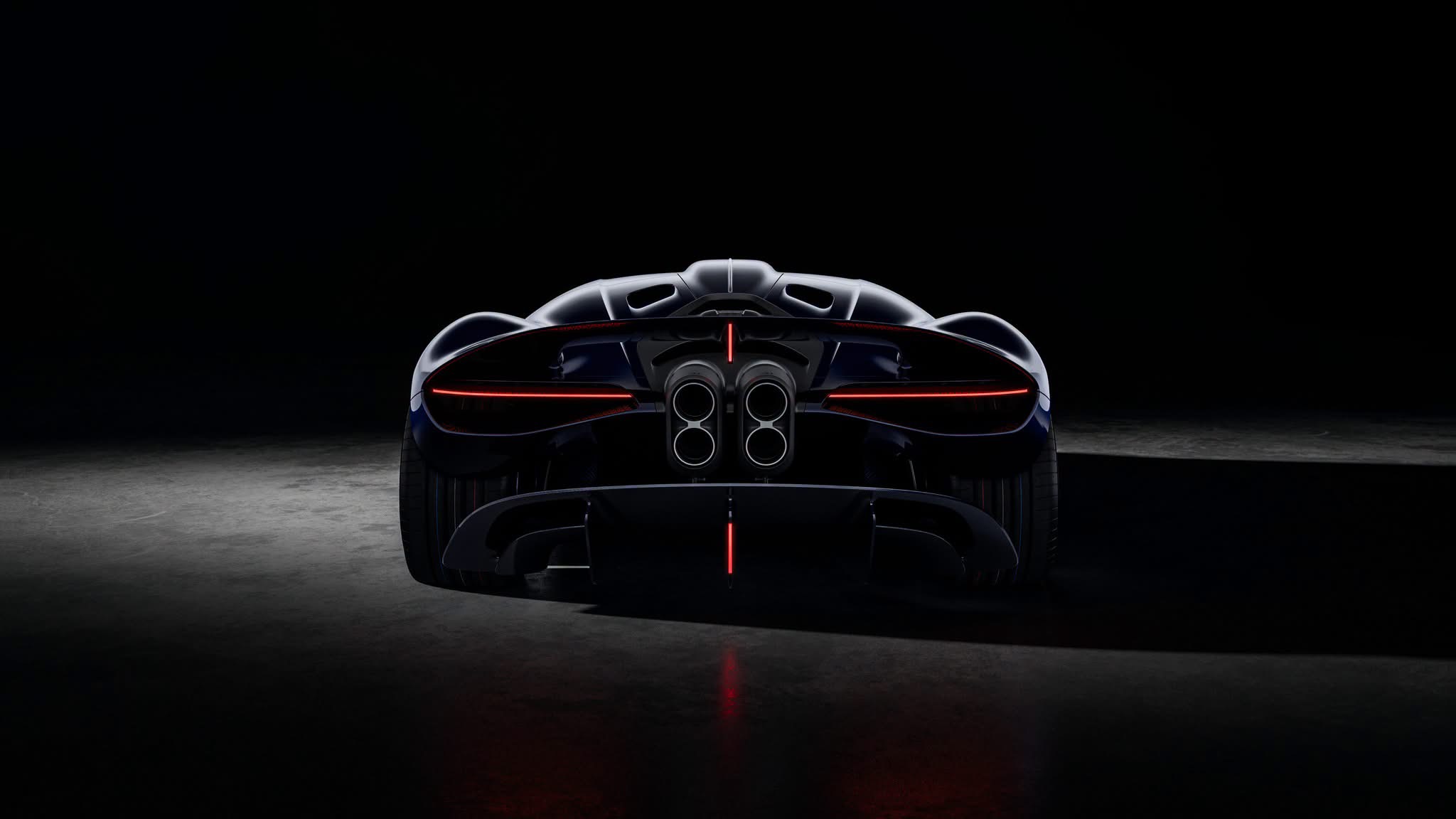
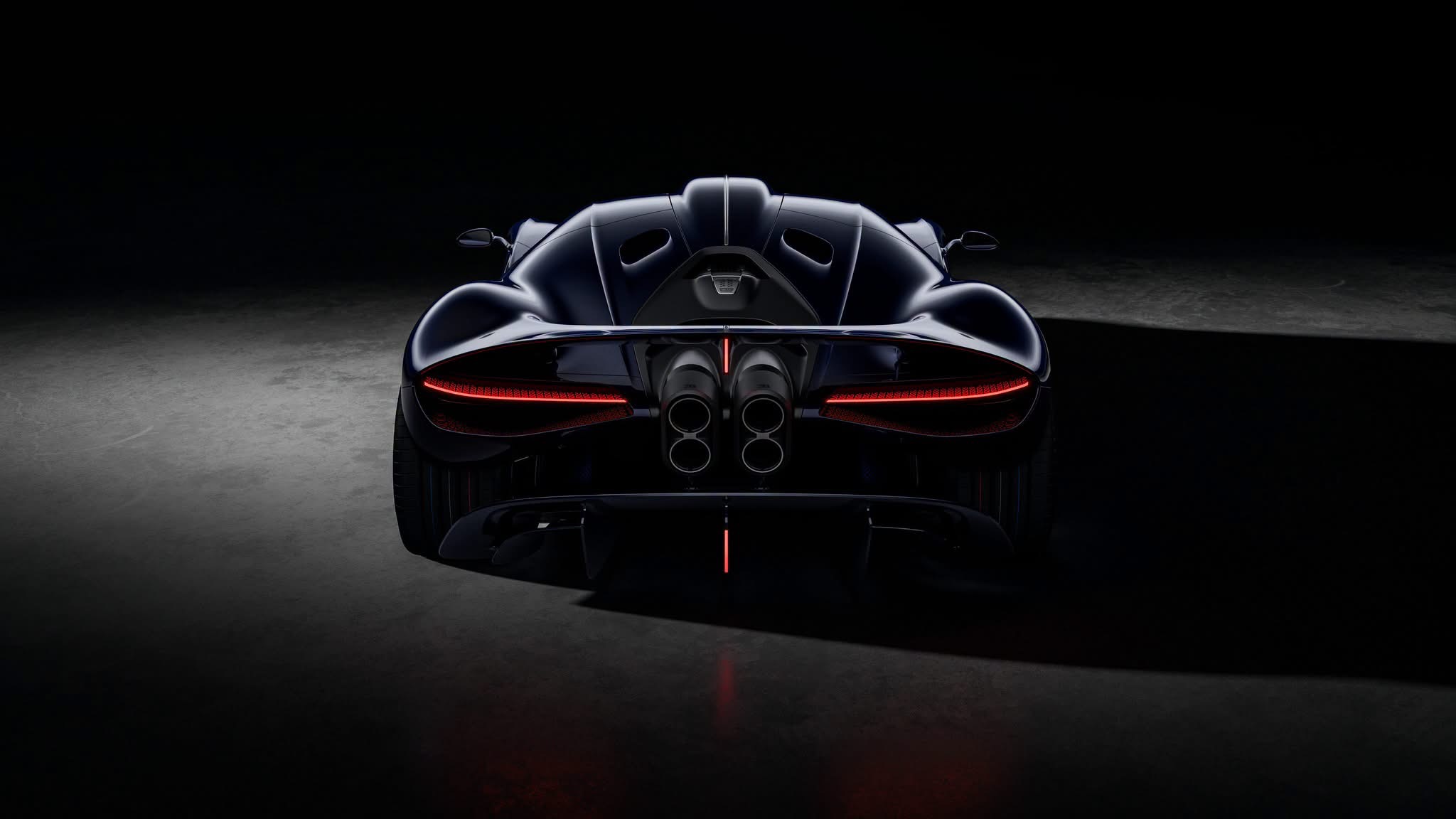
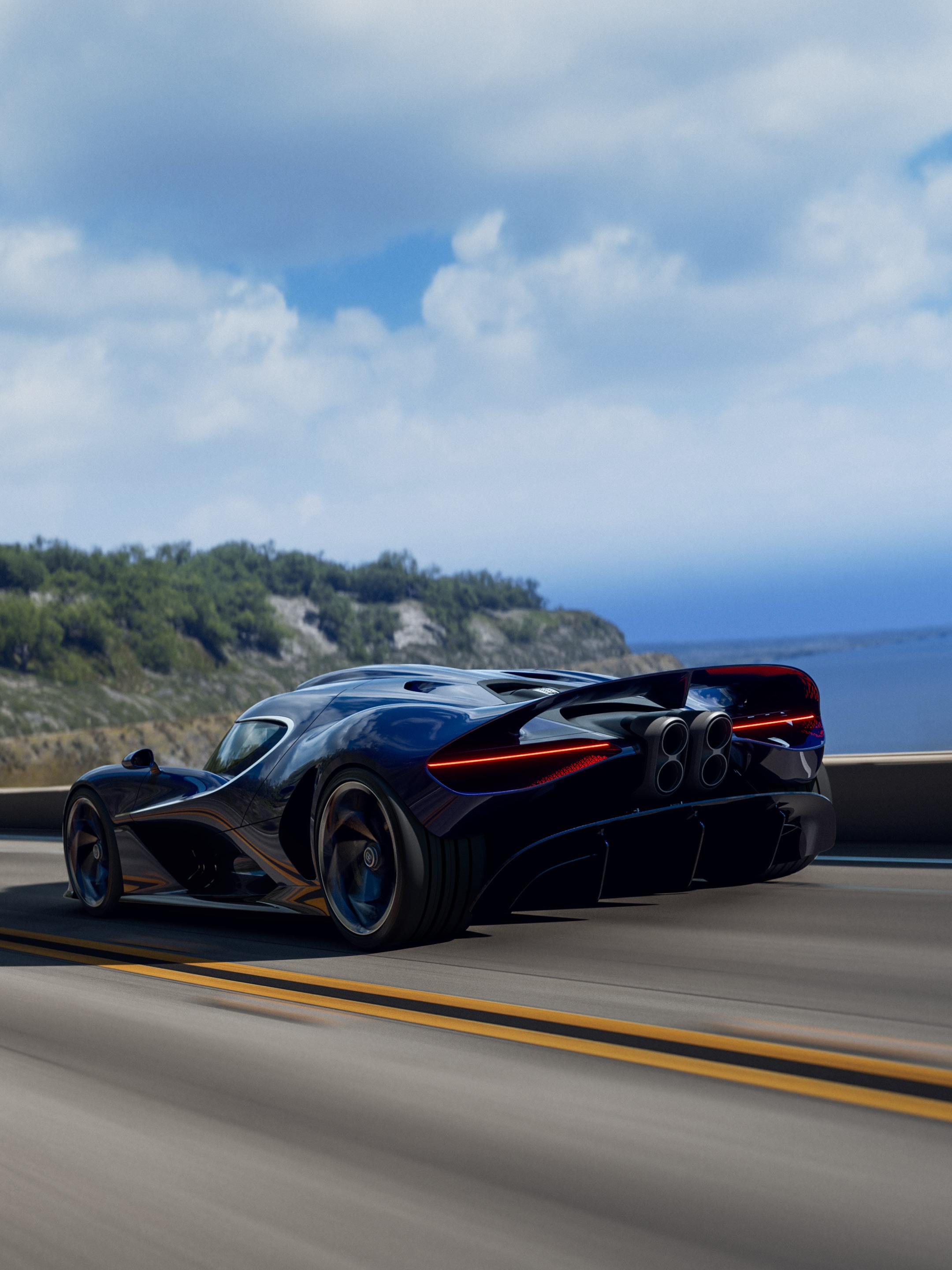
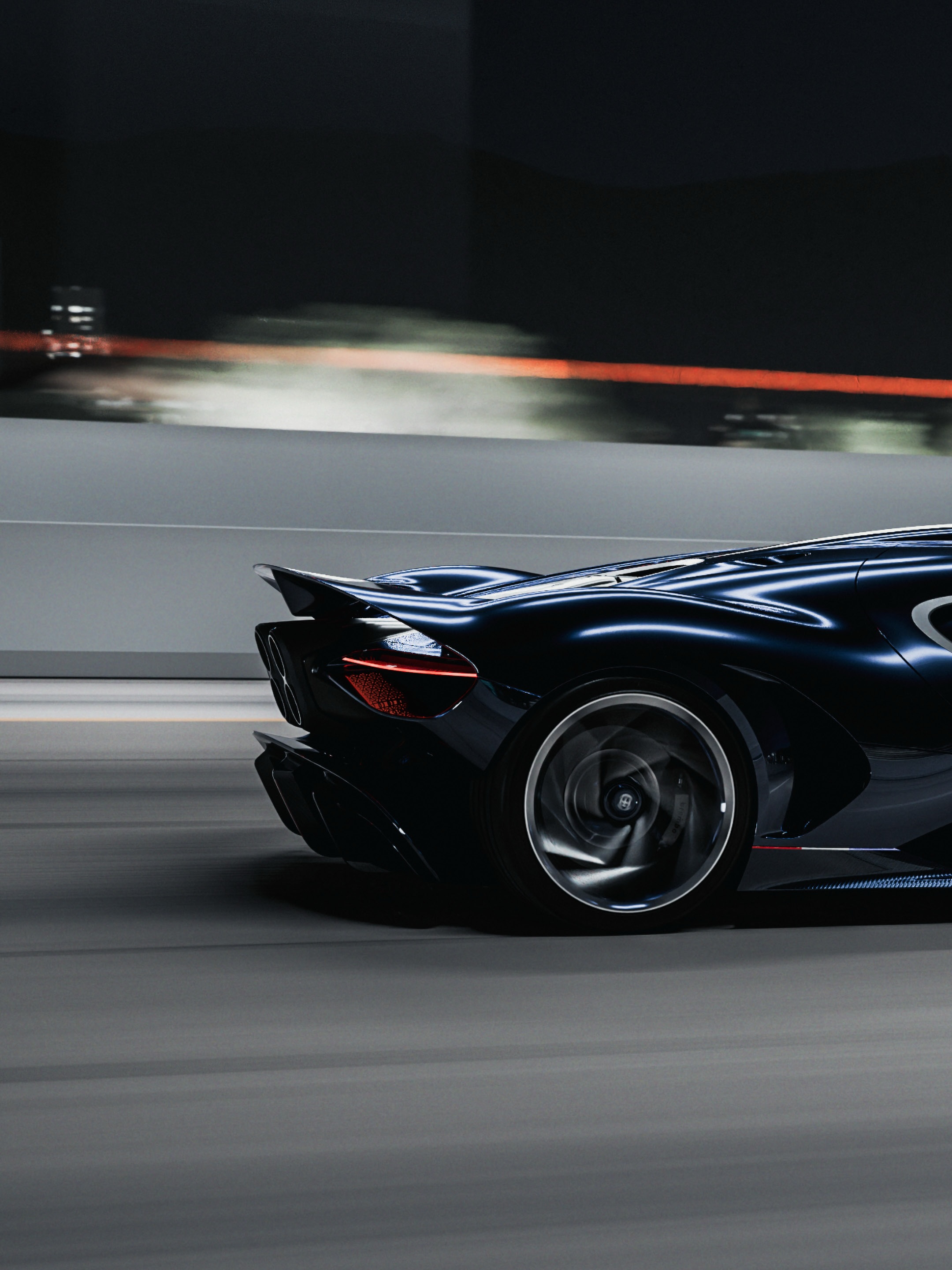
What actually disappears is the spectacular part: the huge adjustable rear wing, the multiple aerodynamic appendages, the central fin and the X-shaped light signatures. In their place there is one continuous body, a low wing folded into the rear haunches, and light units that read as jewellery rather than as track equipment.
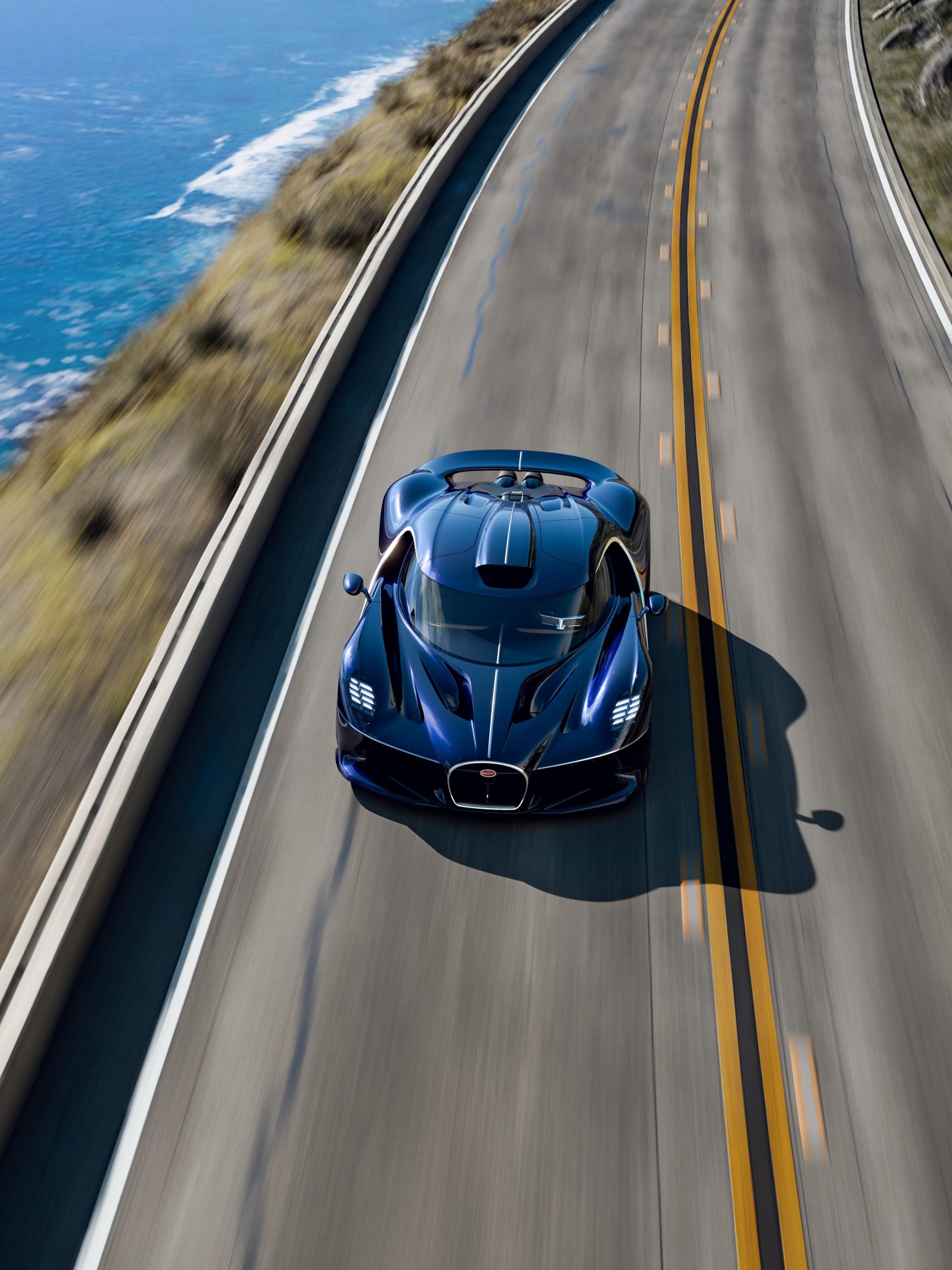
What remains is easy to see in the photographs, and it matters, because the car is not aerodynamically naked. It keeps a front splitter, a very large rear diffuser, several intakes and extractors, an integrated rear wing, four exhaust outlets and the cooling apertures a quad-turbo W16 cannot do without. The honest description is not an absence of aerodynamics, but aerodynamics folded into the sculpture.
One metre tall on 21-inch wheels
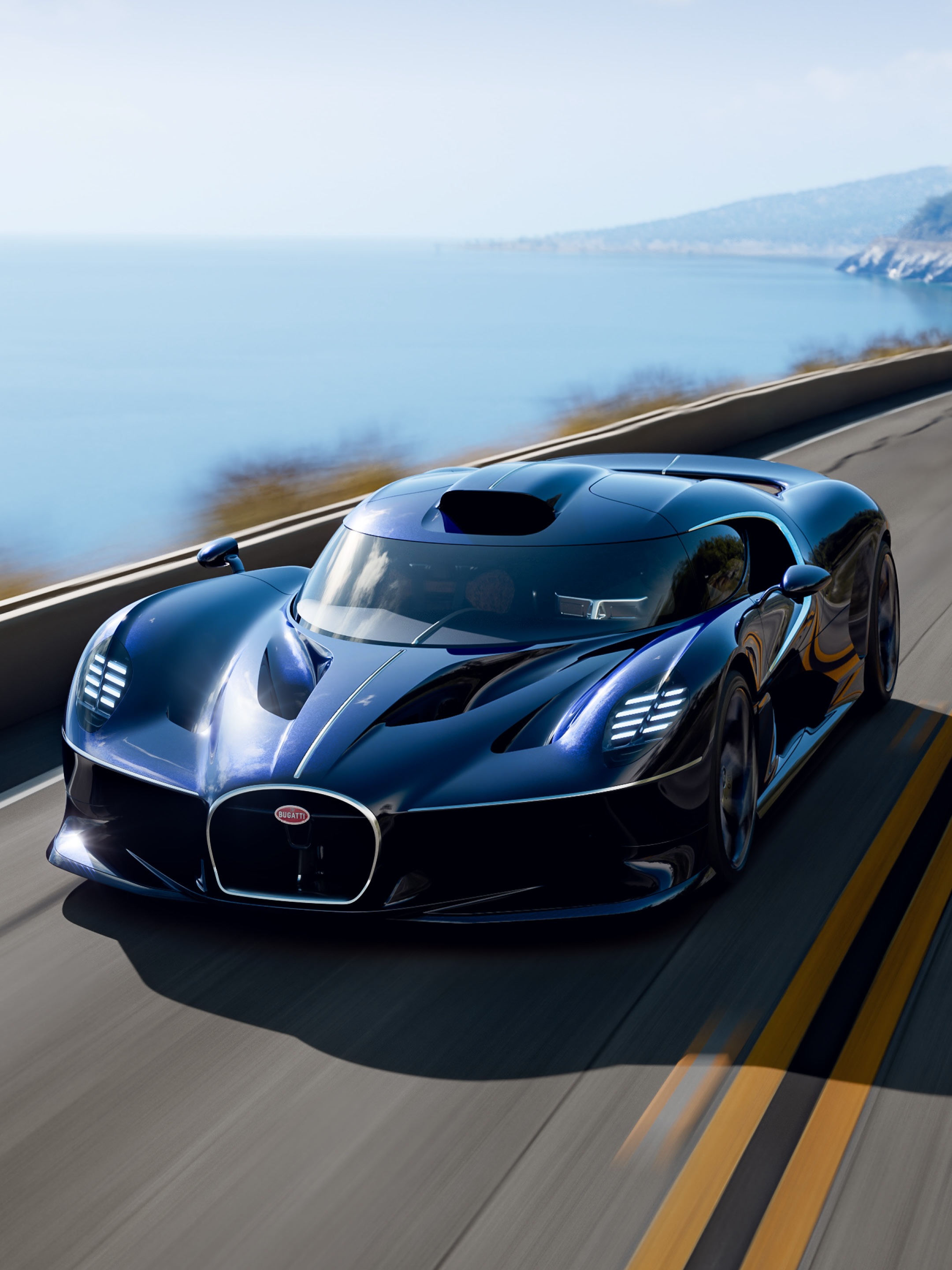
Bugatti describes the Destrier as the lowest silhouette it has ever designed, at roughly one metre high. The cabin sits so deep between the front wings that the windscreen looks like a visor, and the roof scoop feeding the engine becomes one of the tallest points of the car.
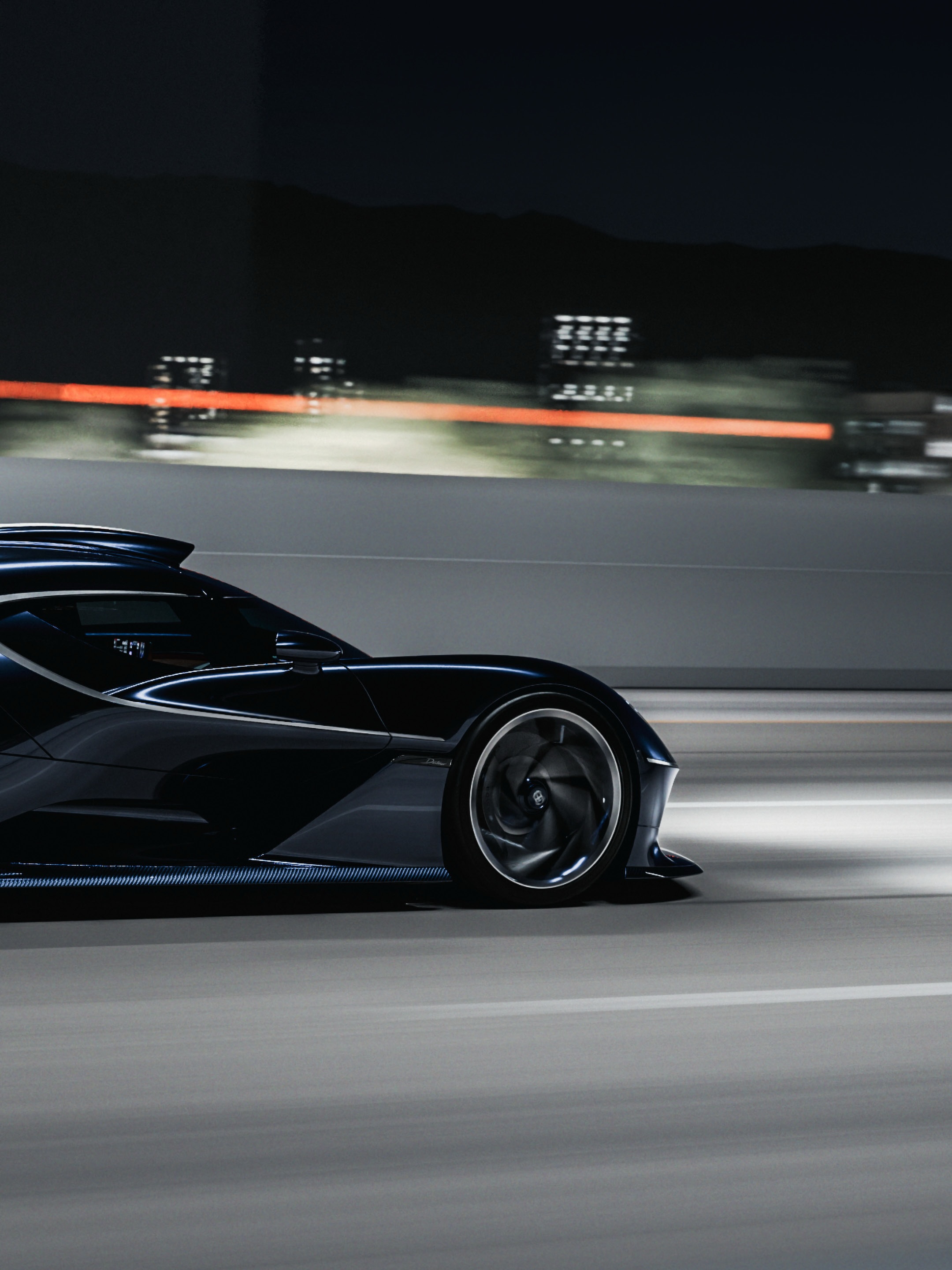
The wheels do the rest of the work. They measure 20 inches at the front and 21 inches at the rear, against 18 inches on the Bolide, so the body appears to be stretched over them rather than resting on them. Add the wide front wings, the waist pulled in behind the doors and the very developed rear haunches, and the proportions belong to a design sketch rather than to a production drawing.
That is the point of the exercise. Those proportions are normally softened between the first sketch and the finished car, for packaging, for legislation, for cost. Here they were kept. Frank Heyl, Bugatti's design director, puts it in one line: the Destrier, he says, “cannot be understood with the head, only felt with the heart”.
Sapphire Celeste and a new C-Line
The paint is a bespoke colour called Sapphire Celeste, developed for this car and its owner. It is a multi-layer finish carrying particles inspired by the sparkle of a diamond, and it moves between deep blue and violet depending on the light. Exposed carbon fibre is deliberately restricted to two areas, the front splitter and the rear diffuser, and it is tinted to match the paint instead of being left black.
The C-Line, the curve that identifies every modern Bugatti, no longer runs in one piece. It starts around the cabin, stops before the front wheel arch, lets the bodywork show through, then picks up again and runs into the horseshoe grille. It is made in polished aluminium, so it draws a bright line across a very dark blue car. The grille itself is wider than the Bolide's, and the X-shaped headlights are replaced by ovoid units holding fine horizontal bars.
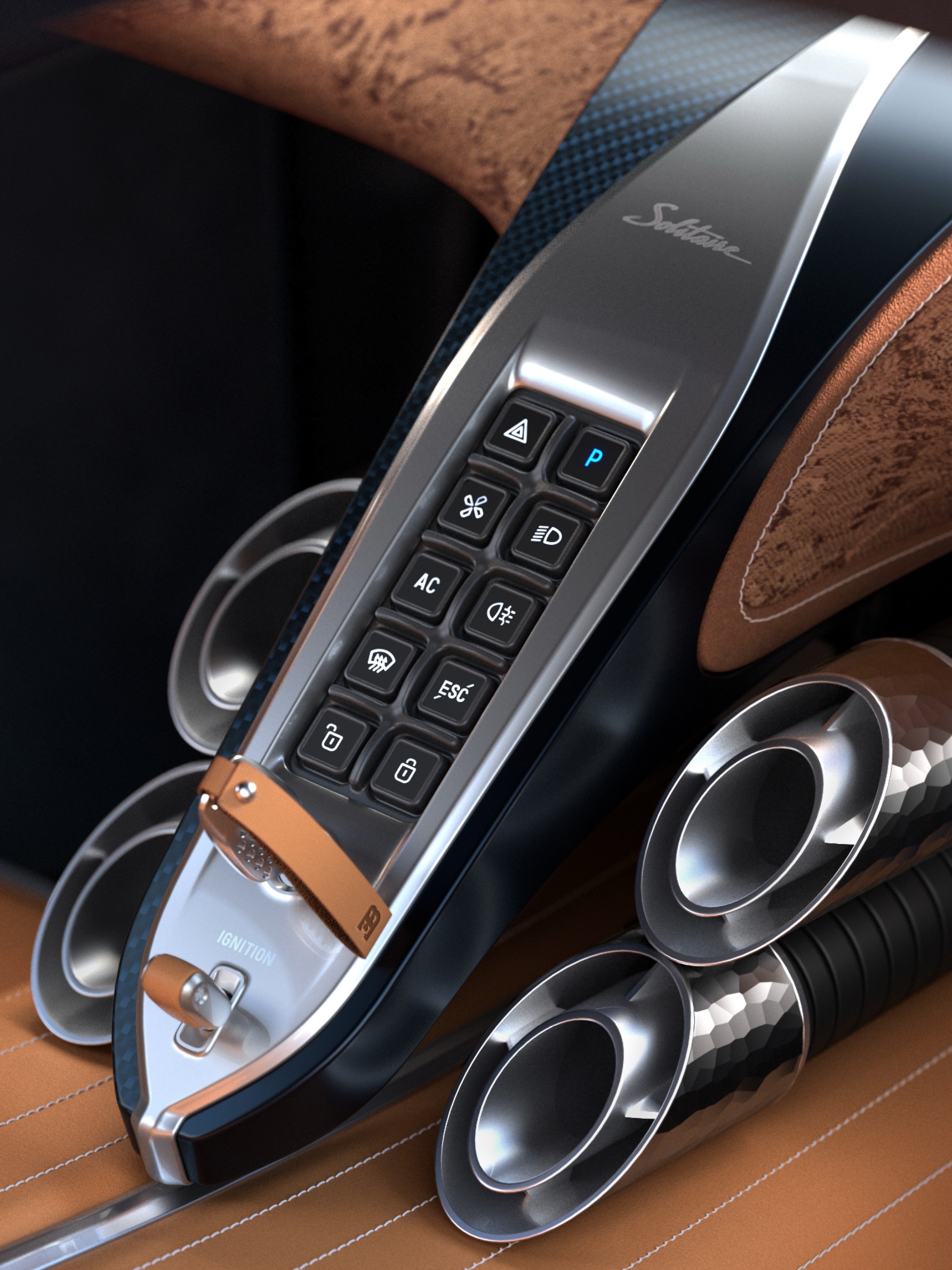
The details are where the name is explained. Several metal parts, inside the engine bay and in the cabin, receive a hand-hammered finish that refers to the armour of medieval knights. A laser-engraved plate above the windscreen shows the Type 57G Tank and the Type 57SC Atlantic, the two faces of the same 1930s chassis, and the oil filler cap carries the mention 1/1. The colour itself nods to the Type 57SC Atlantic, the most celebrated body ever built on that chassis.
An Ambre Voyageur cabin
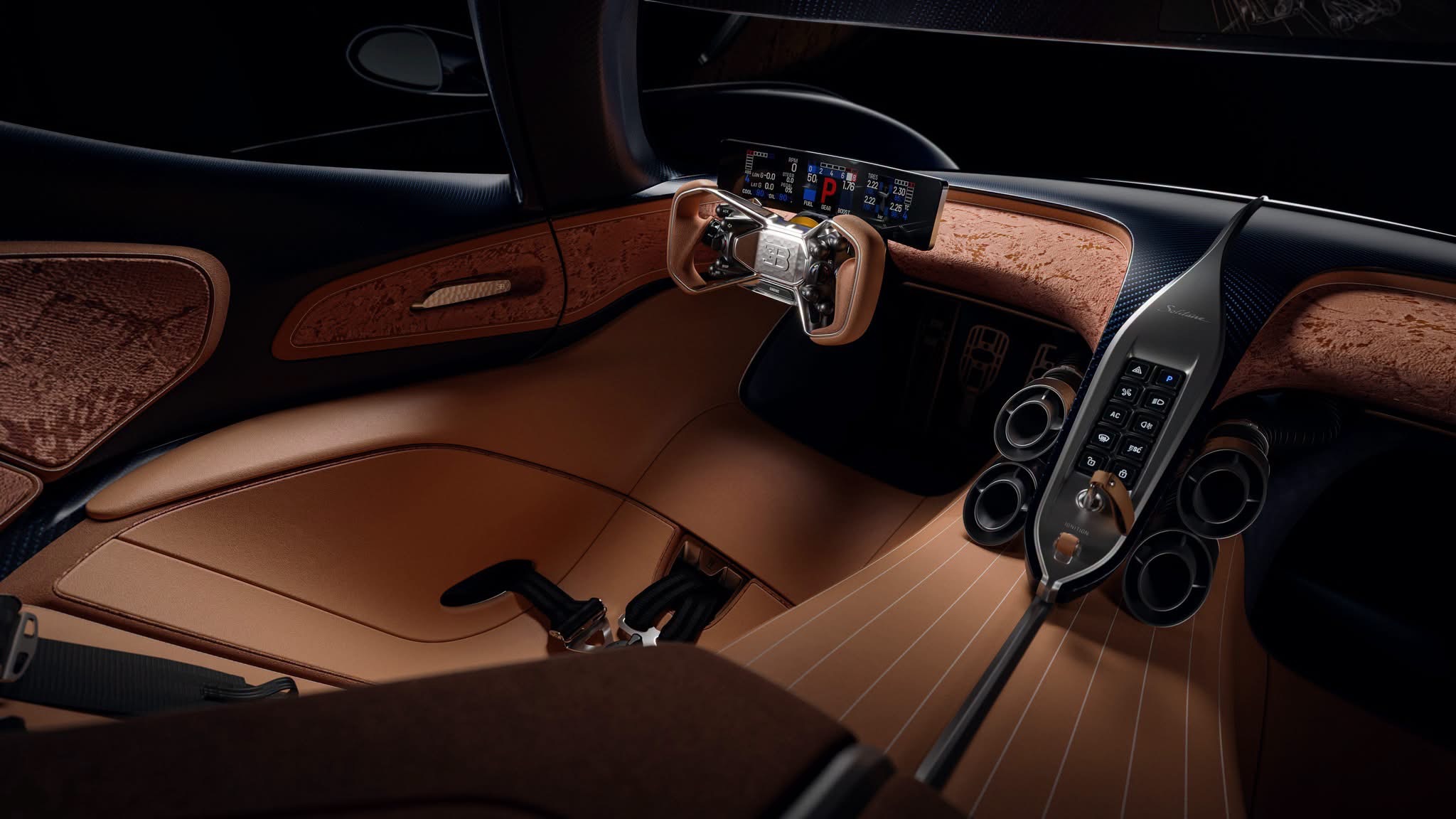
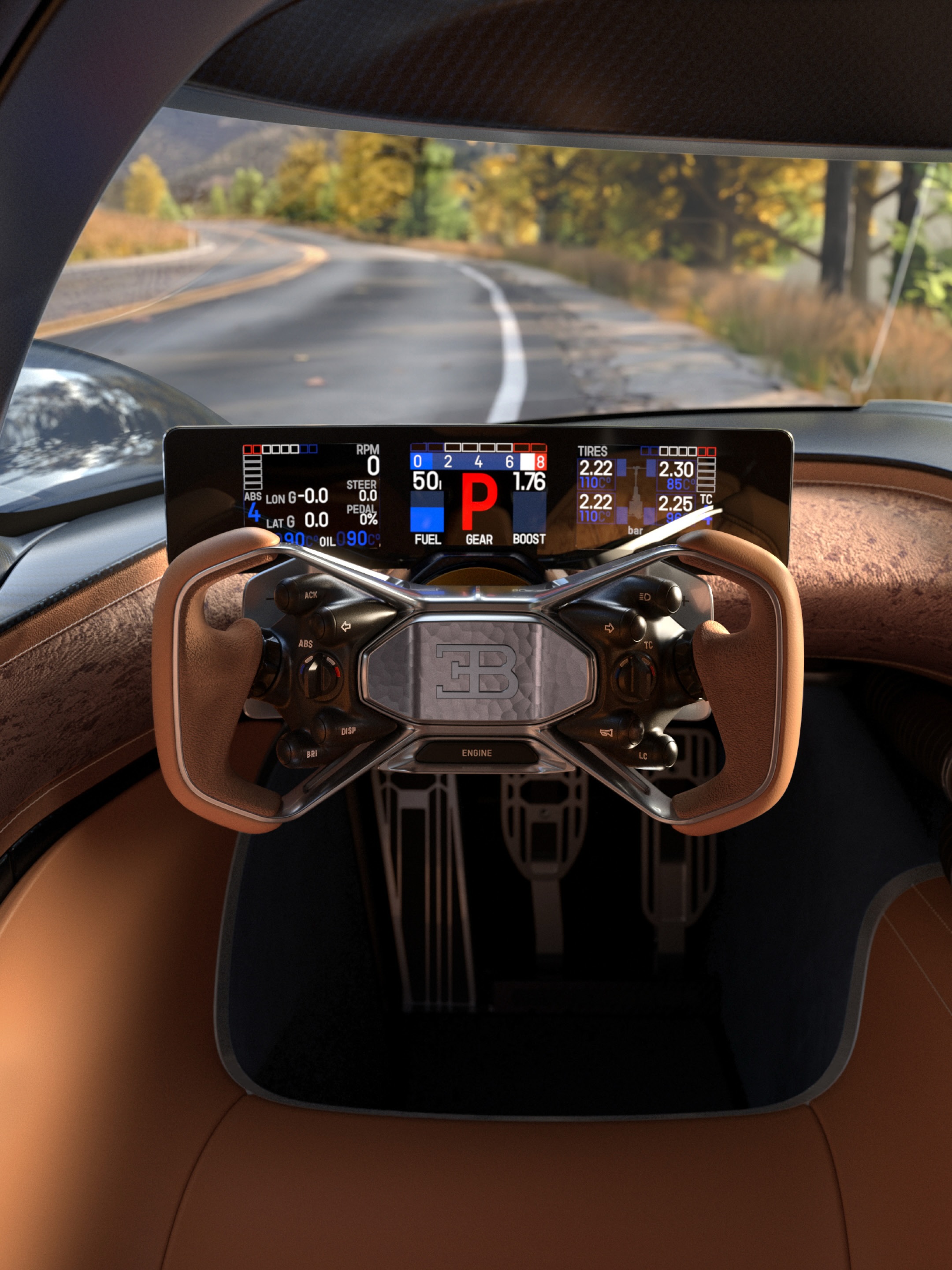
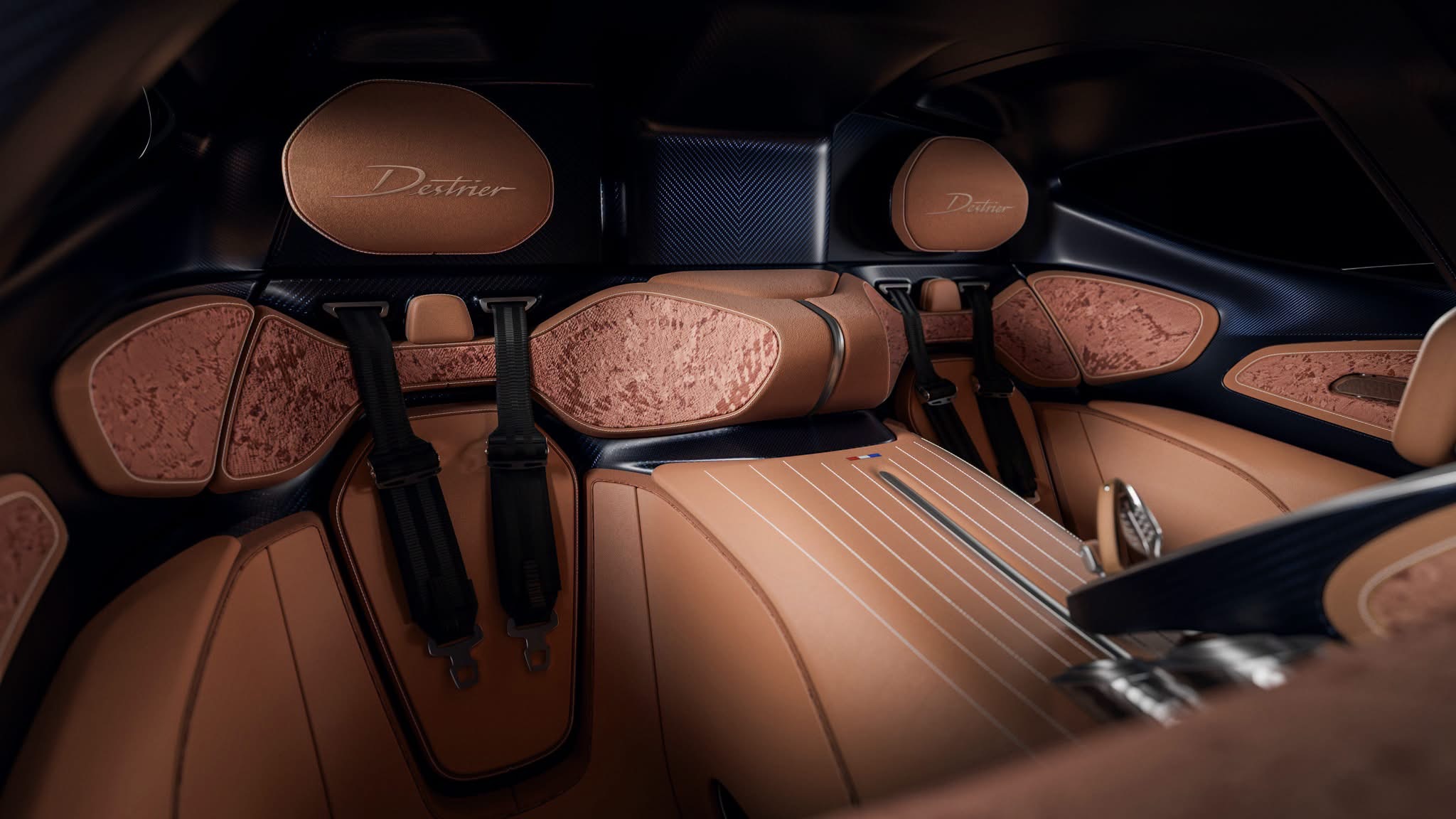
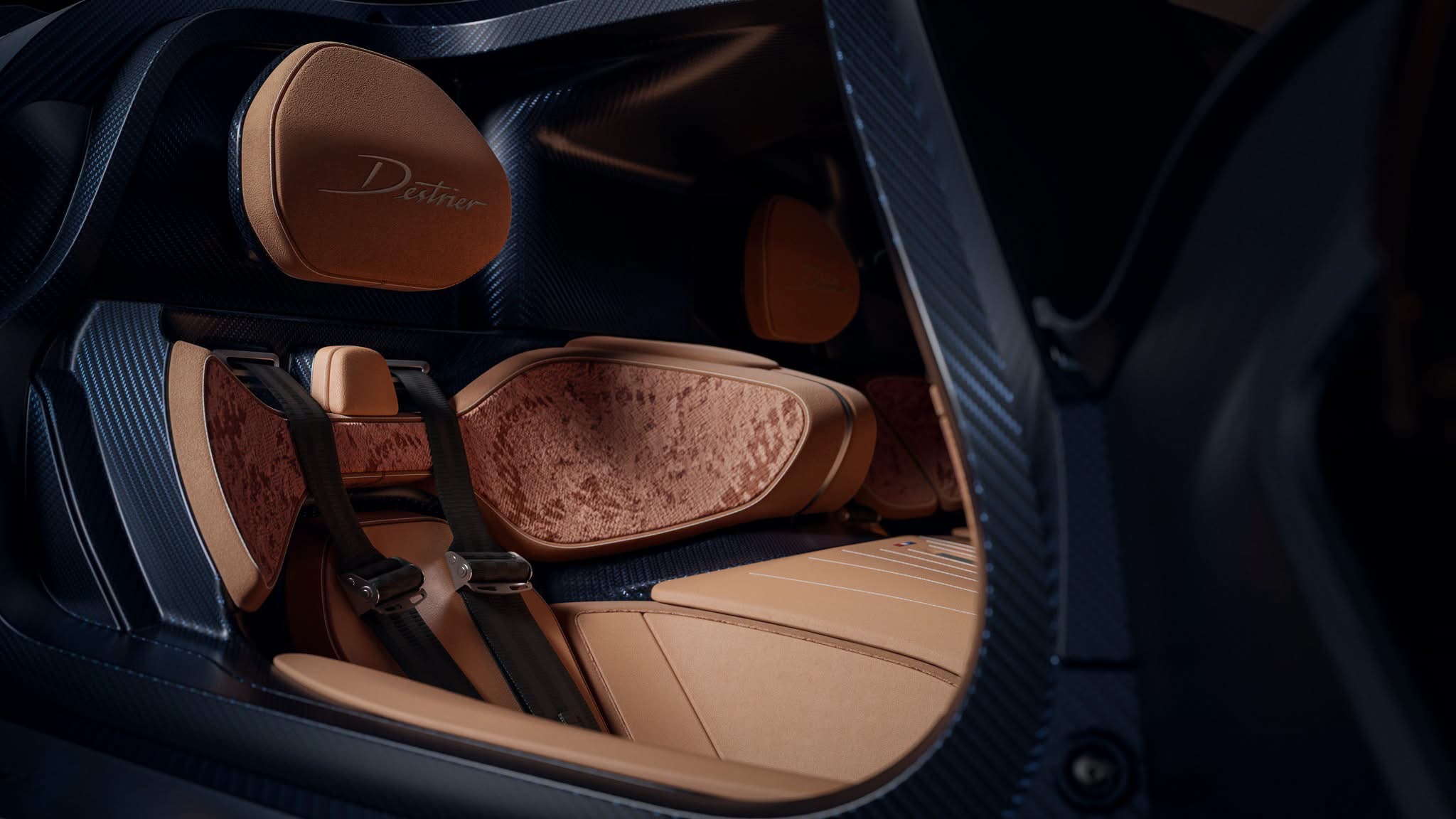
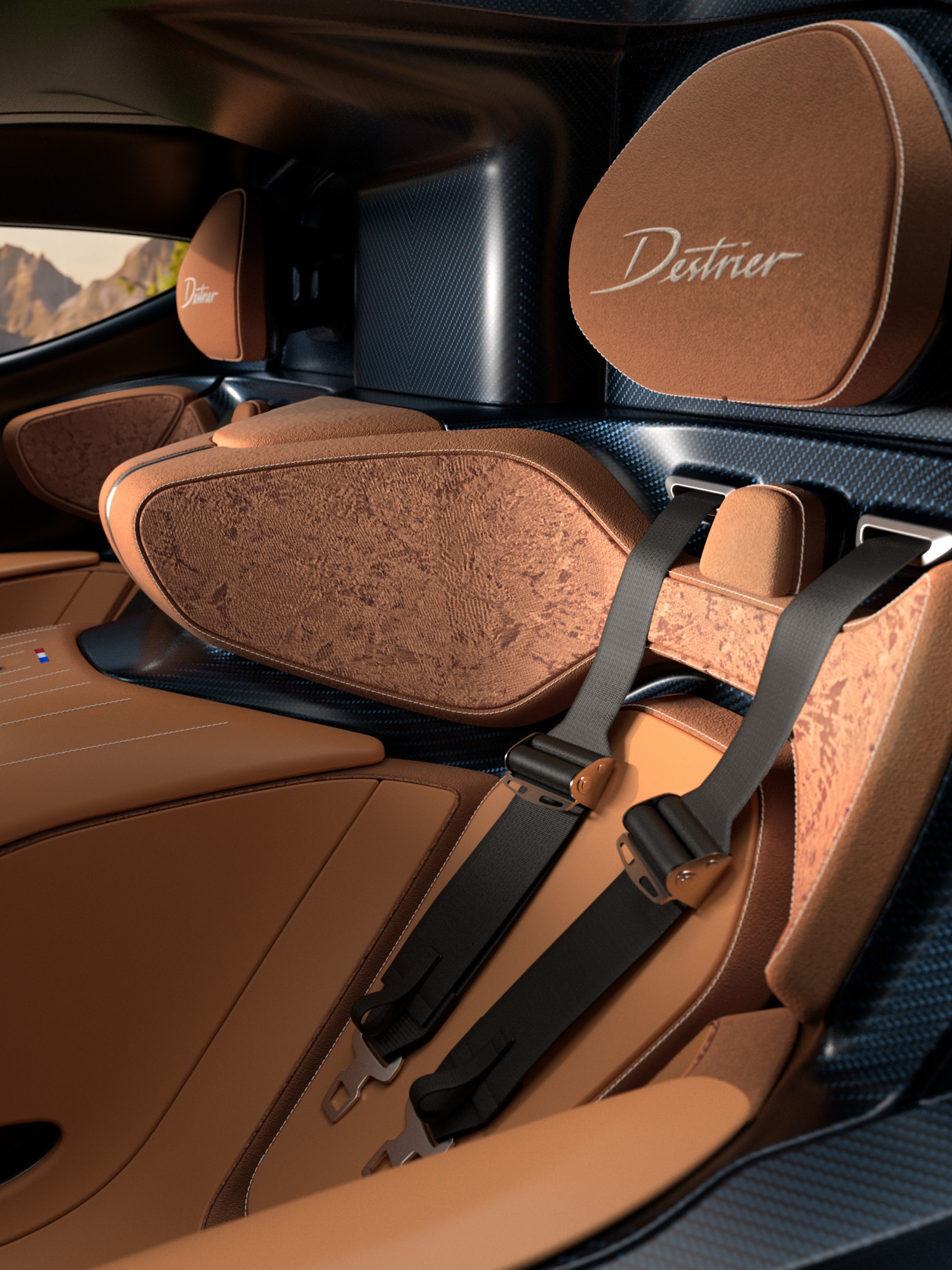
Inside, the structure is still the Bolide's, but almost nothing else is. Three materials dominate: leather and nubuck in a warm brown called Ambre Voyageur, and a textile knitted in three dimensions. Against the blue of the body, the contrast is the loudest decision of the whole car.
That textile is the interesting part. It borrows from haute couture and from high-performance sportswear, and it is knitted rather than cut and sewn, so it forms surfaces without visible seams. Fine copper threads run through it and catch the light as it moves across the cabin. The pattern is circular, a halo line that wraps around driver and passenger, and contrasting stitching carries the same geometry onto the headrests, the seats, the centre console and the surrounding panels.
The hammered finish returns on four interior pieces: the door releases, the air vents, the steering wheel hub and the door sills. A small French flag marks the origin of the marque and its home in Molsheim. Sabine Consolini, who leads colour and trim at Bugatti, describes the method plainly: each material, she says, was chosen the way a tailor selects fabric.
Why the name Destrier?
A destrier was the warhorse ridden by knights in the Middle Ages, and Bugatti presents it as the noblest and most powerful of medieval horses. The name is not decoration: it describes the posture the designers were aiming for.
Look at the side profile and the animal is there. The cabin is set very low between the front wings, the waist narrows behind the doors, and the rear haunches swell as if the car were gathering itself before a jump. The hammered metal, borrowed from armour, closes the story.
There is a family link too. The Brouillard, the first Solitaire car, was named after Ettore Bugatti's favourite horse. But unlike the Brouillard, the Destrier is not officially built around a personal story from the founder's life. Bugatti presents it as a creation led by design and proportion first.
The 1,600 hp W16
The engine is the reason this car exists at all. The Destrier inherits the complete Bolide powertrain: 8.0 litres, sixteen cylinders in a W, four turbochargers, 1,600 PS. It is one of the last official Bugattis to use the W16, after the Bolide and W16 Mistral series were completed, and it arrives while the brand is moving to the Tourbillon and its hybrid V16.
This is where the reporting has to slow down. The figures published for the Bolide belong to the Bolide: a different body, a different aerodynamic package, smaller wheels and a stripped interior. Weight, drag, downforce, top speed and behaviour on a circuit all change with a body this different.
So the accurate sentence is the narrow one: the Destrier carries the 1,600 PS of the Bolide, and Bugatti has published no performance figure of its own for this car. There is no WLTP data, no CO2 figure, no consumption, no homologation statement and no road-testing programme either, which is exactly why its road-legal status remains an open question.
How much does the Bugatti Destrier cost?
Bugatti has not disclosed the price of the Destrier, and on current form it will not. The only official figure attached to the car is the one that belongs to its donor: the Bolide was sold new at €4 million before taxes, in a run of 40. That number is the floor of this discussion rather than an answer to it, because a Solitaire car is priced as a commission and not as a model.
The useful comparison is the car that came immediately before. In January 2026, a Bugatti spokesperson told Autocar that the F.K.P. Hommage would cost its owner in excess of €10 million. Mate Rimac went further in Caradisiac, calling it the most expensive new car in the world while declining to name the figure, and the magazine placed it near €20 million by reading it against the €16 million La Voiture Noire and the Rolls-Royce Arcadia Droptail. For the first Solitaire car, the Brouillard, The Autopian estimated at or above $15 million.
The Destrier belongs to the same programme on the same terms: a body drawn for one car, a cabin built around one client, a colour mixed for one commission. Read against those comparables, our estimate places it between €15 million and €25 million, with roughly €20 million as the reasonable middle. To be explicit about what that is: an estimate by LUSSO, not a figure from Molsheim. Ten million euros is the floor of the range and not its ceiling, and taxes and the depth of the commission can push a final invoice well past it.
The owner is not named either. Bugatti confirms only that the colour was created for this car and its owner, that the interior was designed around one person, that every material was selected for this commission, and that the car carries the mention 1/1. In other words, this is not a show car looking for a buyer. It is already someone's car.
Programme Solitaire: two creations a year
The most interesting part of the Destrier is not its bodywork, it is the business model behind it. The Programme Solitaire reuses an existing chassis and an existing powertrain, which frees the development budget for design, materials and coachwork, and Bugatti caps it at two creations a year. Scarcity is written into the rules rather than into a production run.
The result is a second commercial life for the W16 without restarting series production of it. The same architecture is sold once as a track instrument, then reinterpreted as a concours sculpture at a far higher price. Taking the Bolide, the most extreme car in the range, and inverting its purpose completely is the sharpest version of that idea Bugatti has attempted so far.
For collectors, the signals are favourable but not a guarantee. A 1-of-1 designation, the W16, factory provenance and a Pebble Beach debut all help. Future value will still depend on provenance, on public exposure, on condition and on the depth of a market for a car this expensive and this difficult to trade. Anyone weighing that kind of purchase should take independent advice rather than a headline number.