








 Deutsch
  Français
  Italiano
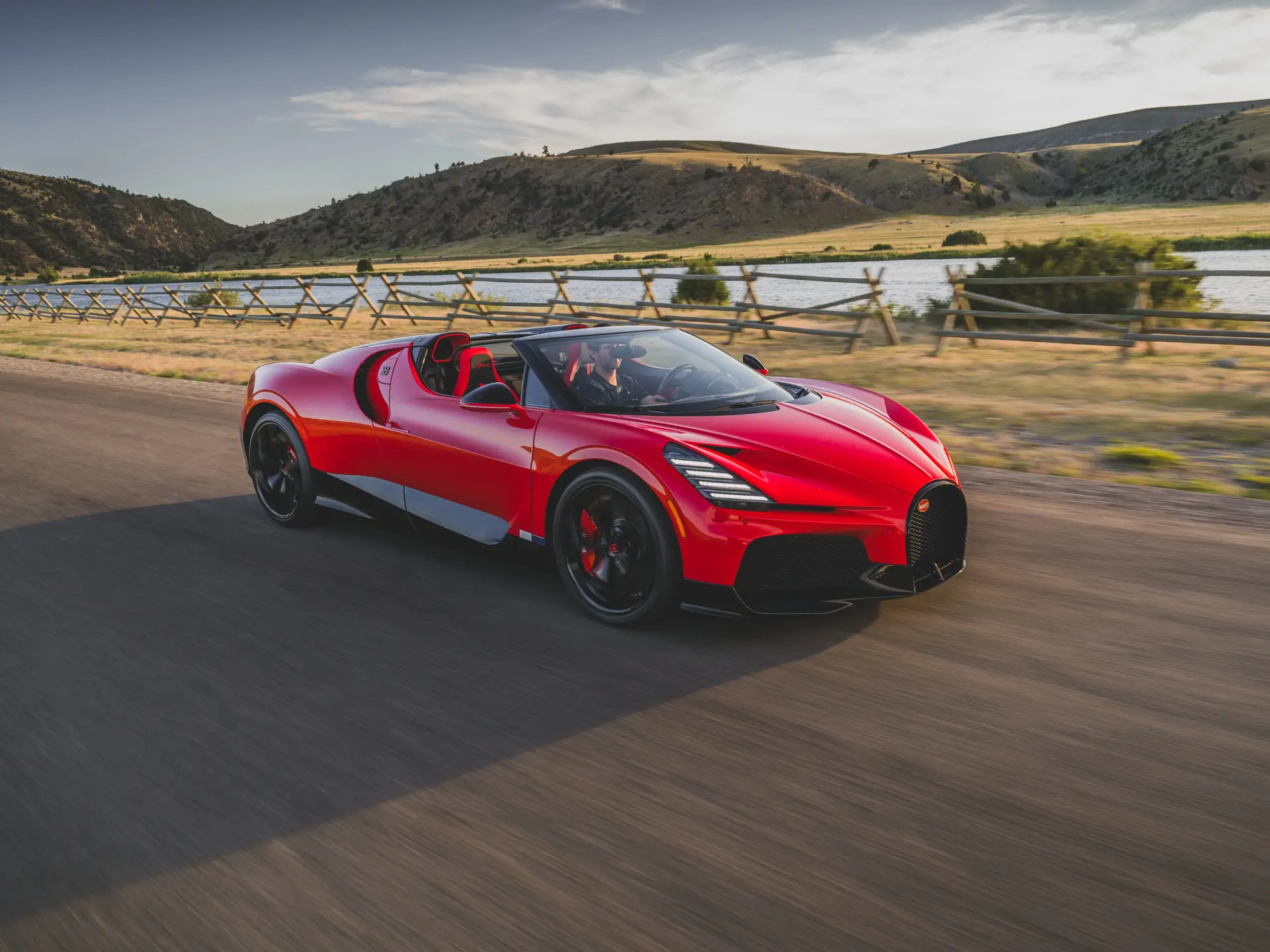
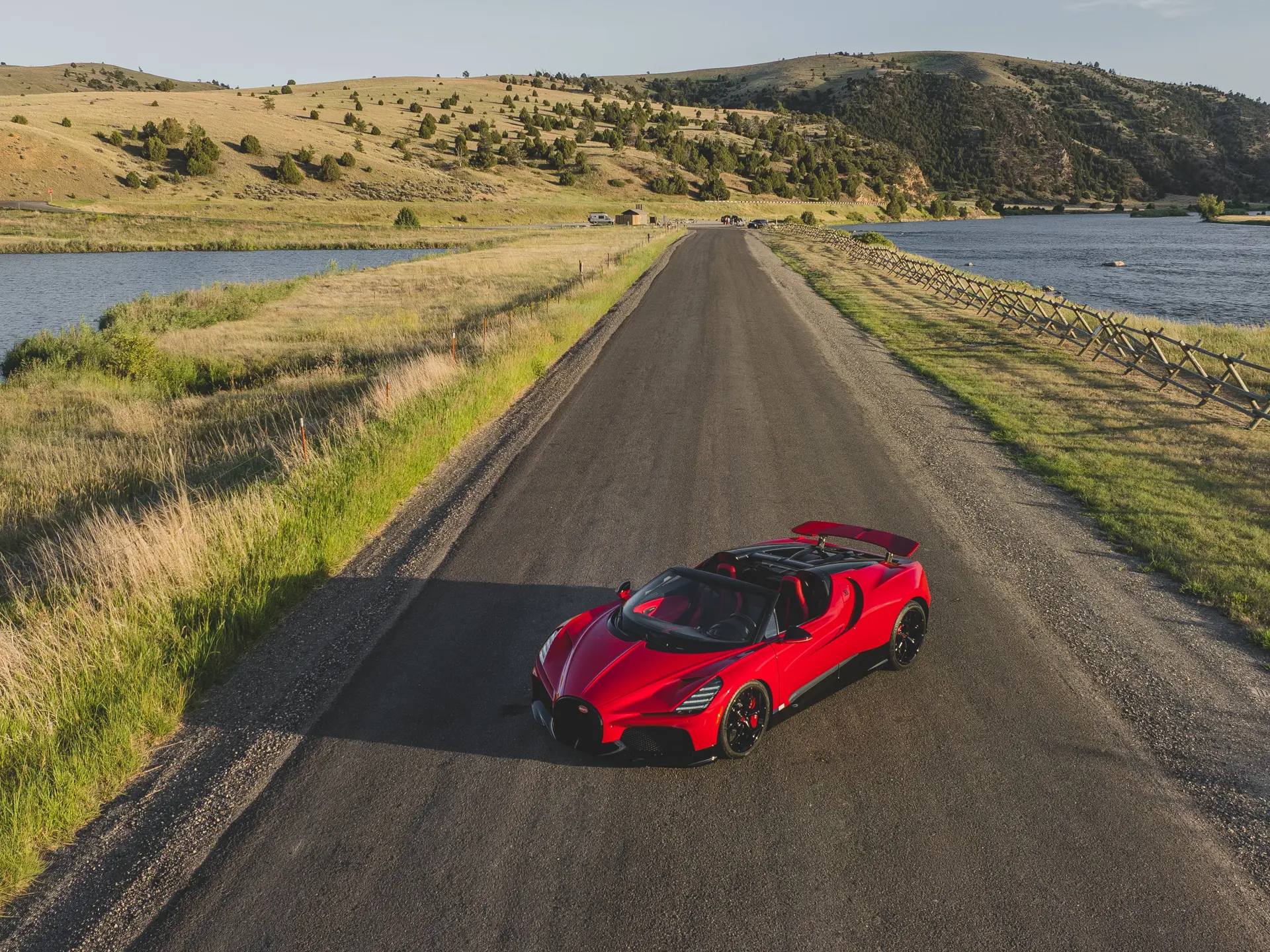
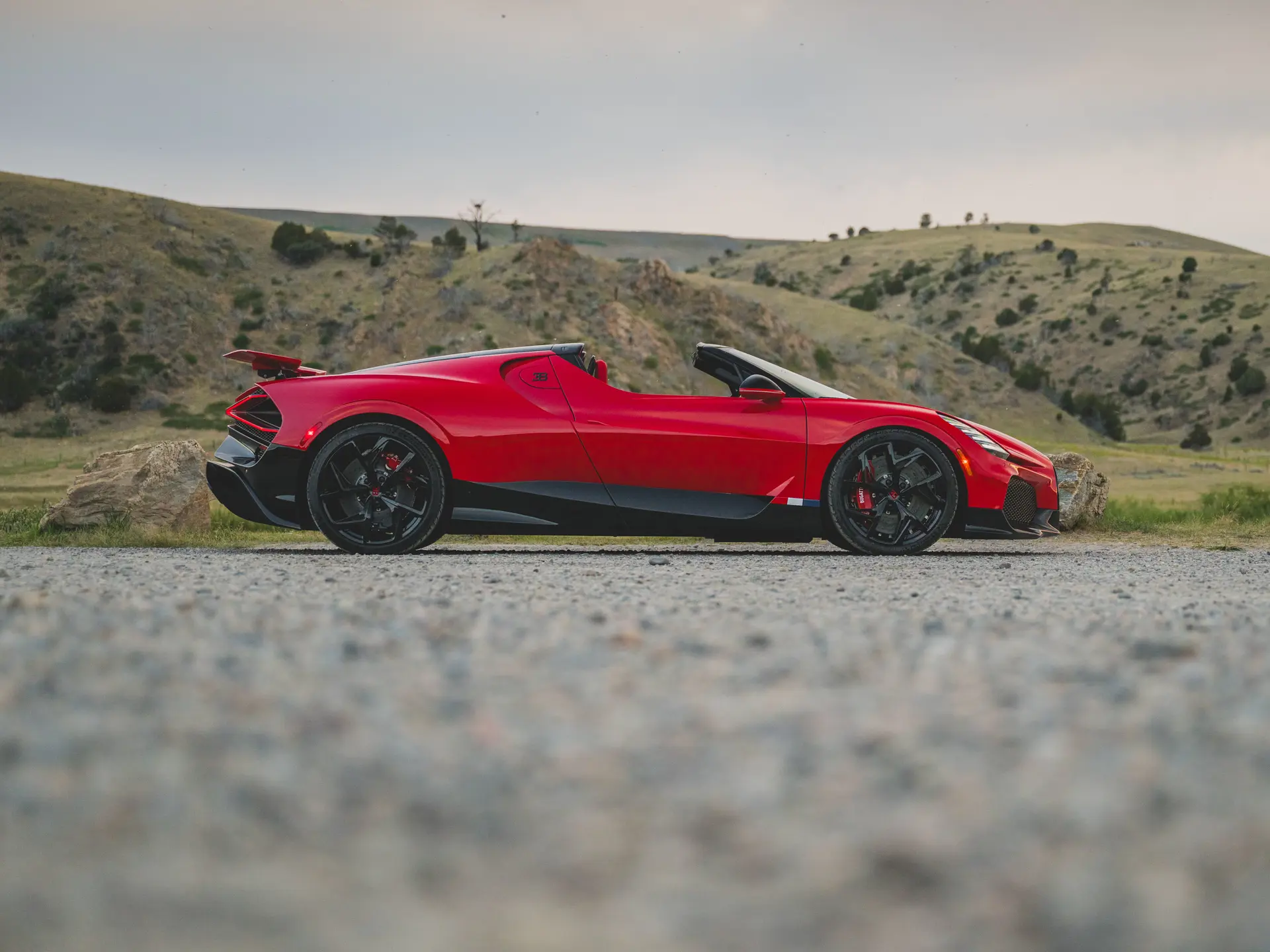
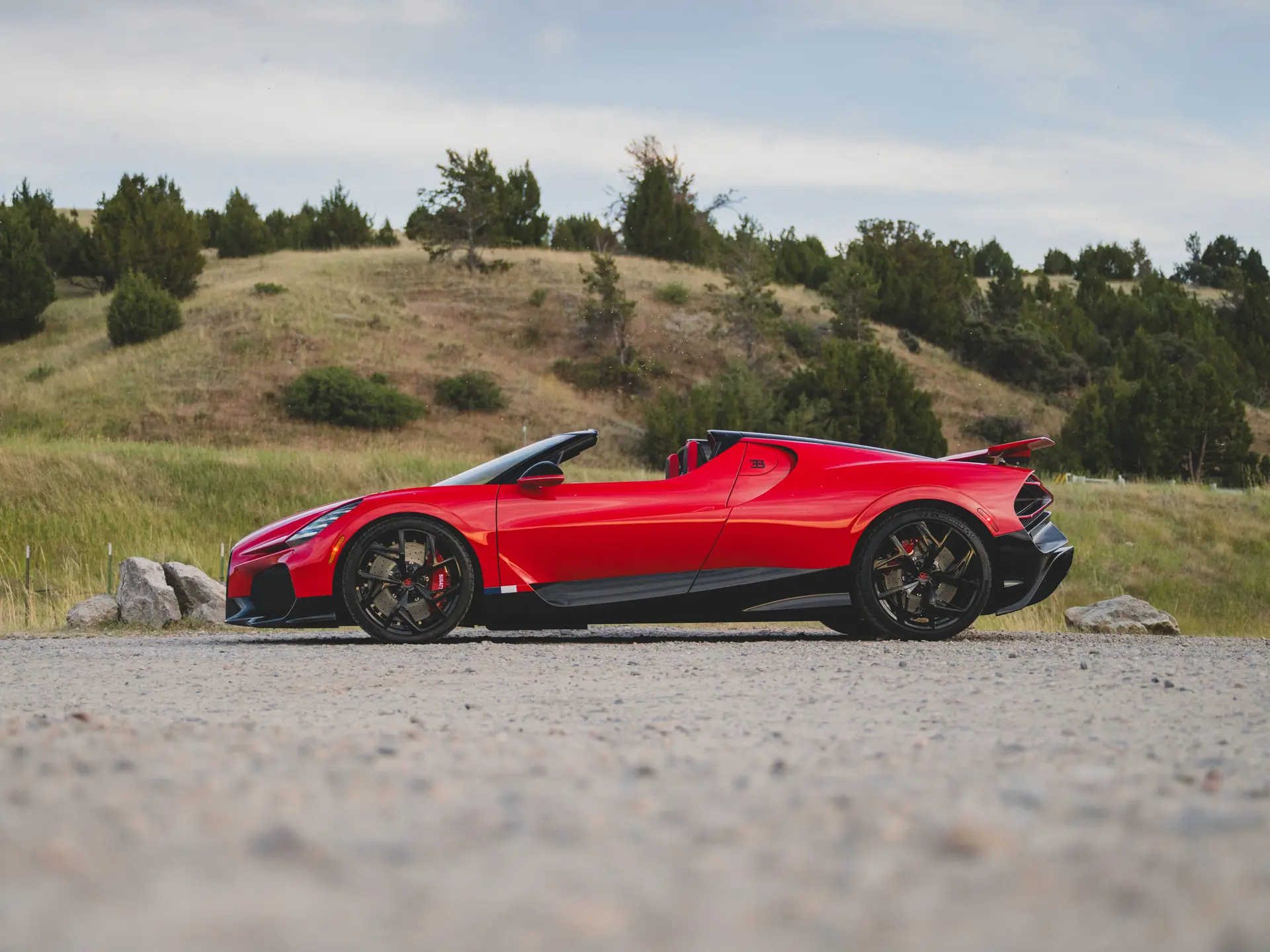
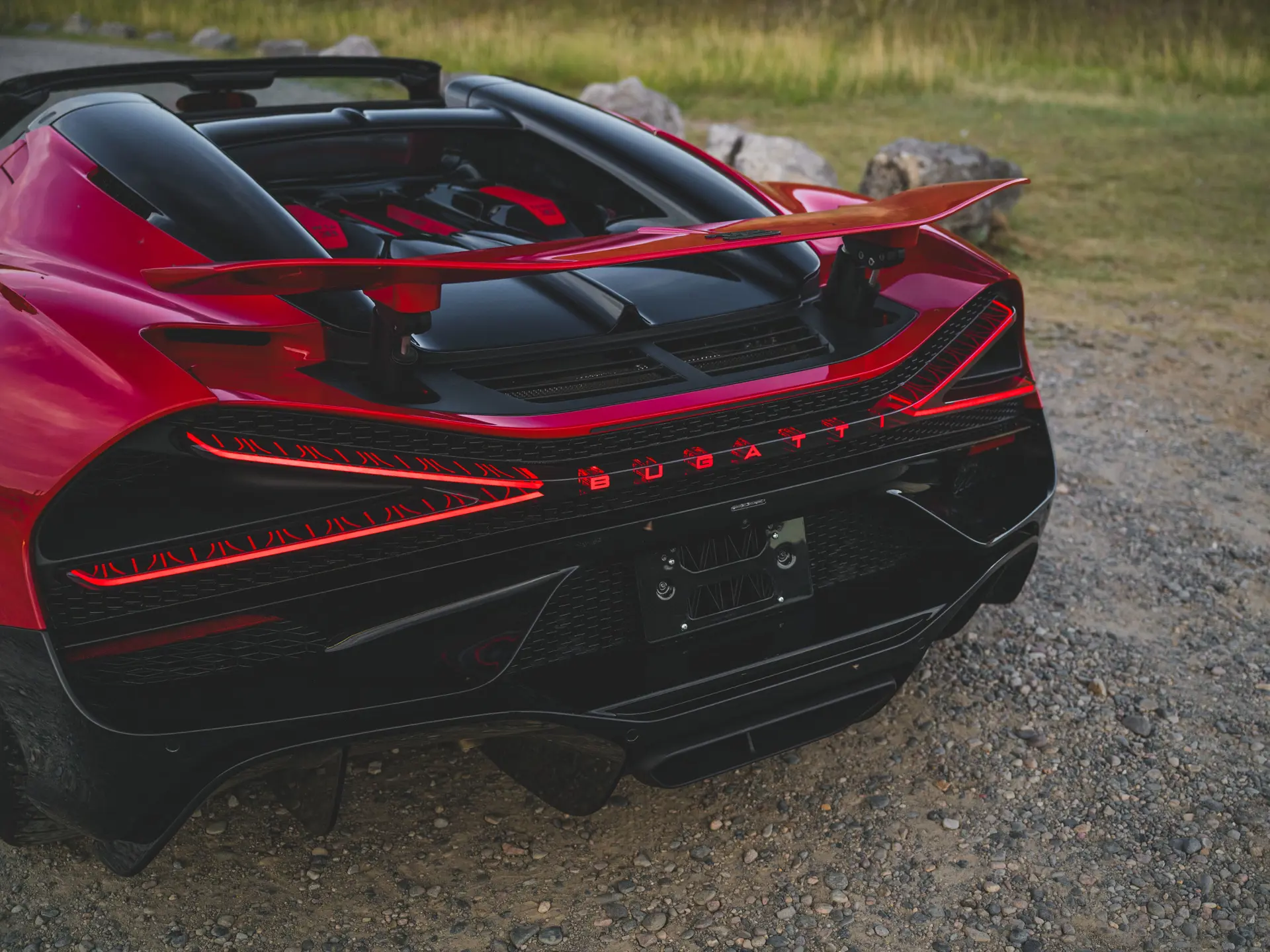
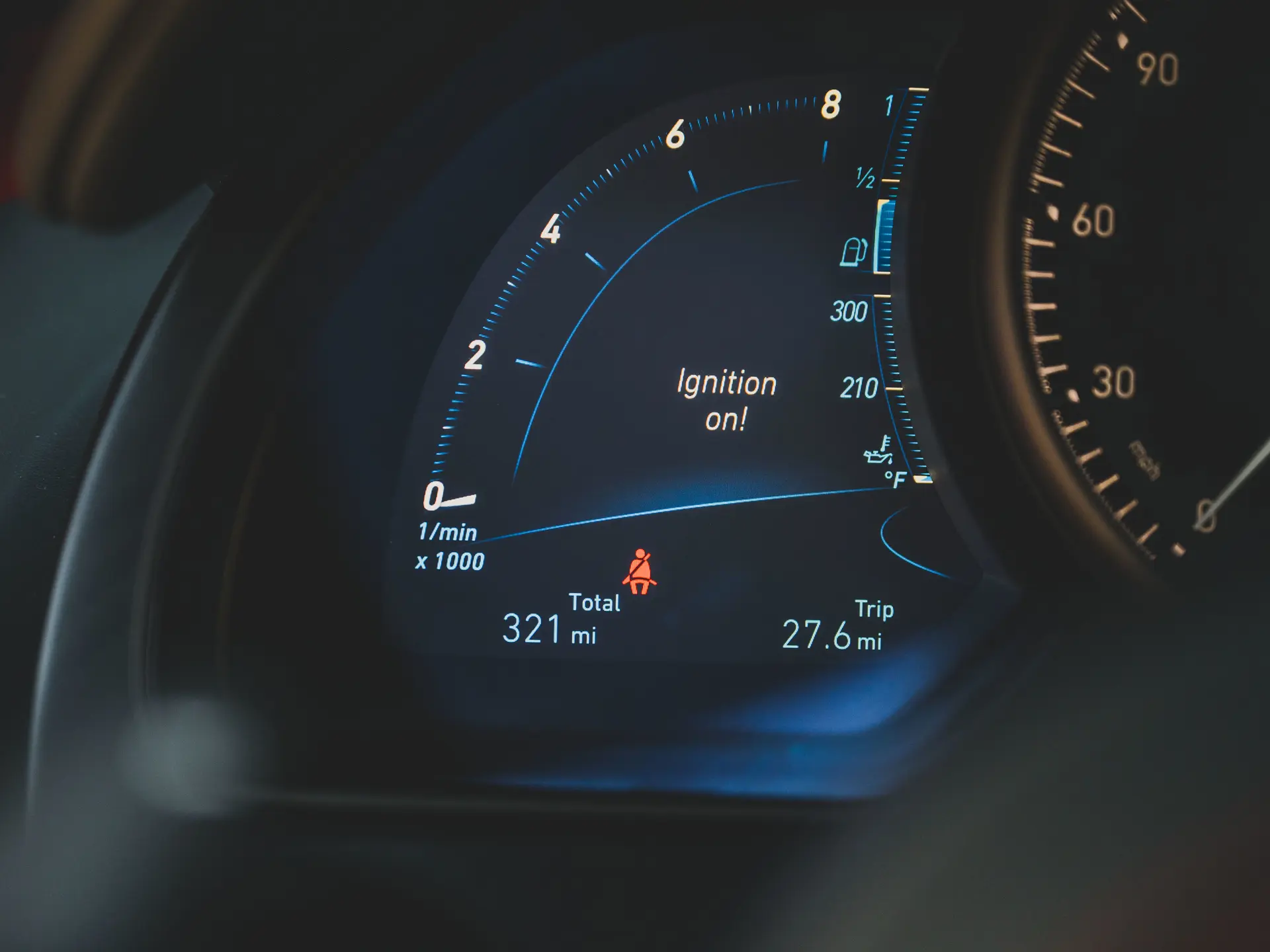
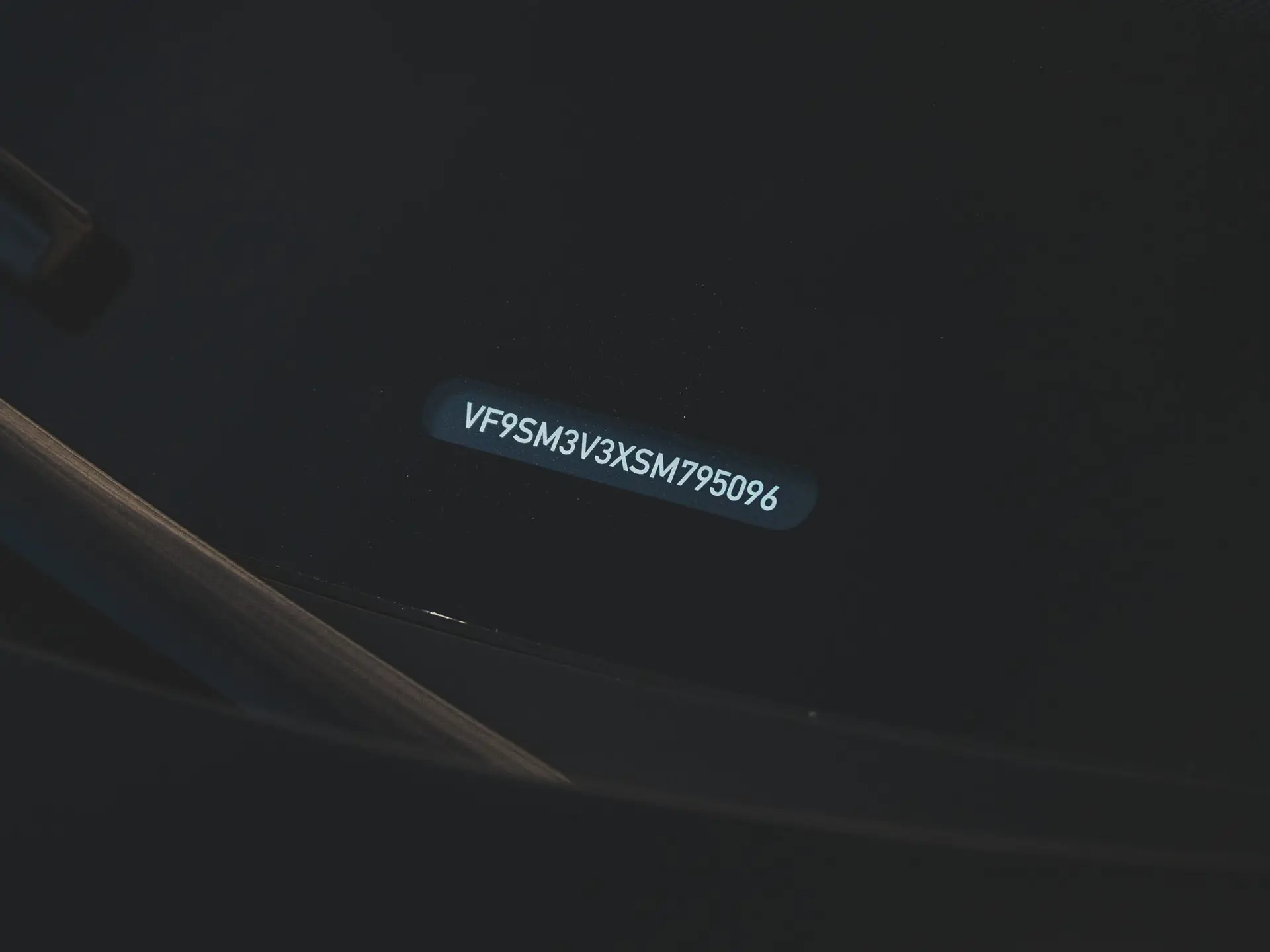
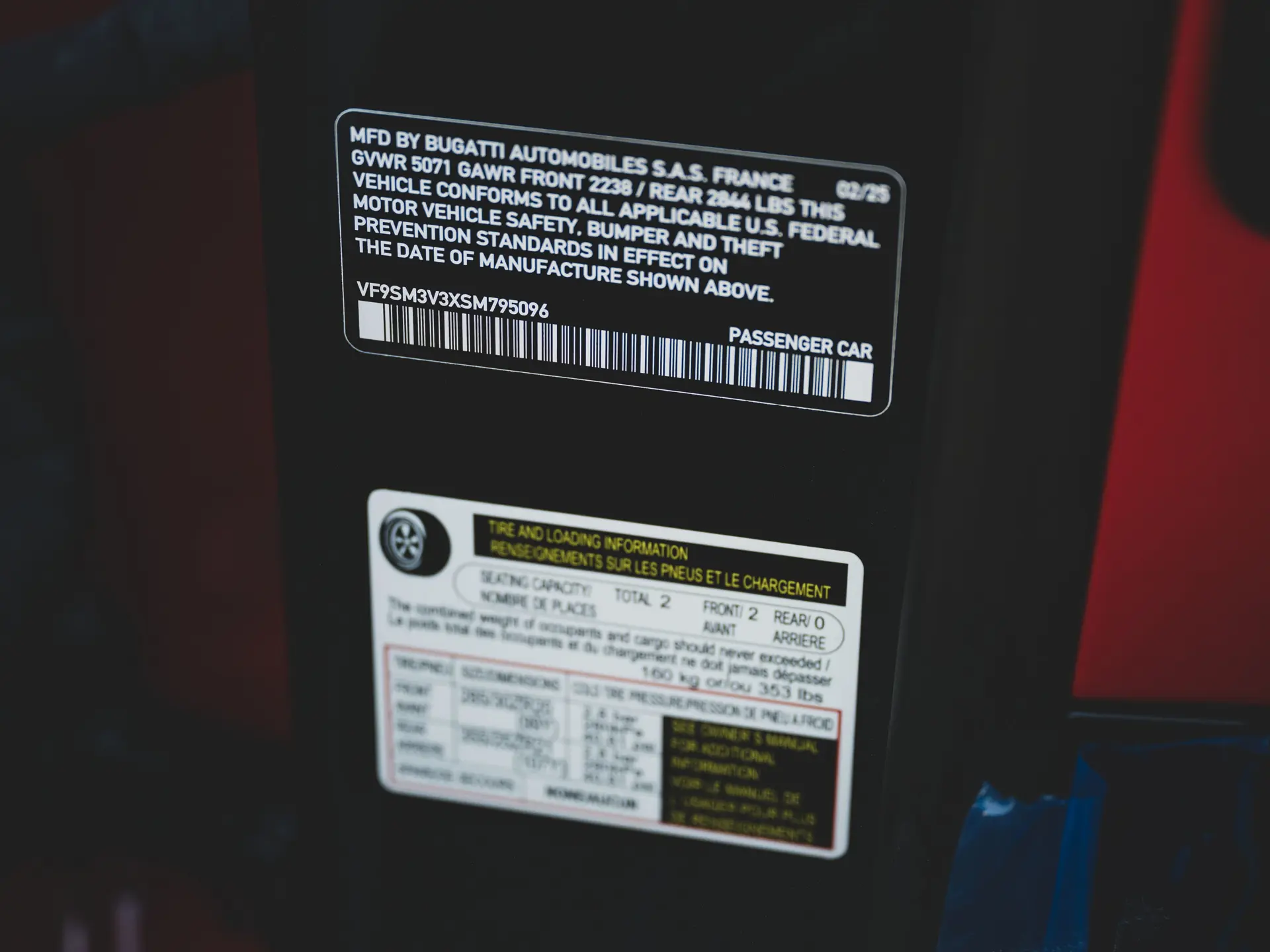
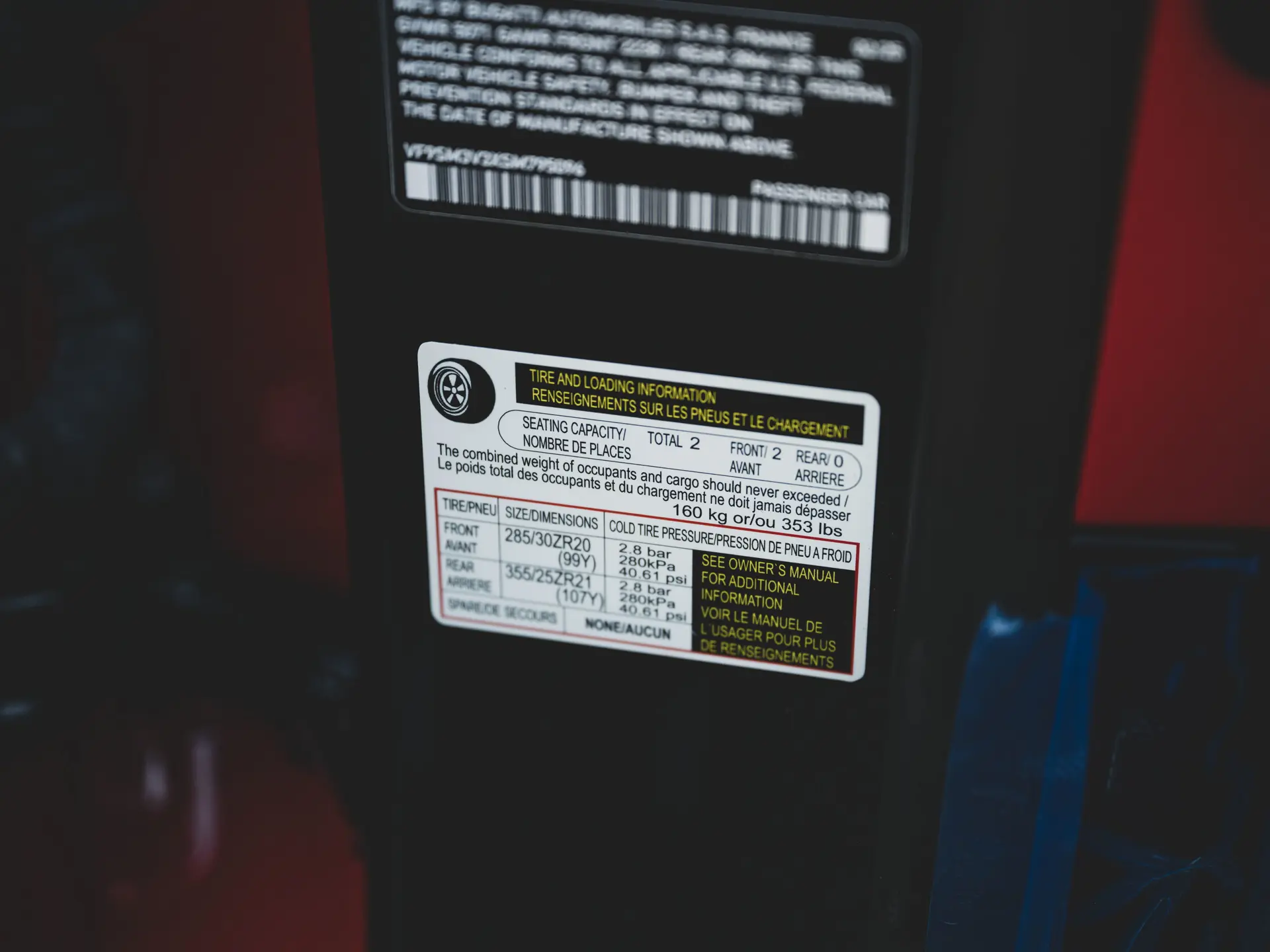
Bugatti built 99 Mistrals, priced at around €5 million each, and every one was spoken for before the car was shown in public. It is the last road-going Bugatti powered by the 8.0-litre quad-turbocharged W16, the engine that arrived with the Veyron in 2005 and has now been retired. One of those 99 cars, chassis VF9SM3V3XSM795096, is lot 226 at RM Sotheby's Monterey sale on Friday 14 August 2026, carrying an estimate of $7,500,000 to $9,500,000 and an odometer reading of 321 miles.
All 56 catalogue photographs of this Mistral
The lot, the numbers and the specification
RM Sotheby's estimates the car at $7,500,000 to $9,500,000, with indicative equivalents of €6,500,000 to €8,500,000, £5,500,000 to £7,000,000 and CHF 6,000,000 to 7,500,000. It is offered from The Driver's Philosophy Collection and is located in Monterey, California. The sale takes place on the Friday of Monterey Car Week.
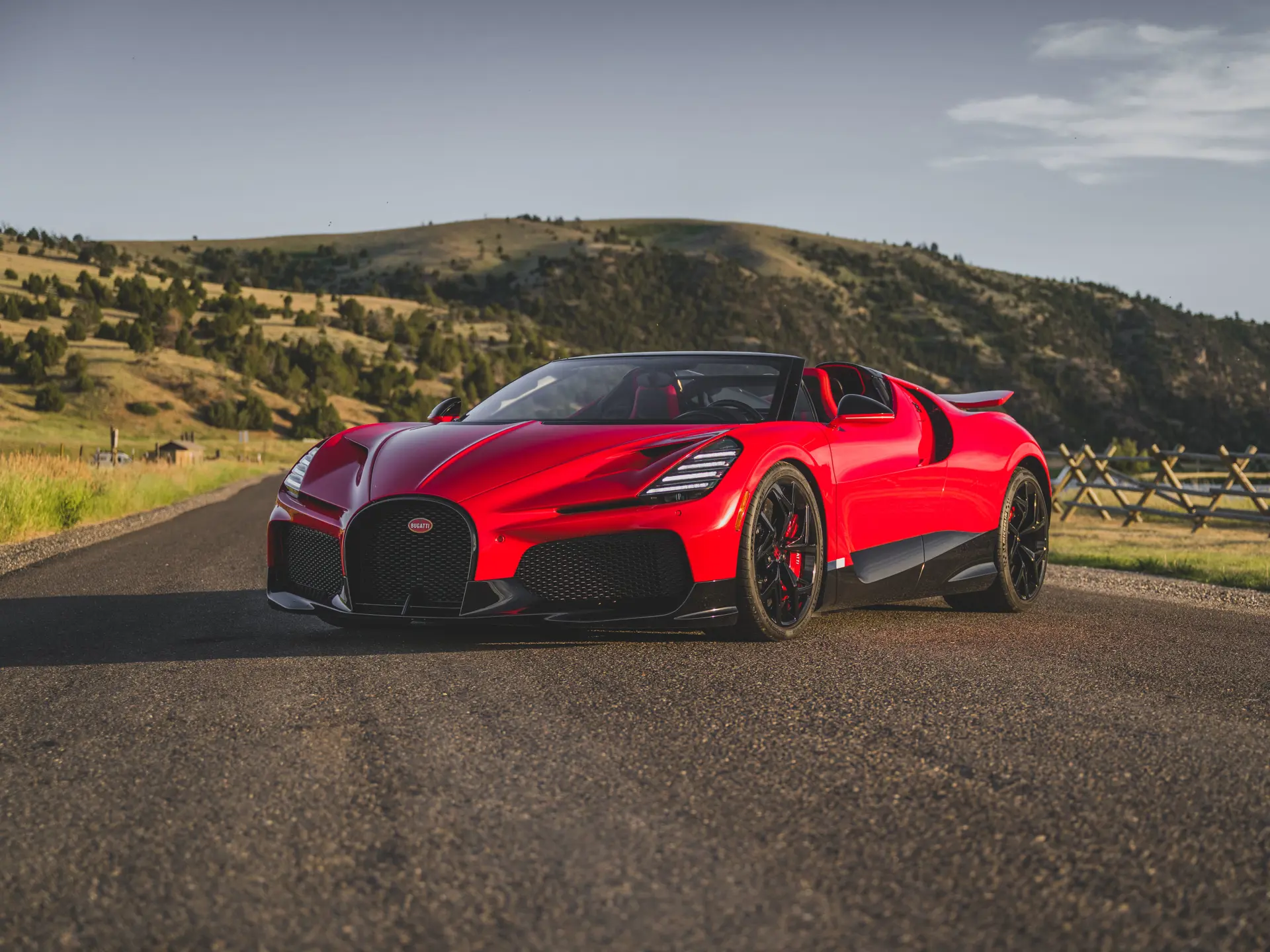
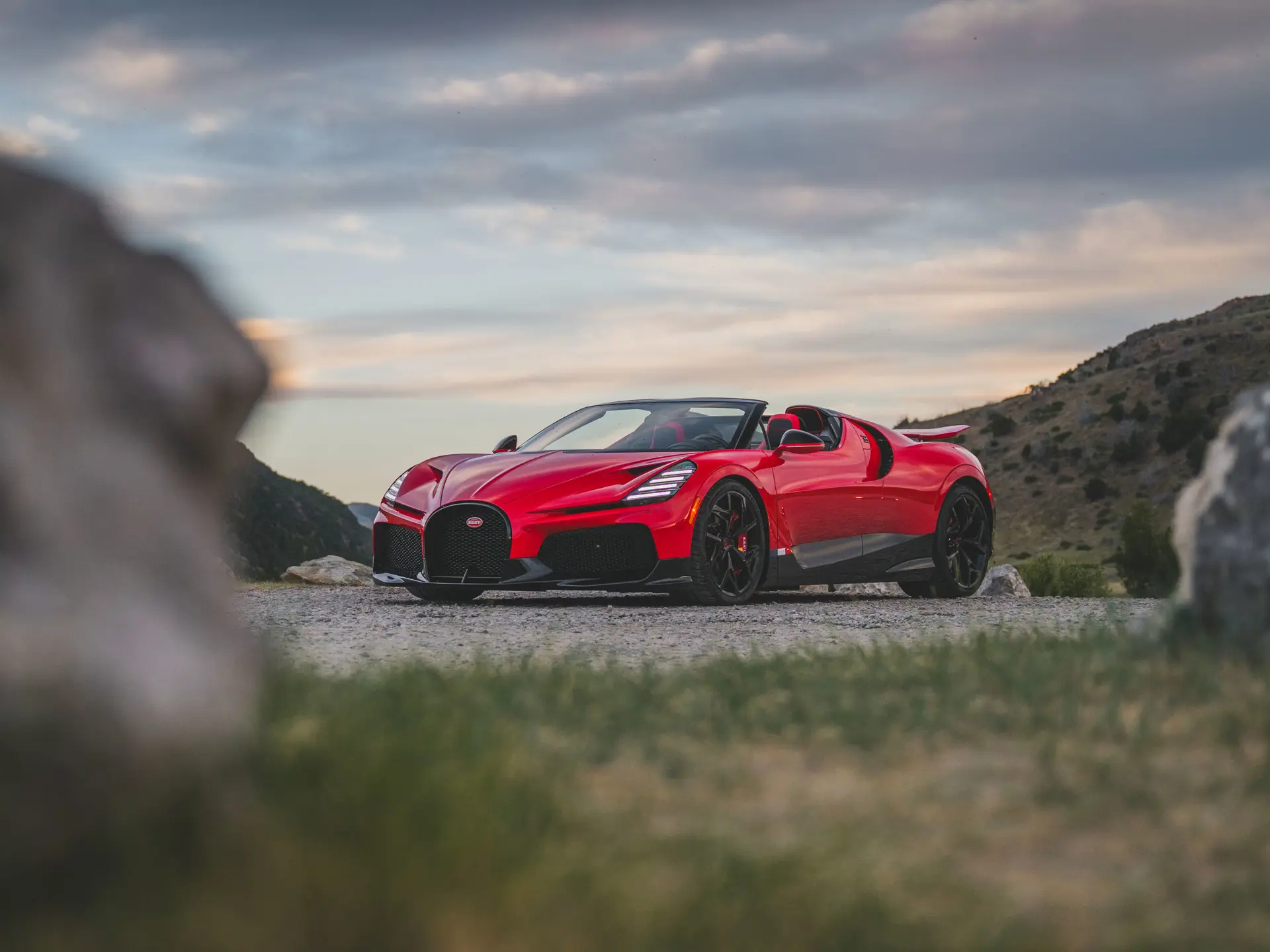
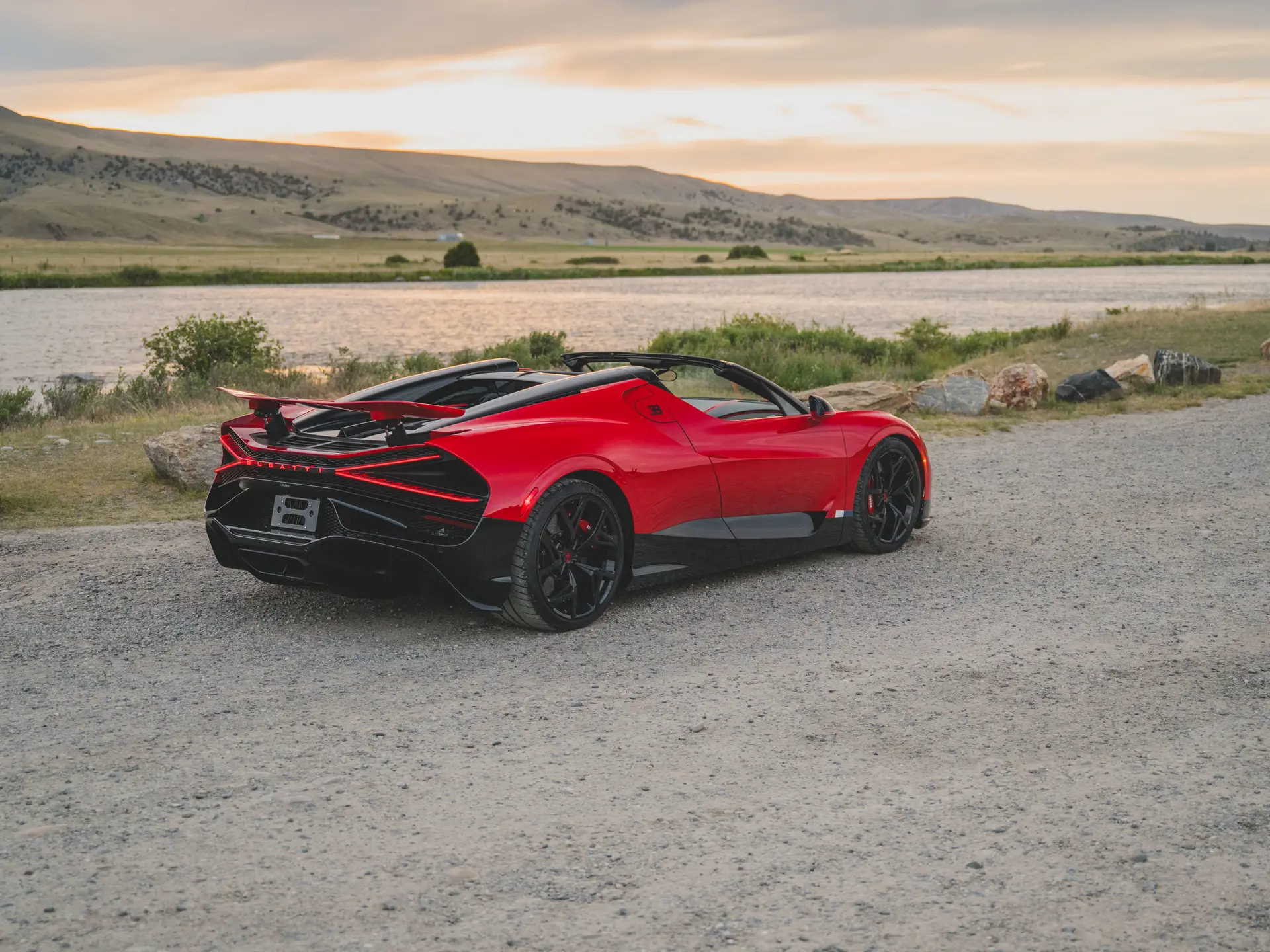
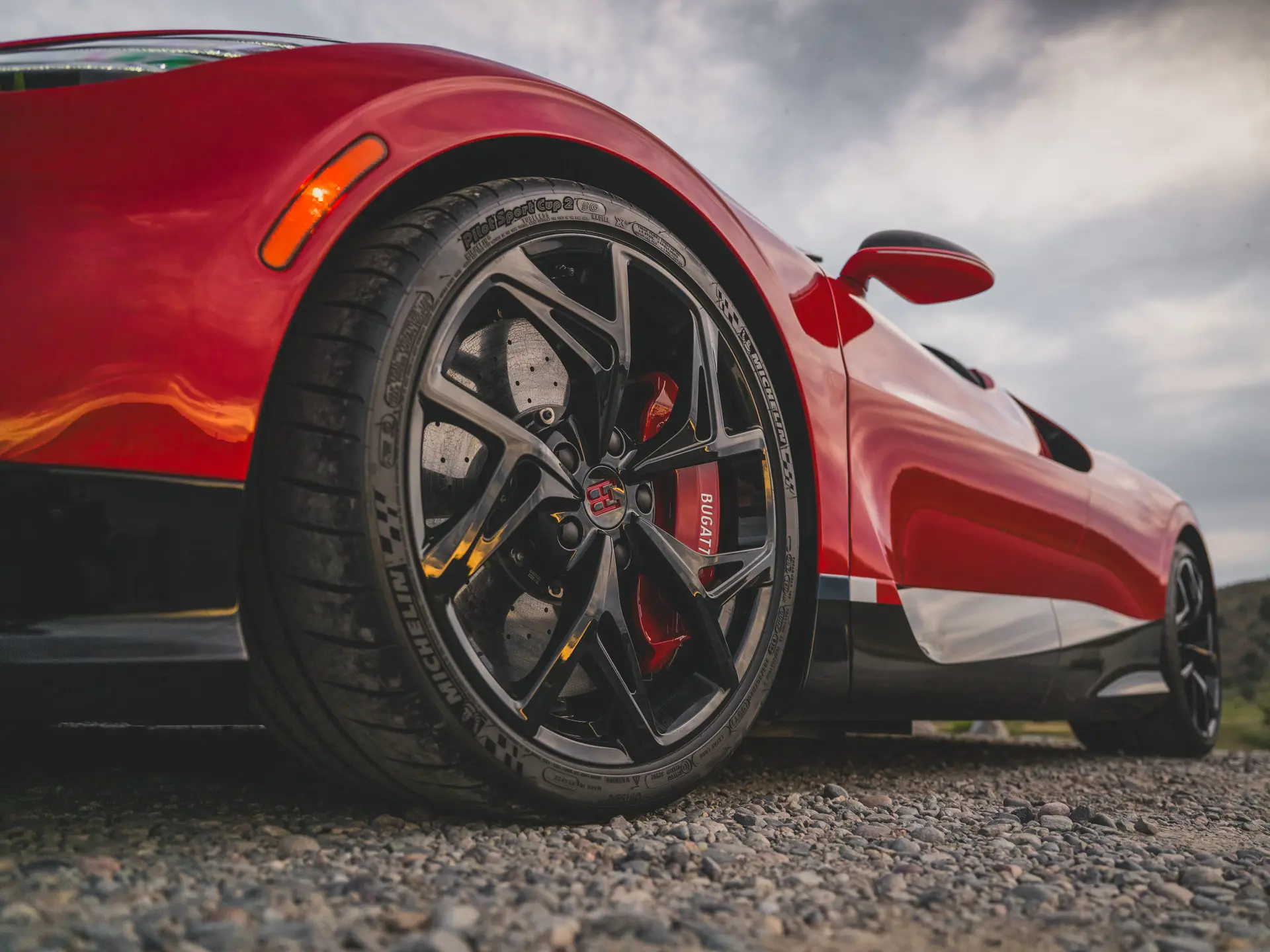
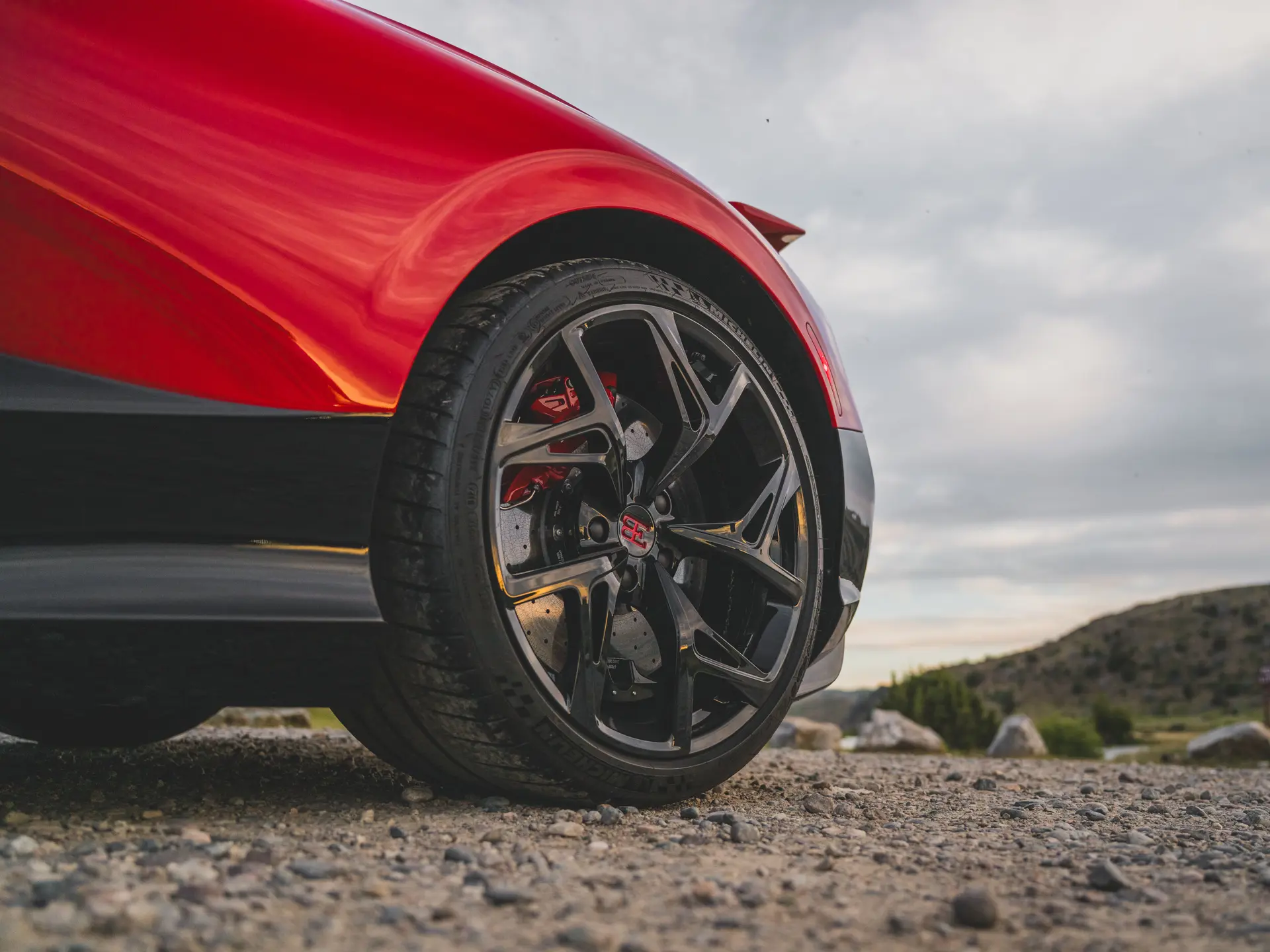
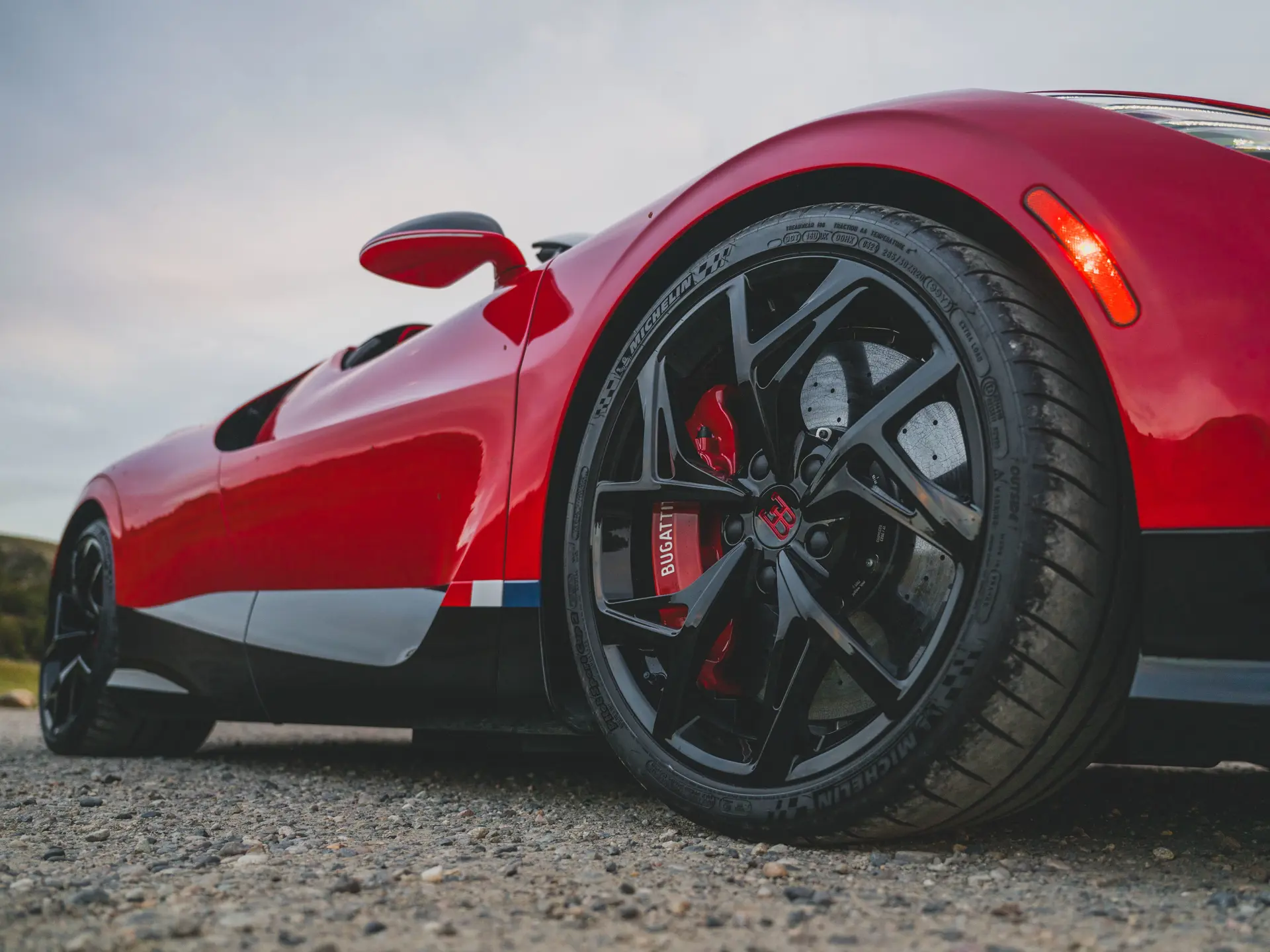
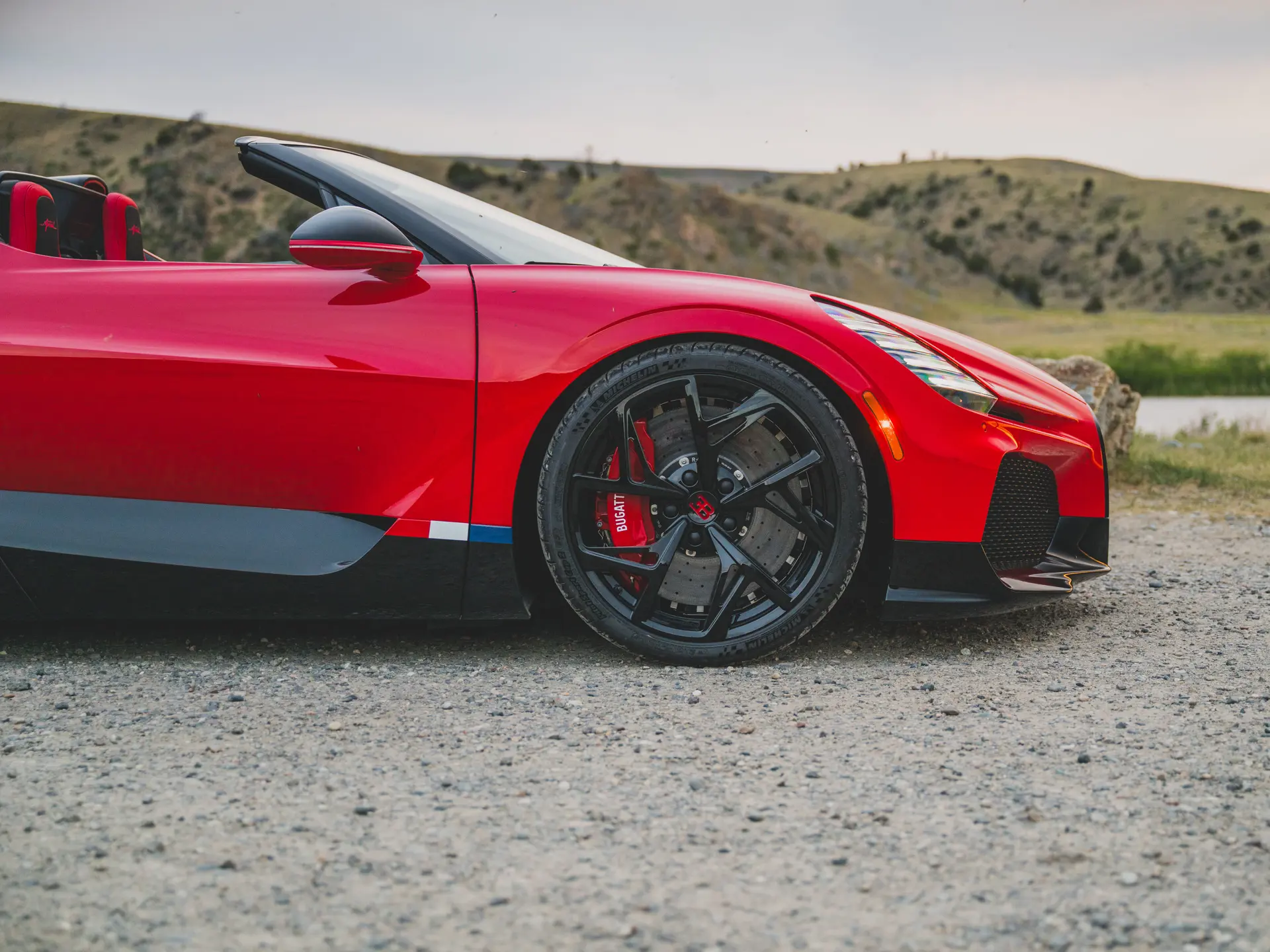
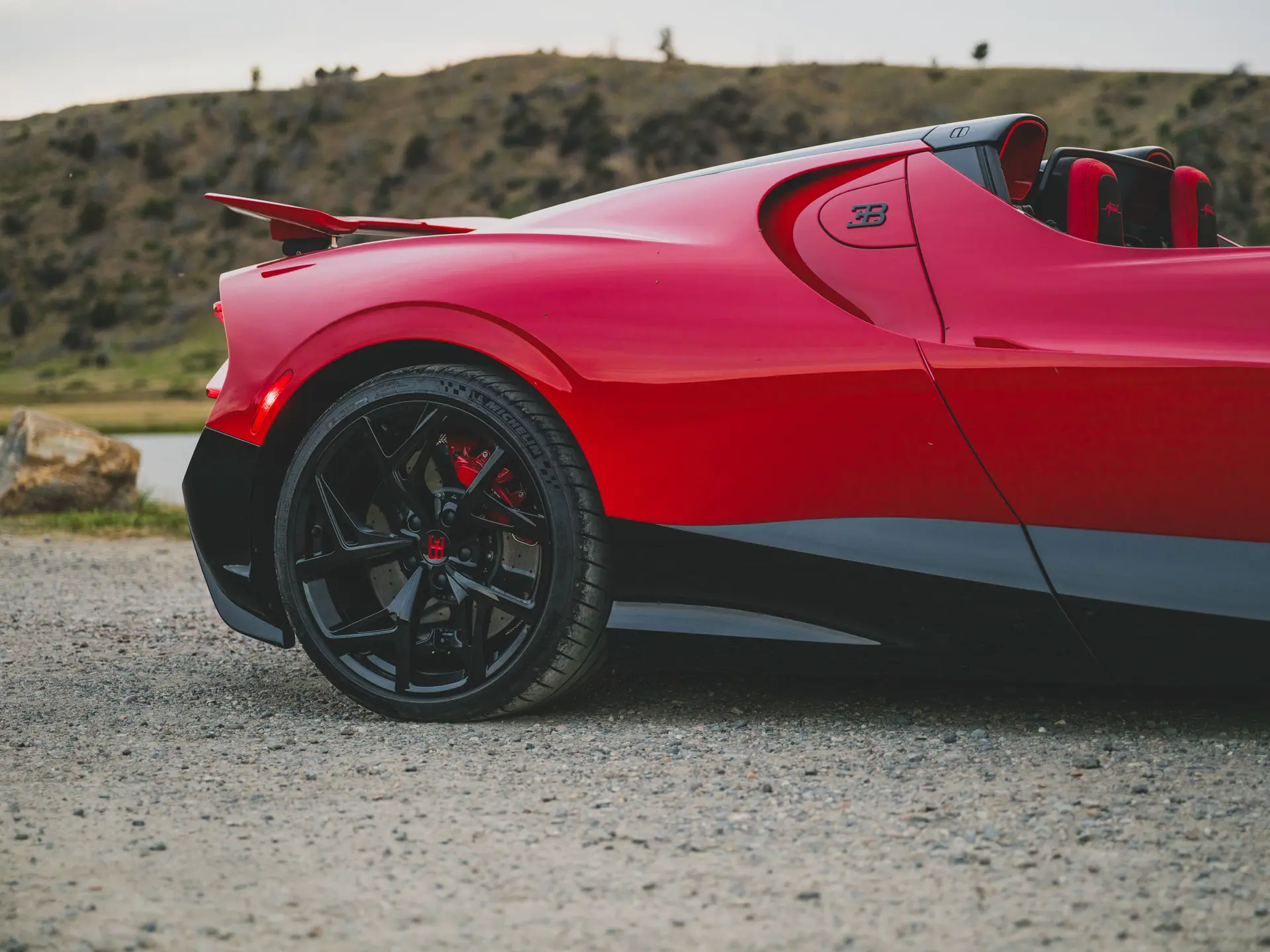
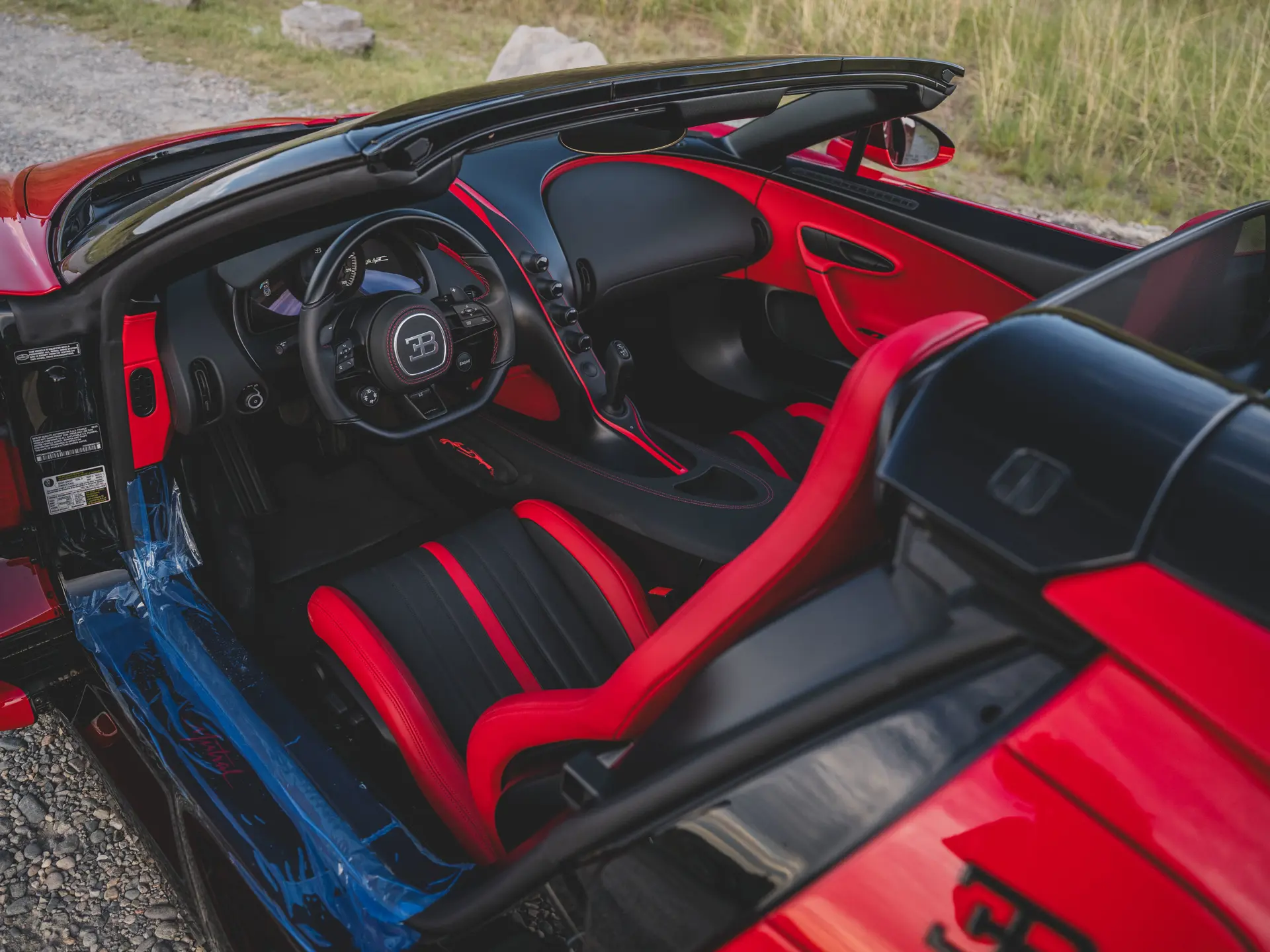
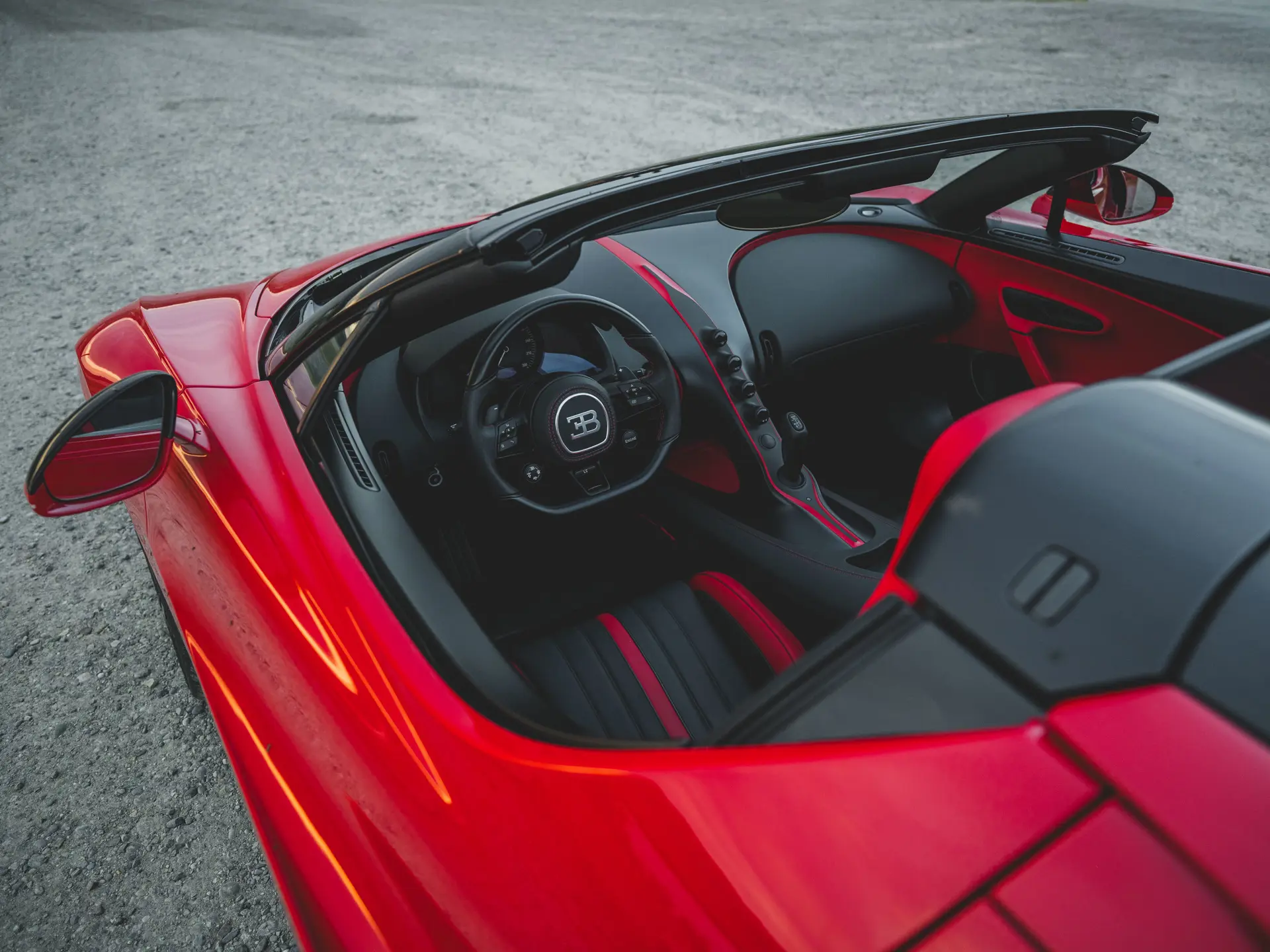
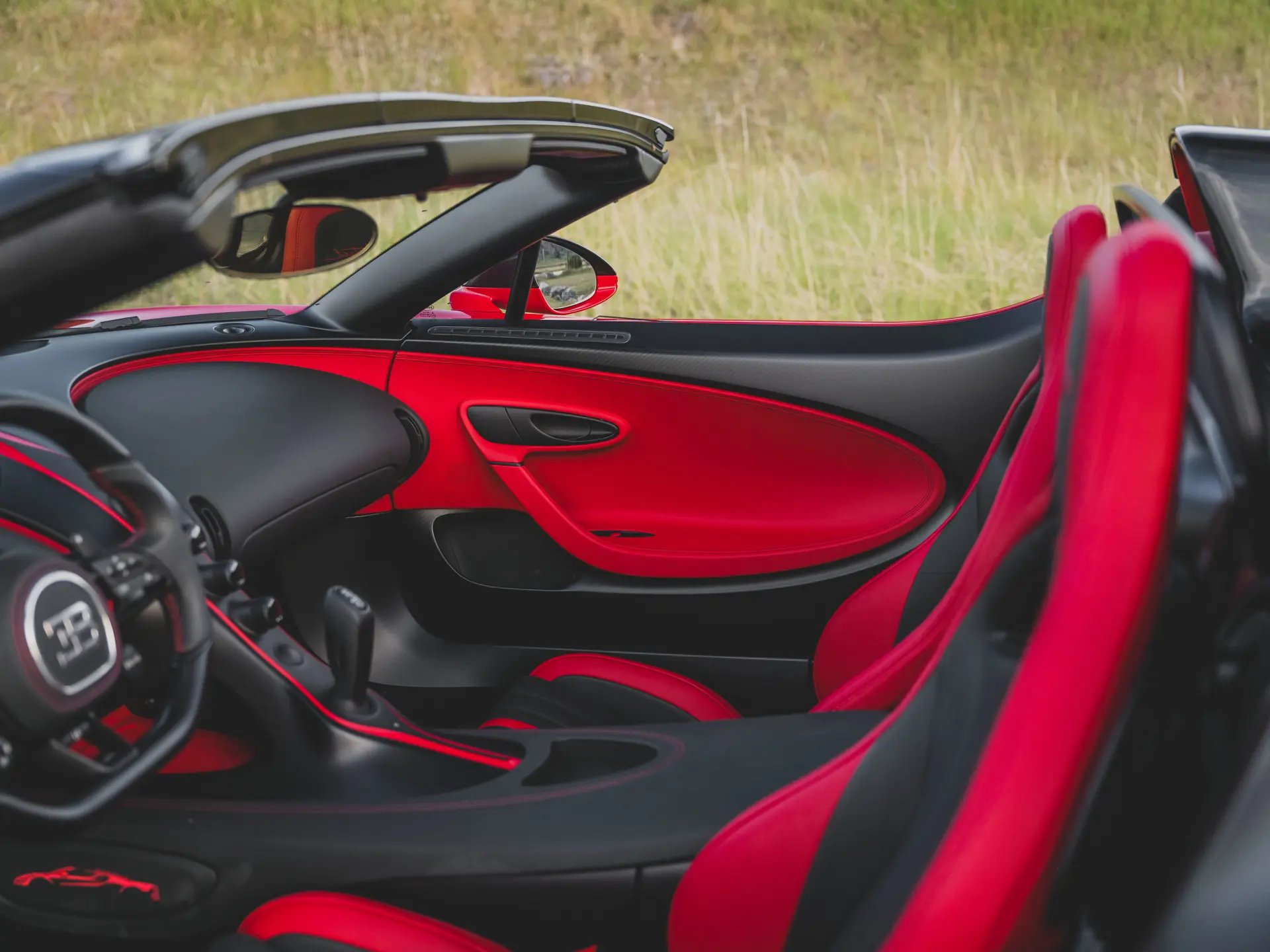
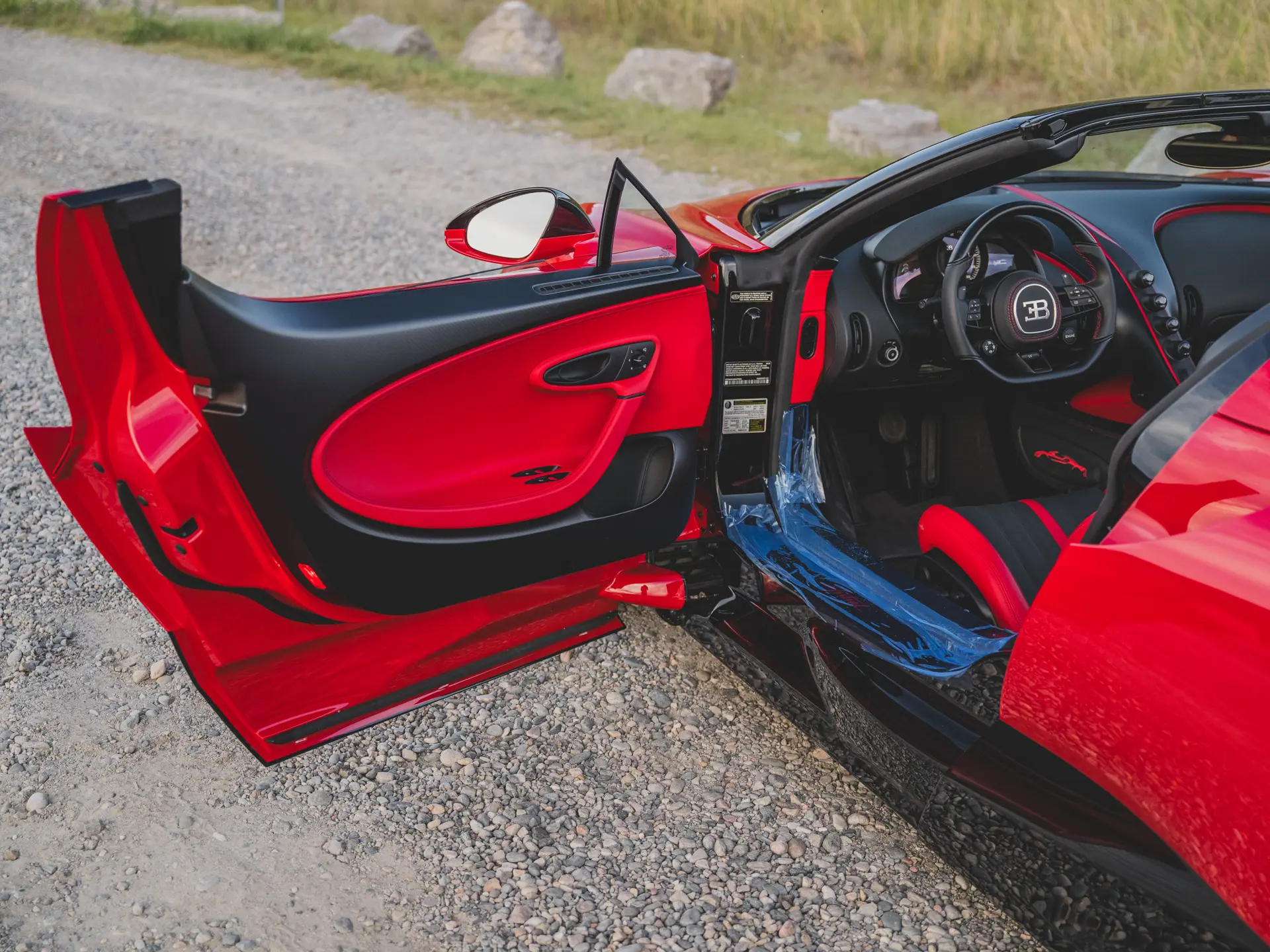
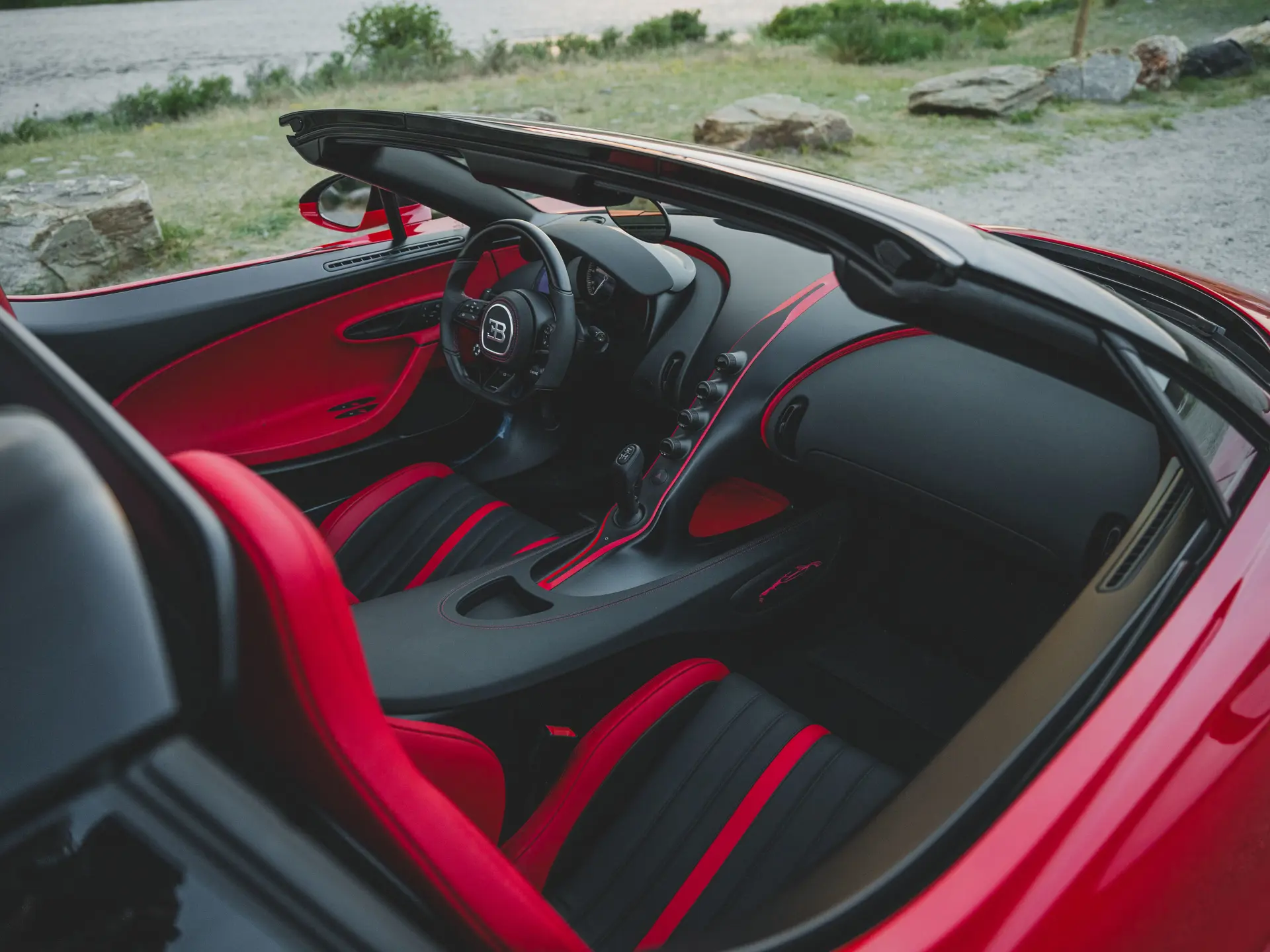
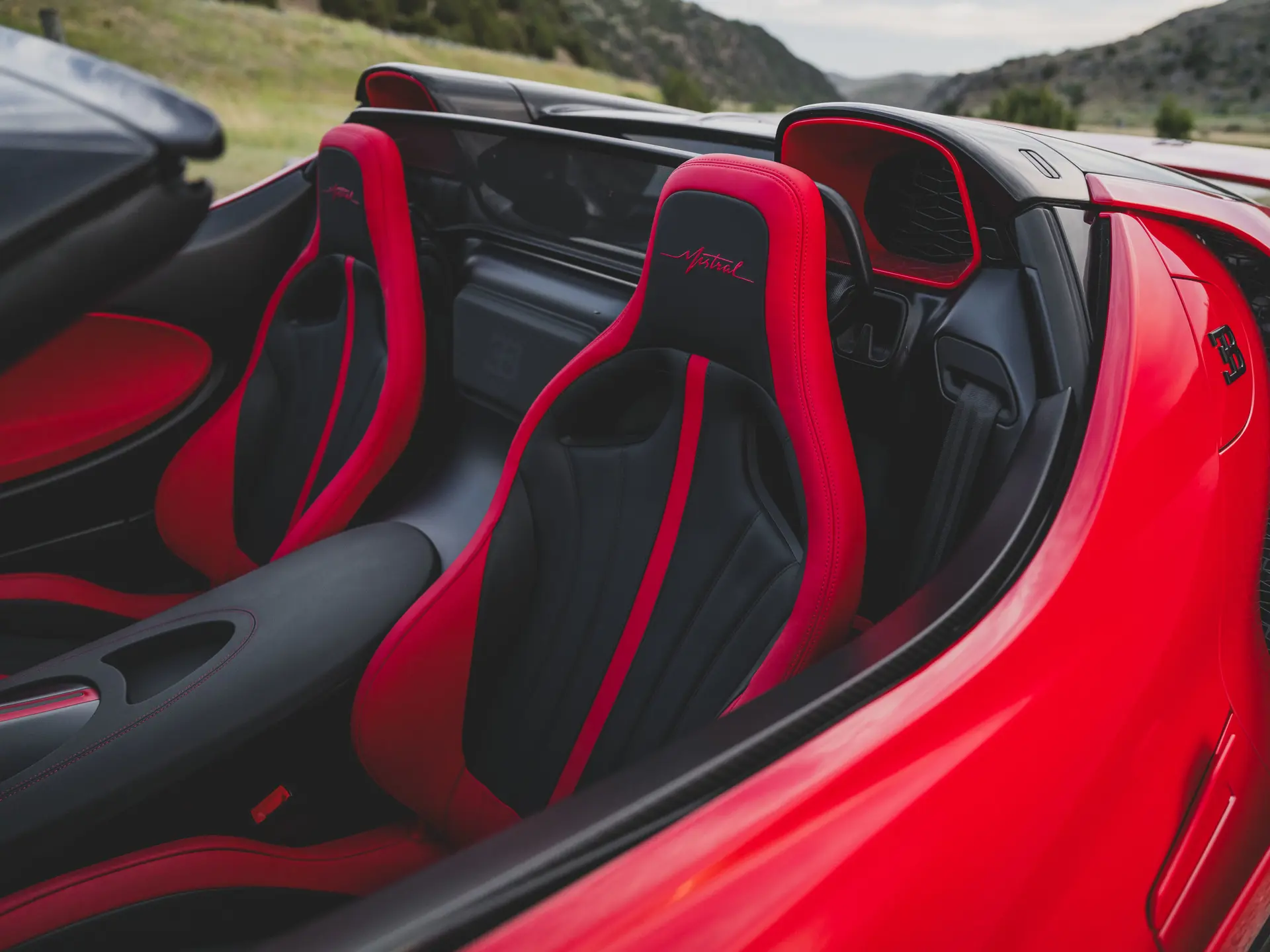
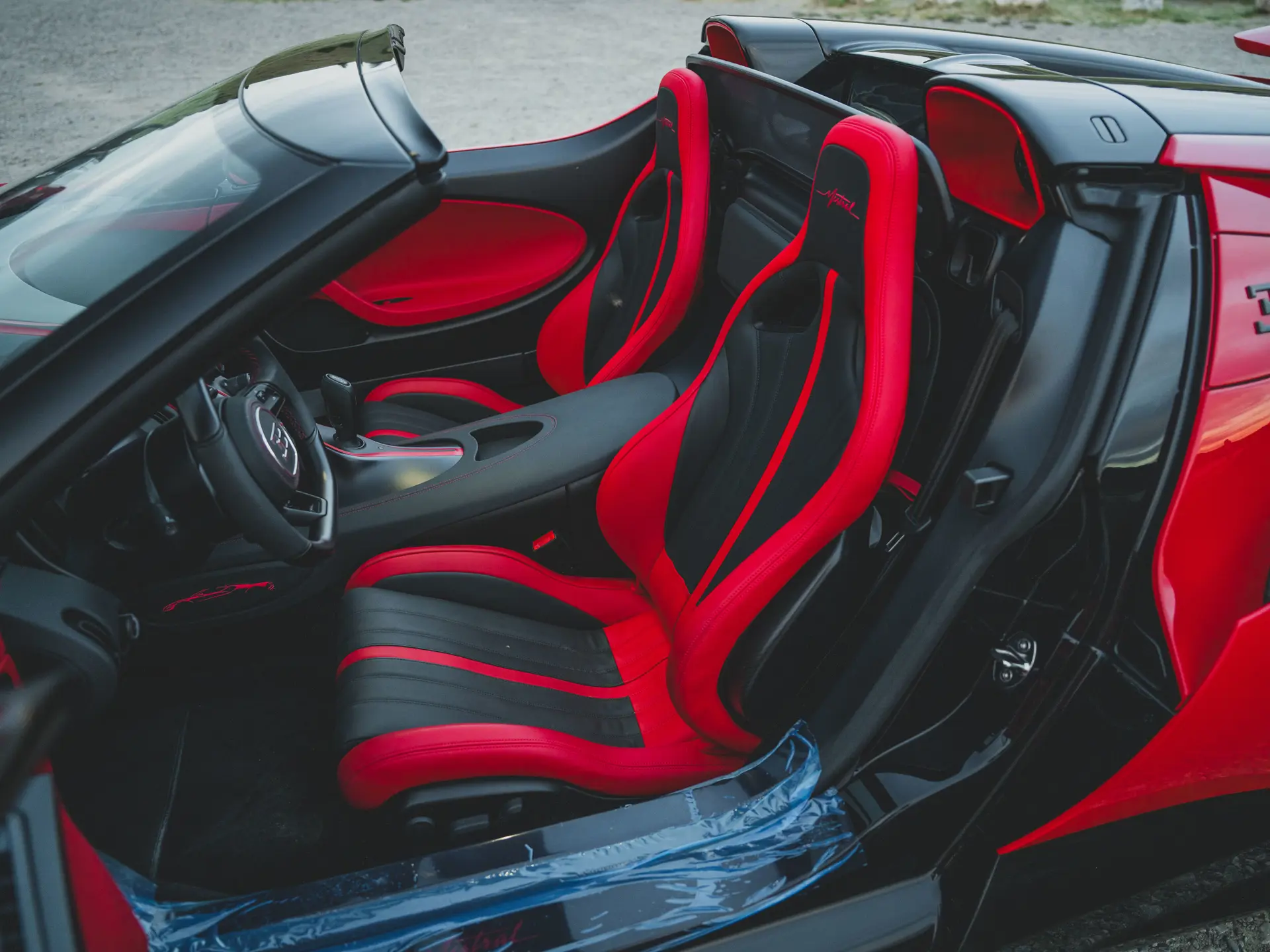
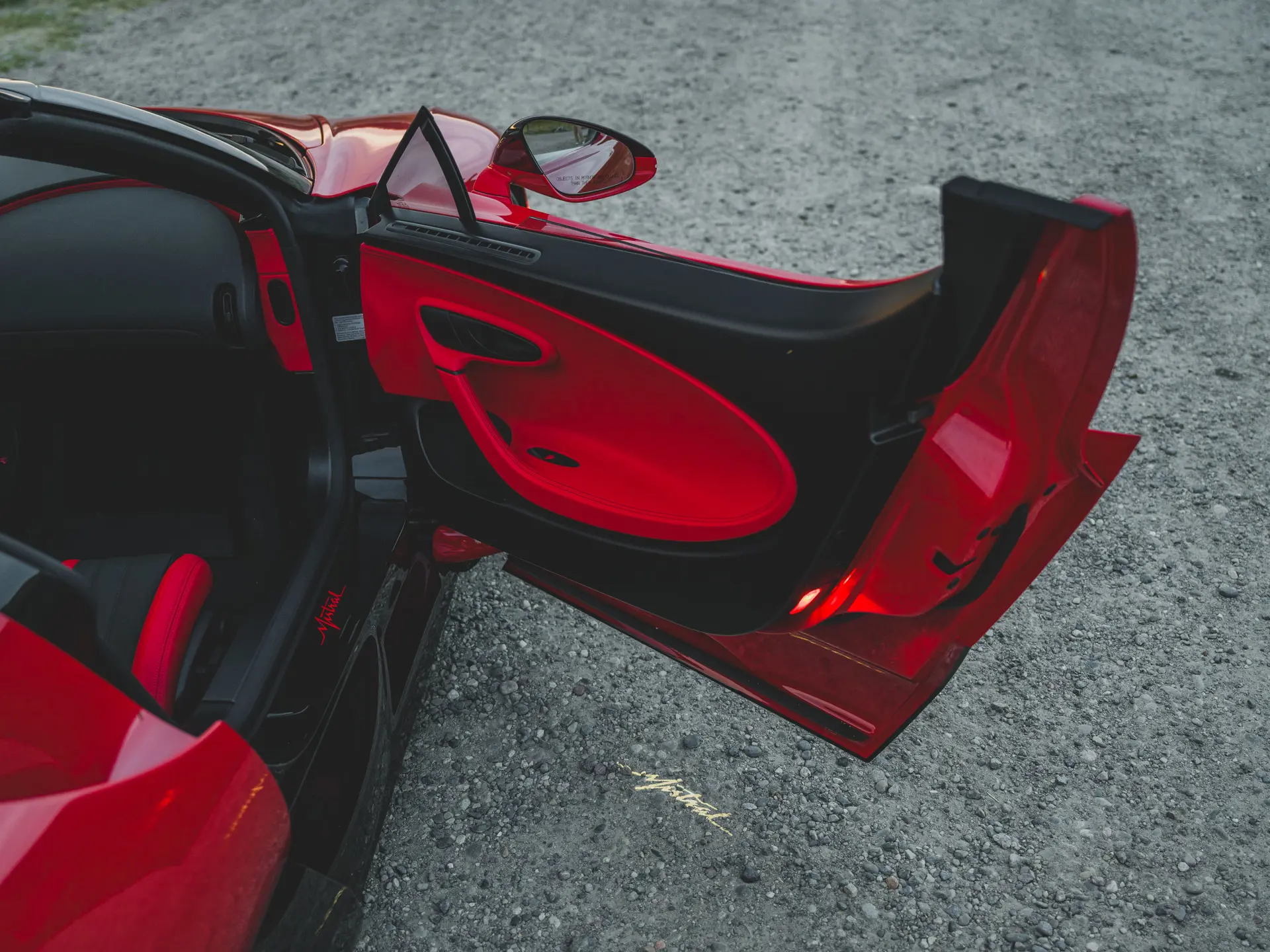
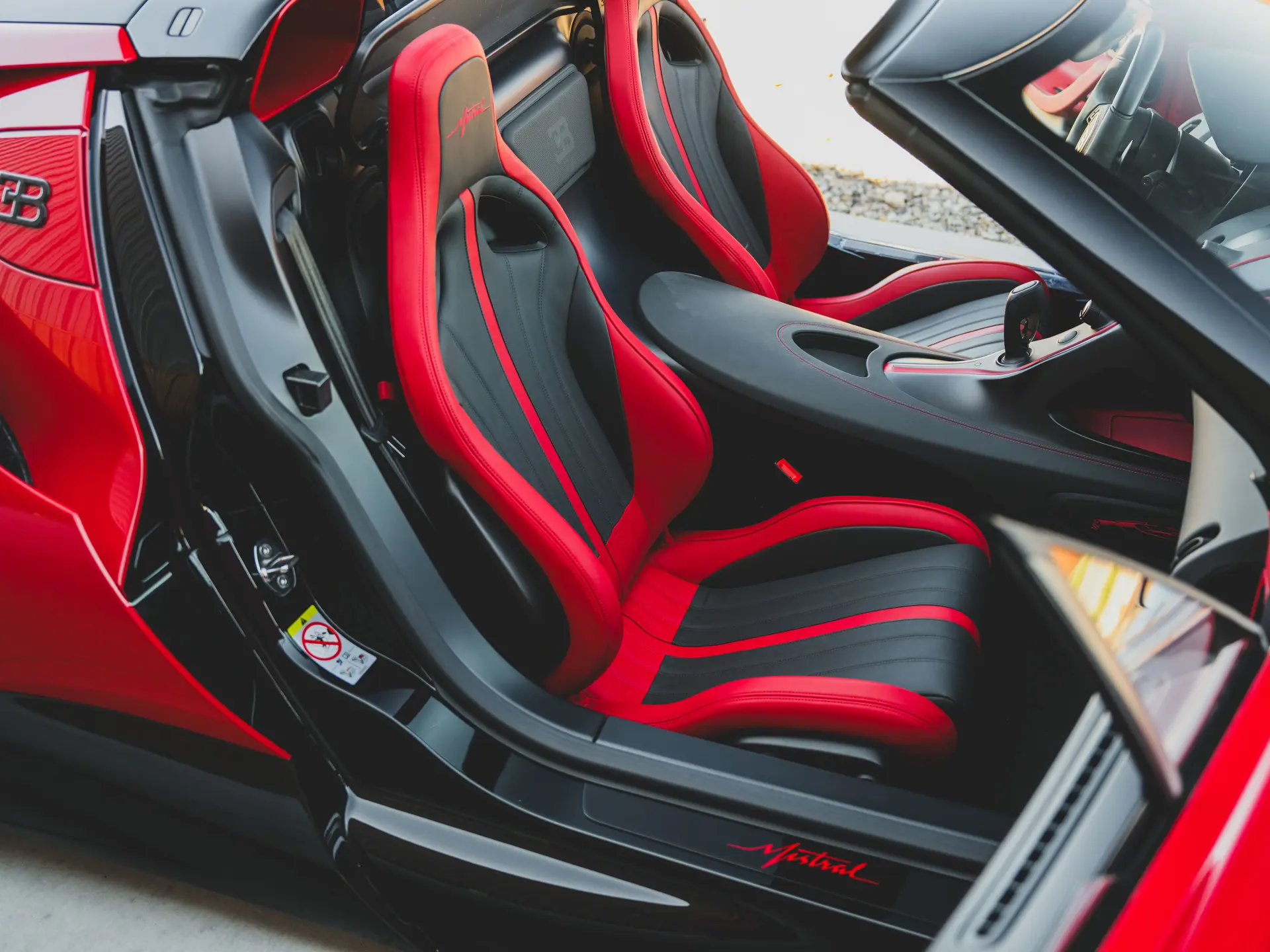
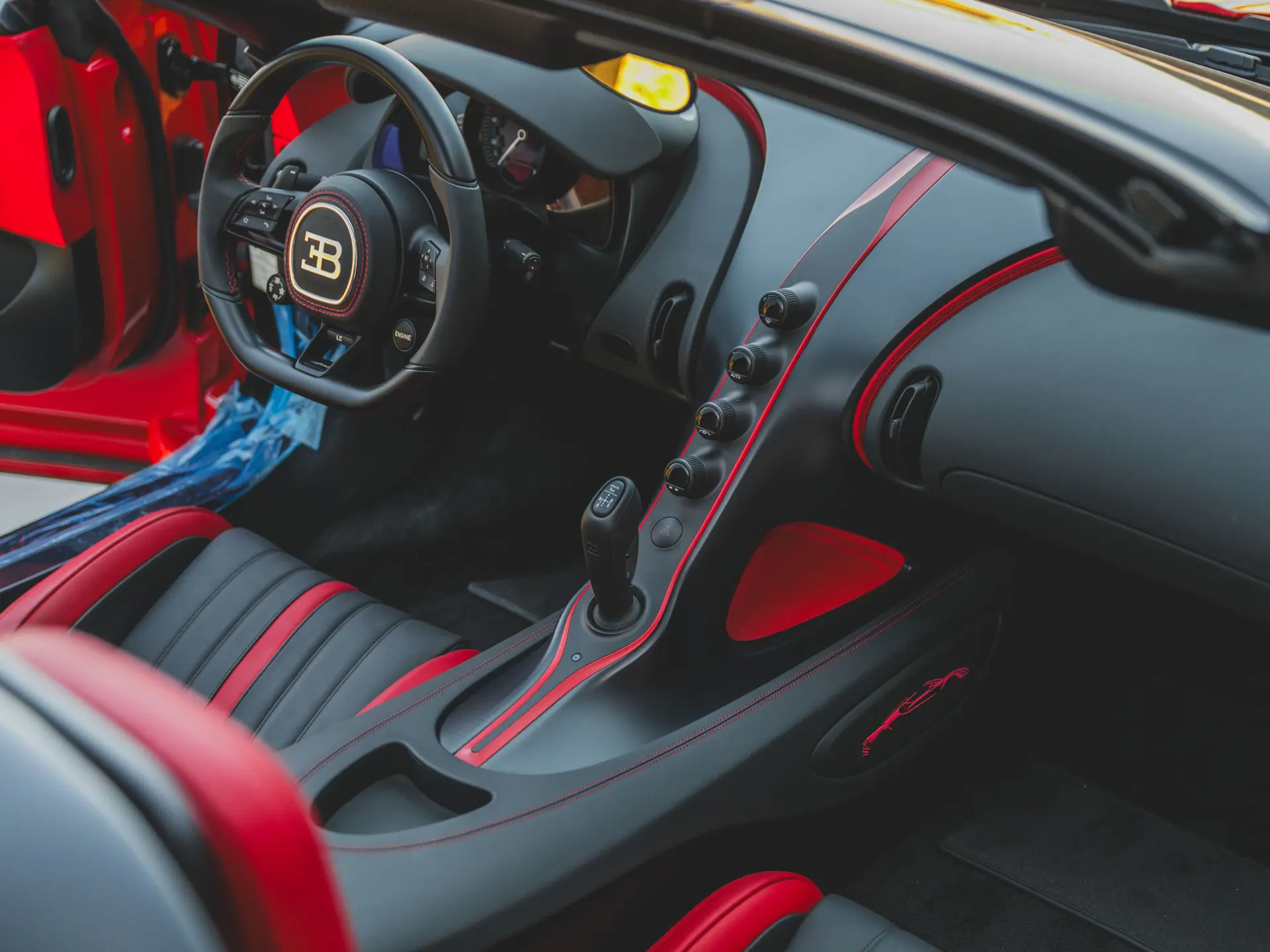
The car is finished in Italian Red over Nocturne, with an interior in Italian Red and Beluga Black leather. RM Sotheby's records approximately $325,000 in factory options and tailored finishes on top of the list price, single ownership from new, and 321 miles at the time of cataloguing. It is accompanied by a copy of the window sticker, the factory car cover, a battery tender, the tool kit and the owner's manuals.
Set against a list price of roughly €5 million, the low estimate is close to par once currency and options are taken into account, and the high estimate asks for a premium. That is a more sober position than some limited-run hypercars carry into the room, and it reflects the fact that all 99 cars exist and can, in principle, come to market.
282 mph, and what the record actually covers
The Mistral's headline claim is that it is the fastest open-top production car ever built. The figure behind it is 453.91 km/h, or 282 mph. RM Sotheby's cites a recorded top speed of 282.05 mph and dates the run to 2023; Wikipedia dates the record to November 2024. Both agree on the number and on the claim; they differ on the year, and we have not been able to reconcile that from the sources permitted here, so we report both.
The distinction that matters more for a buyer is between the record car and this car. Bugatti quotes a standard top speed of 420 km/h for the Mistral, which is where a customer car is limited. Record attempts of this kind are run on a dedicated high-speed facility, on specific tyres, with the car prepared for the purpose. A 321-mile road car in a Monterey consignment is not a 453 km/h car in the sense that it would do that tomorrow.
That is not a criticism of the claim. It is the normal relationship between a manufacturer record and a series car, and it is worth stating plainly because the number is doing a lot of the marketing work here.
The last W16, in detail
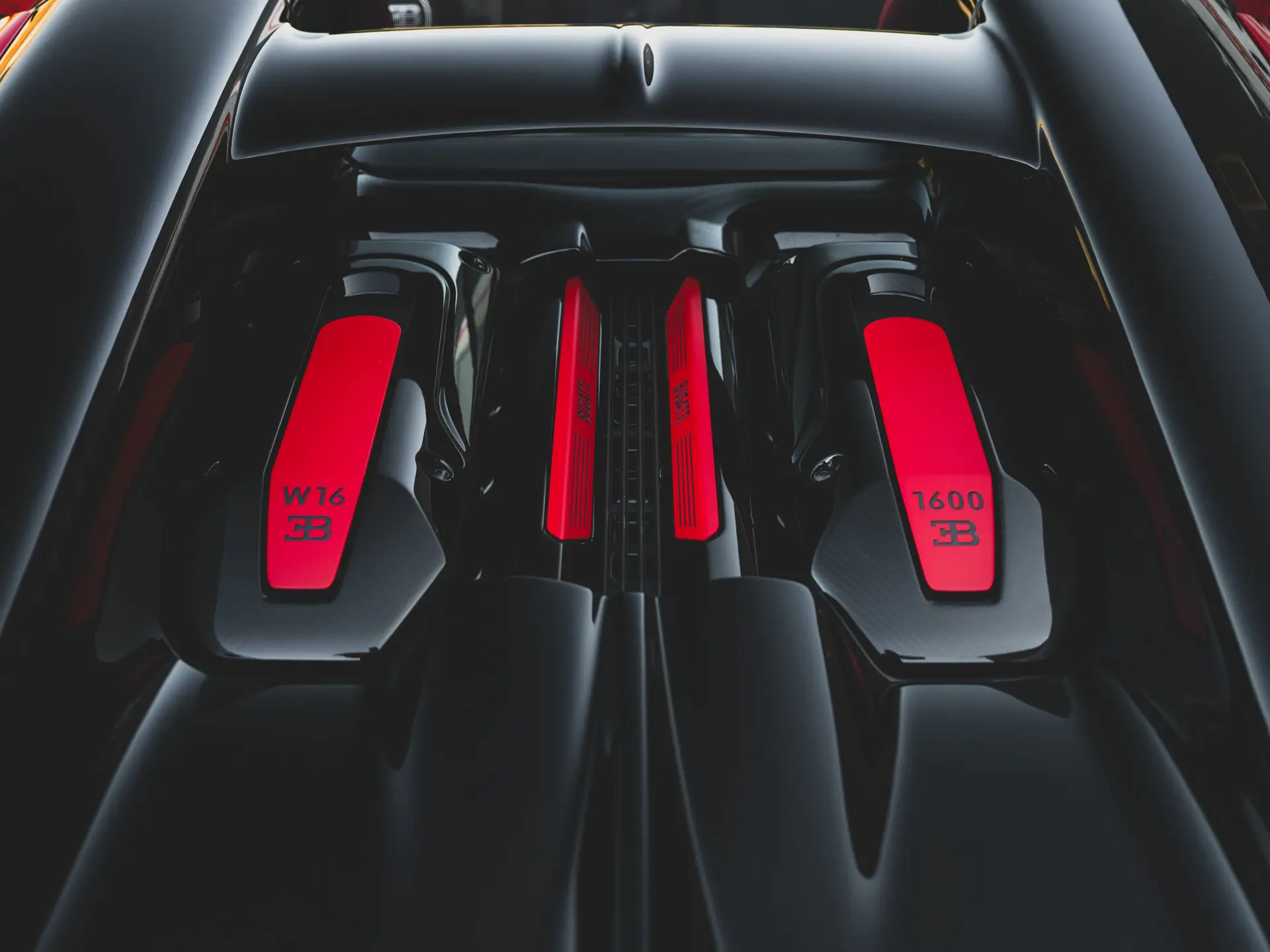
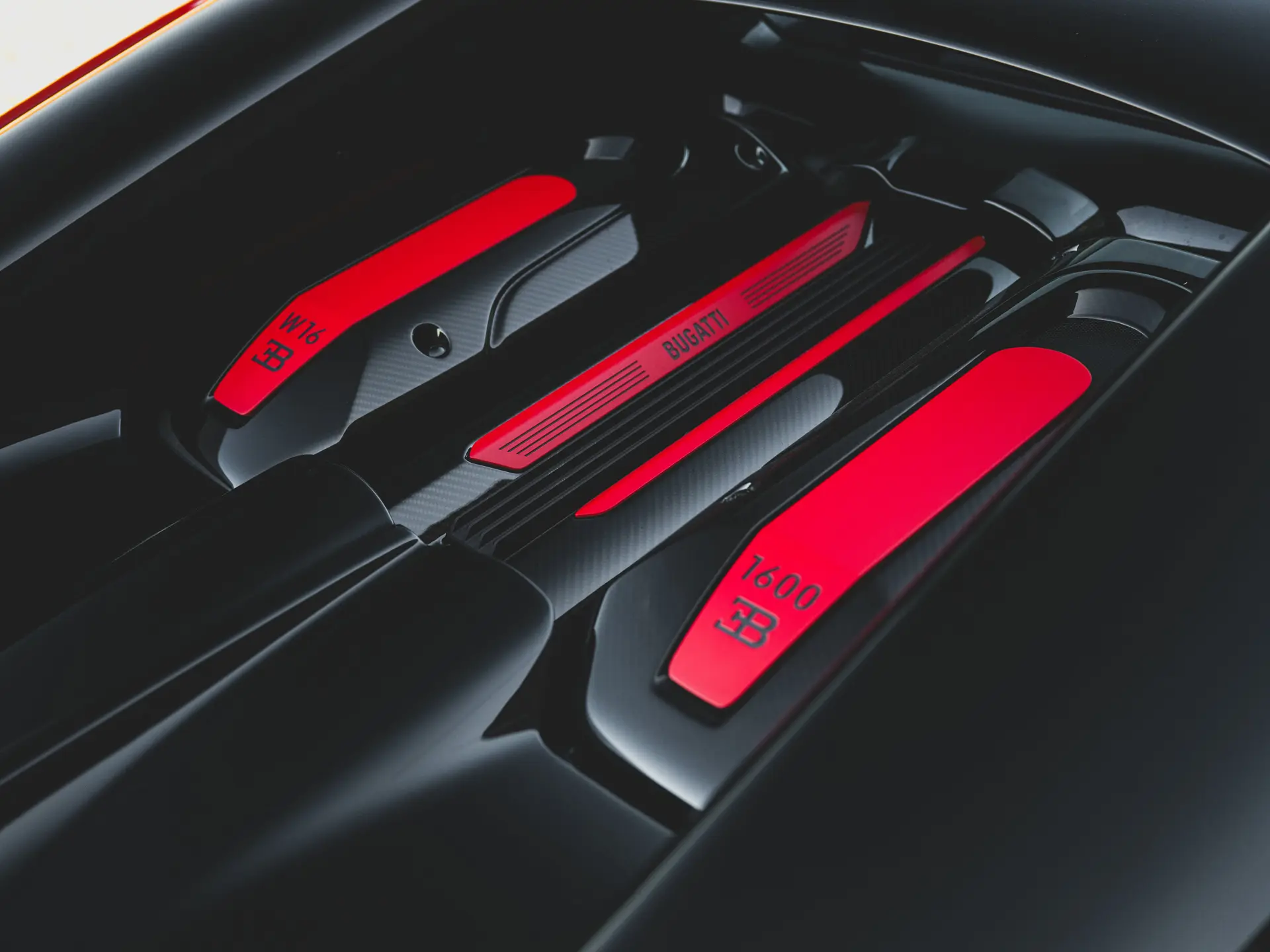
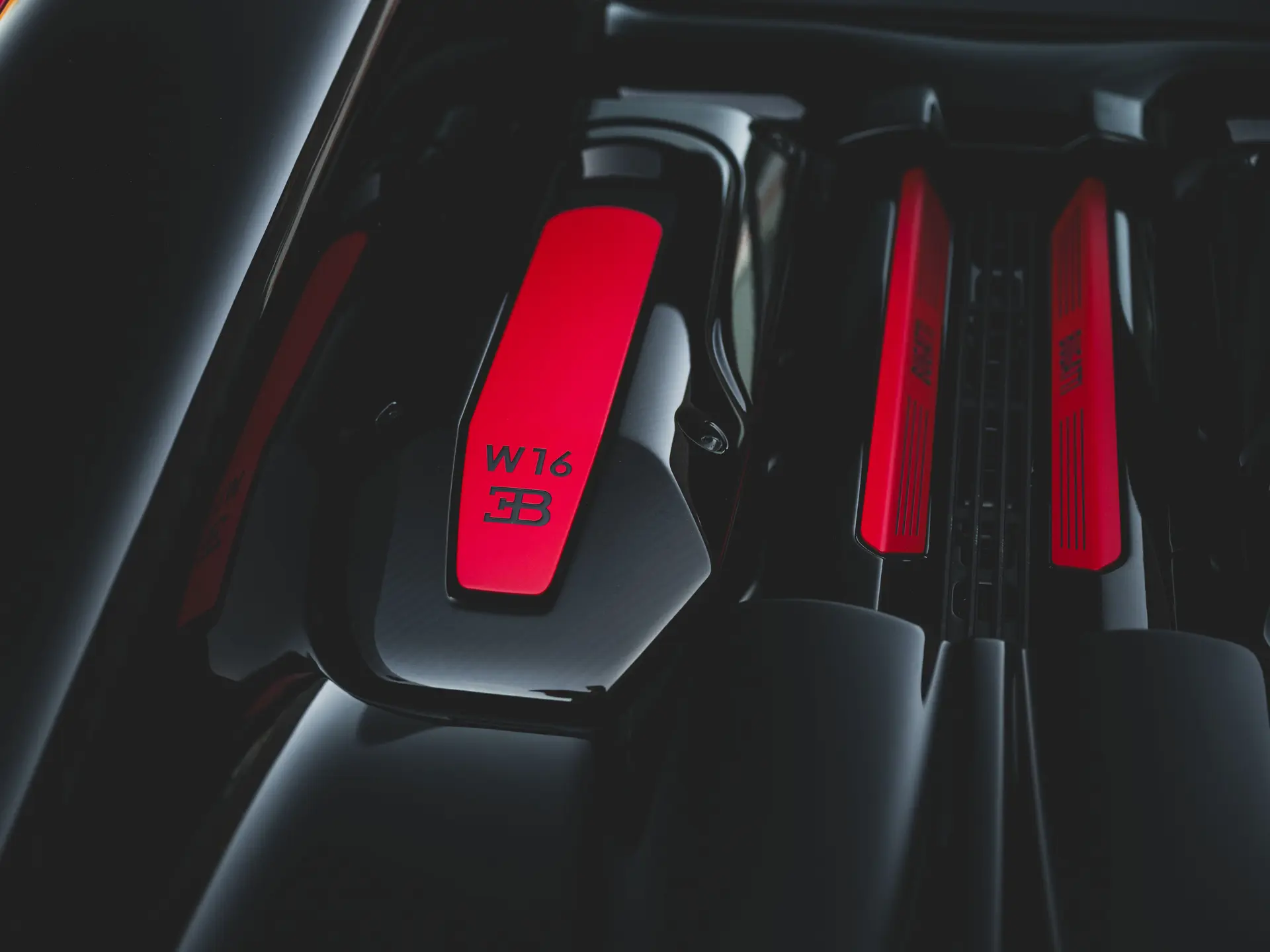
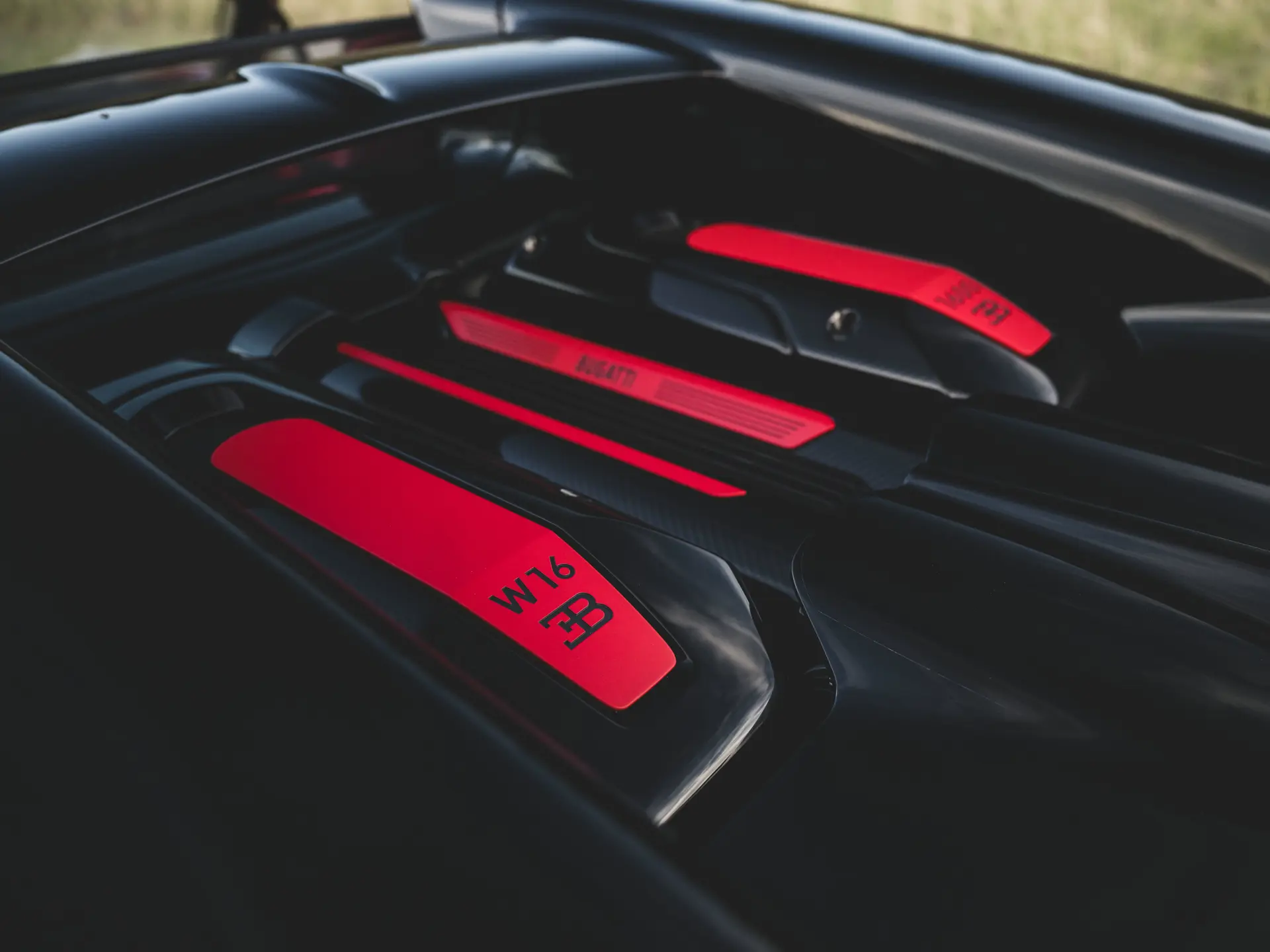
The engine is the 7,993 cc quad-turbocharged W16, quoted at 1,600 PS, which converts to 1,578 hp or 1,177 kW. Torque is 1,600 Nm, held from 2,000 to 6,000 rpm on Bugatti's published figures. RM Sotheby's describes the plateau as running from 2,250 to 7,000 rpm on this specification. Drive reaches all four wheels through a seven-speed dual-clutch transmission.
Bugatti quotes 0 to 100 km/h in 2.4 seconds. Kerb weight is 1,977 kg, and the car measures 4,544 mm long, 2,162 mm wide and 1,212 mm high on a 2,711 mm wheelbase. The width is worth noticing: at 2,162 mm the Mistral is significantly wider across the body than the Chiron coupé it is loosely derived from.
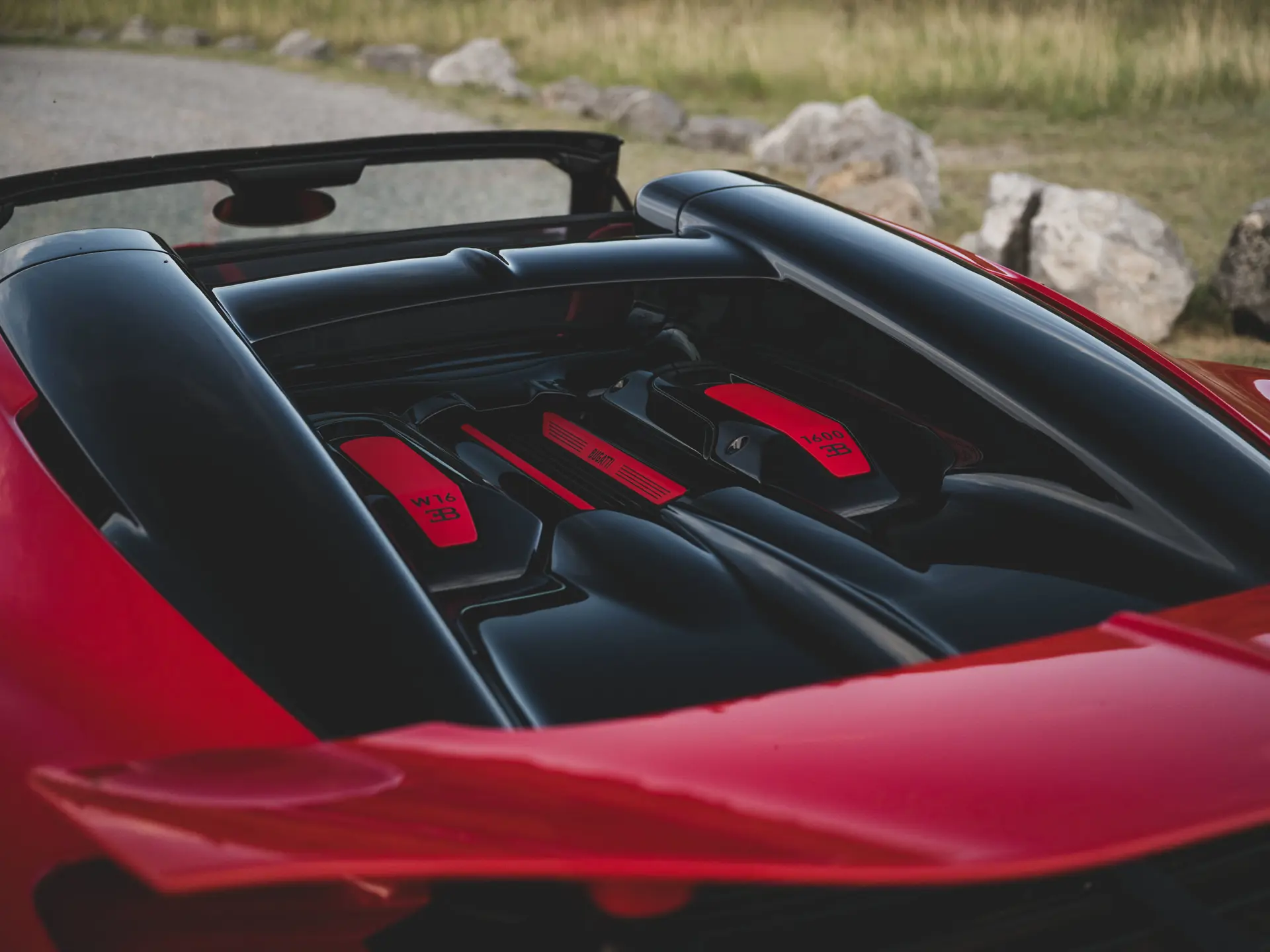
The W16 layout, sixteen cylinders in two banks of eight arranged in a W with four turbochargers, is not coming back. Bugatti has moved to a naturally aspirated V16 with electric assistance for the Tourbillon. That makes every one of the 99 Mistrals a closing statement rather than a variant, which is the argument the market is being asked to price.
A roadster with no roof at all
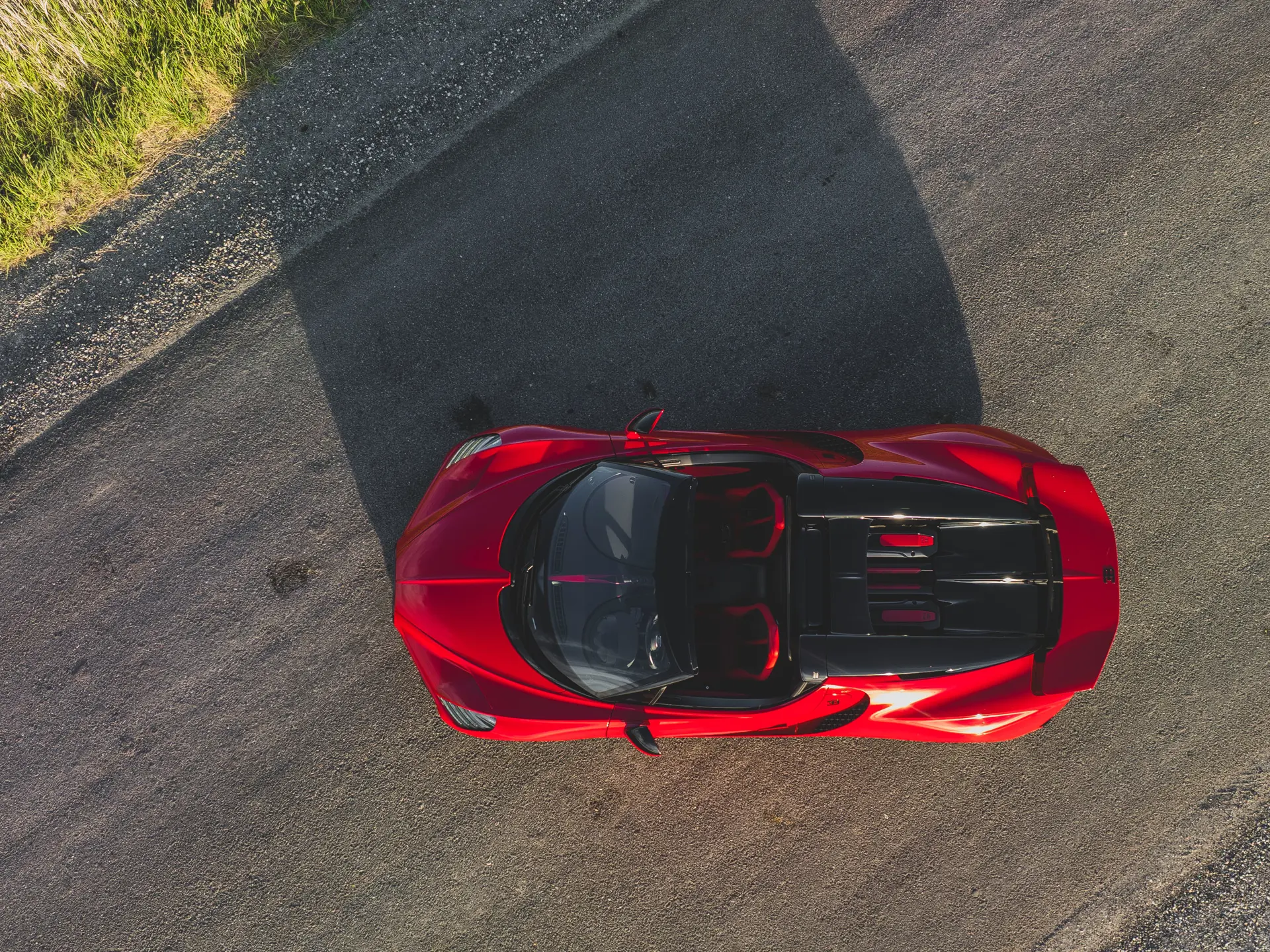
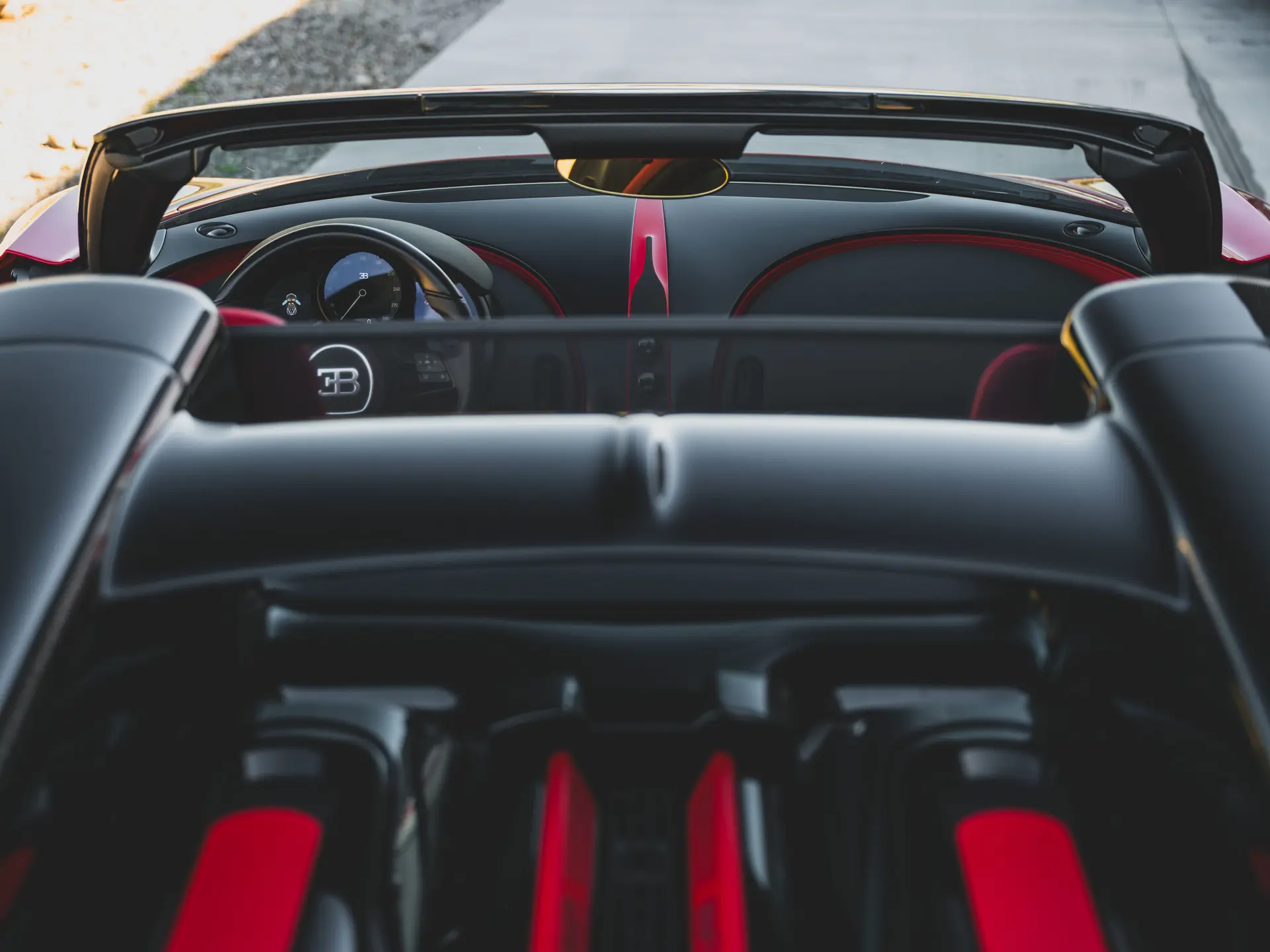
The Mistral is not a convertible in the ordinary sense. There is no folding mechanism and no powered roof. Bugatti supplies a carbon-fibre cover for stationary emergency use and nothing else. The car was designed from the start to be open, which is why its proportions do not read as a coupé with the top cut off.
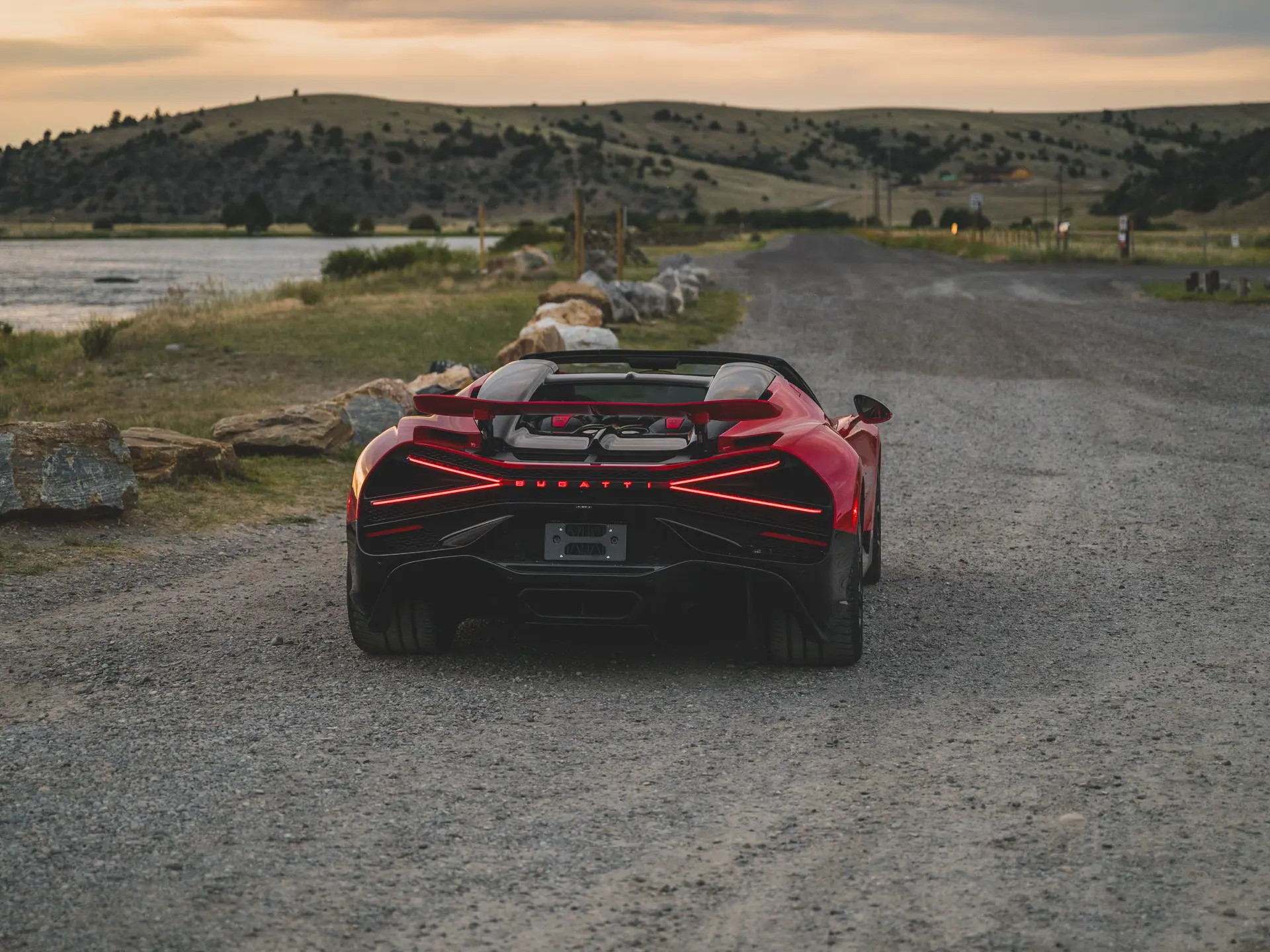
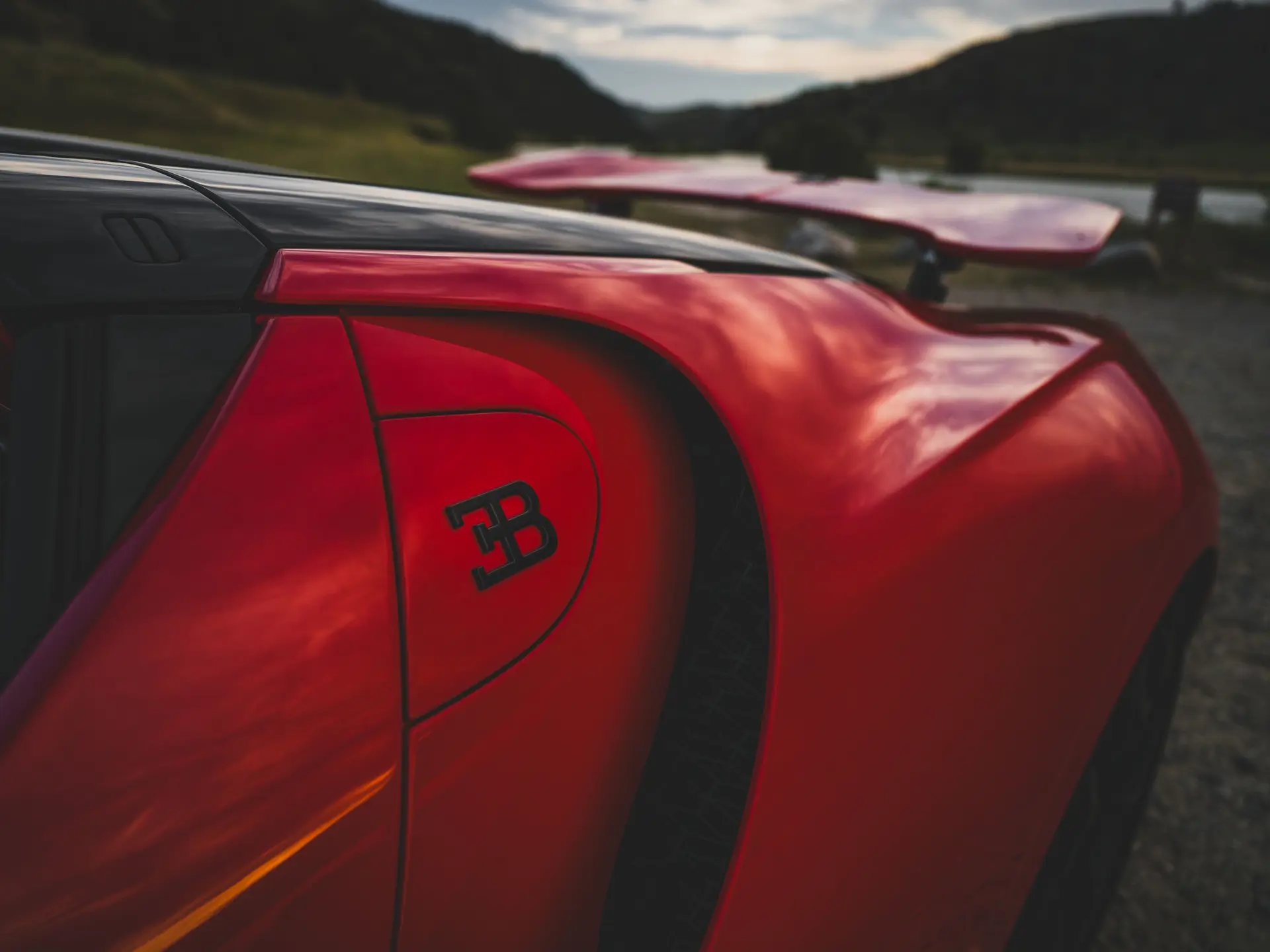
The most functional piece of design sits directly behind the occupants: sculptural intakes mounted at roof level that feed air to the W16. On the Chiron that air is drawn in through the flanks. Here it passes over the driver's shoulders, which changes both the sound and the shape of the car.
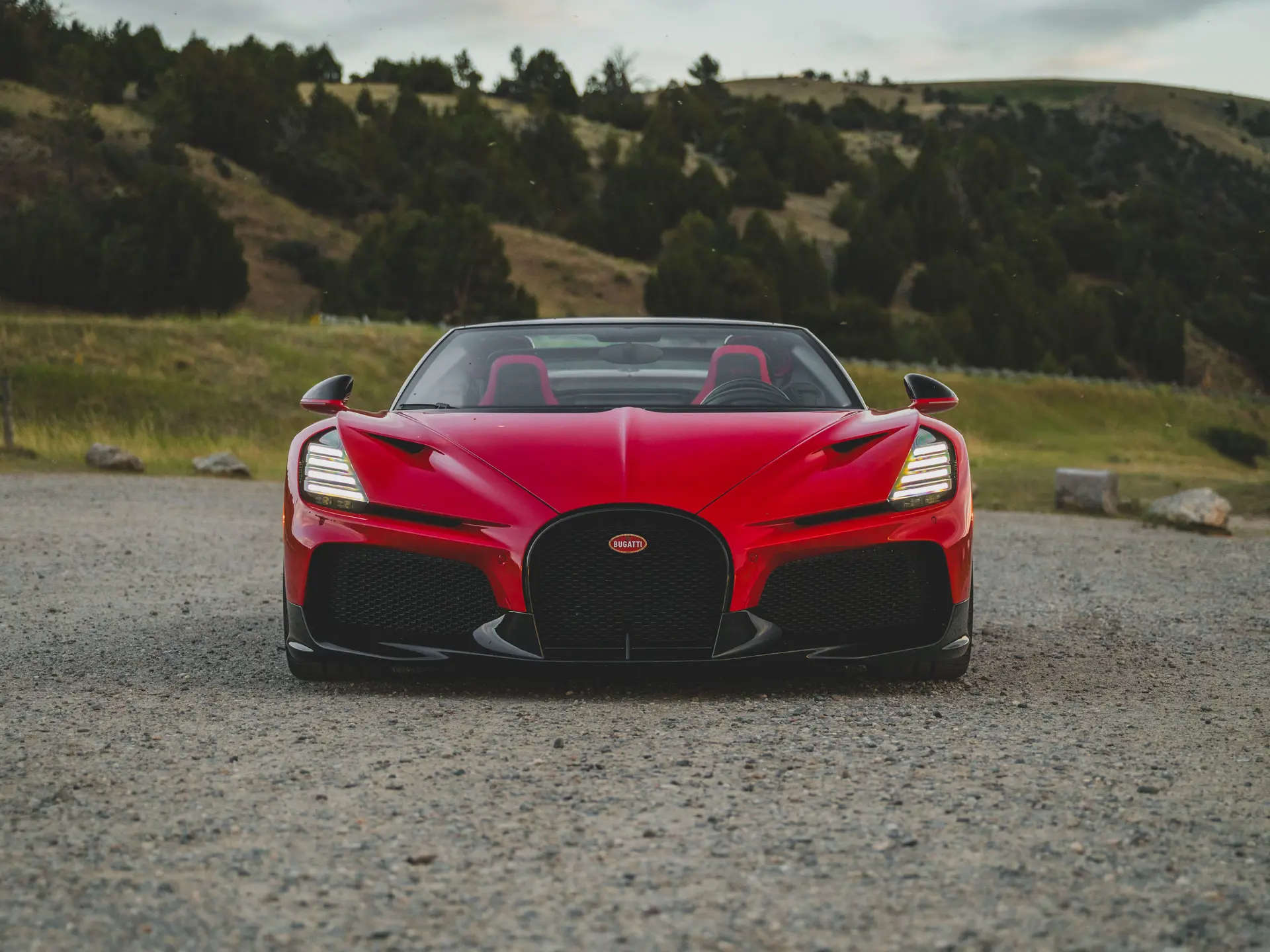
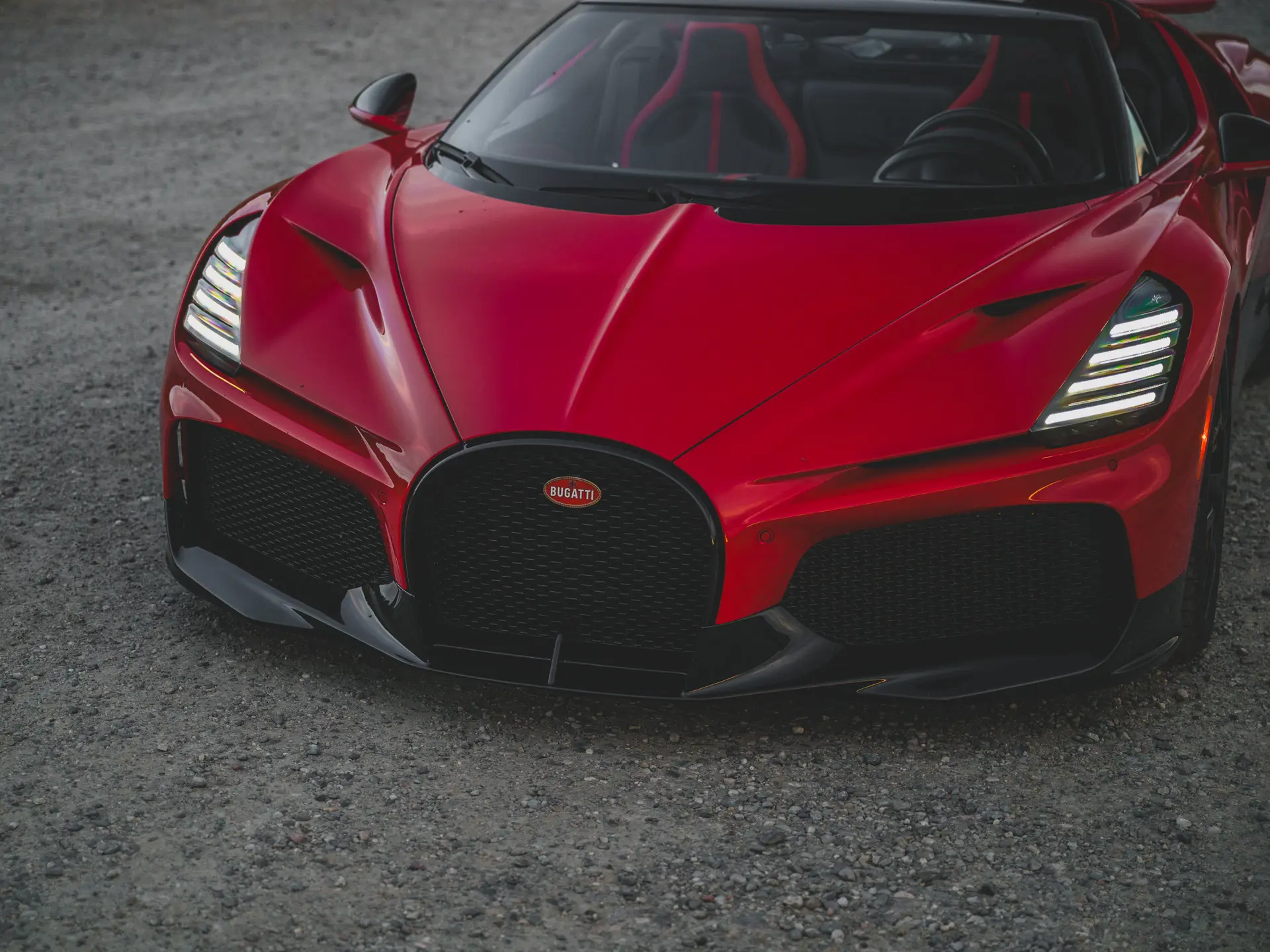
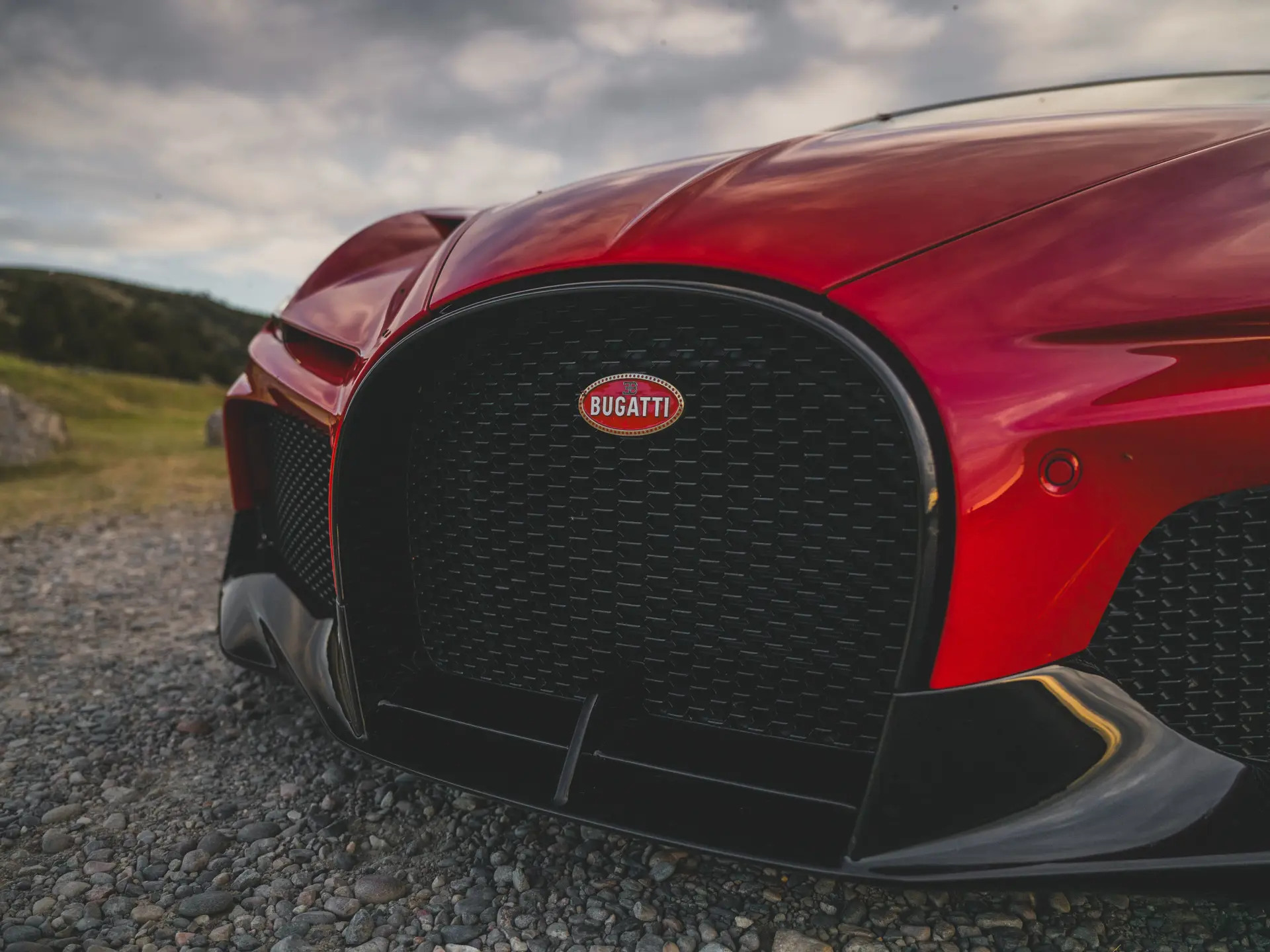
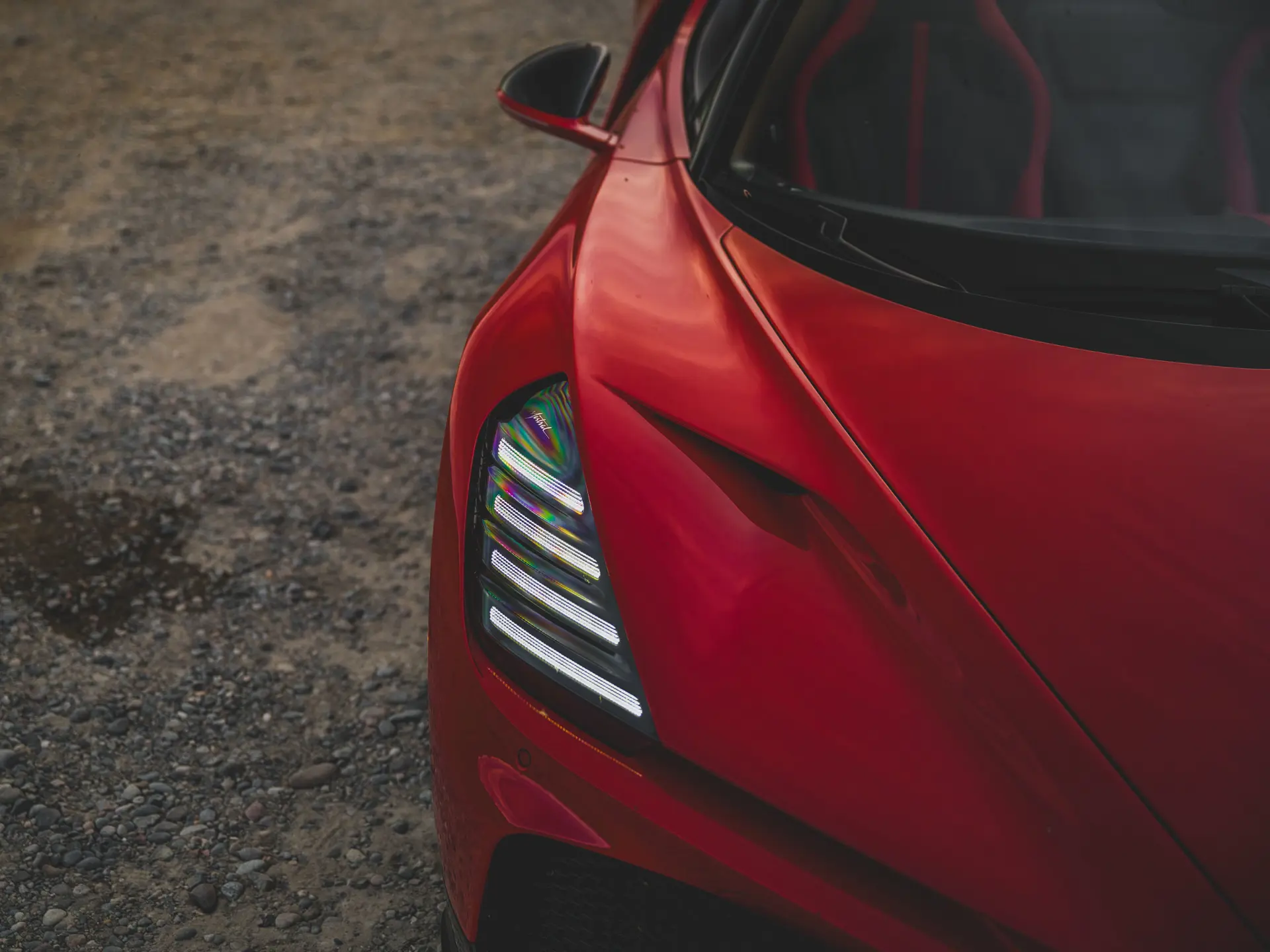
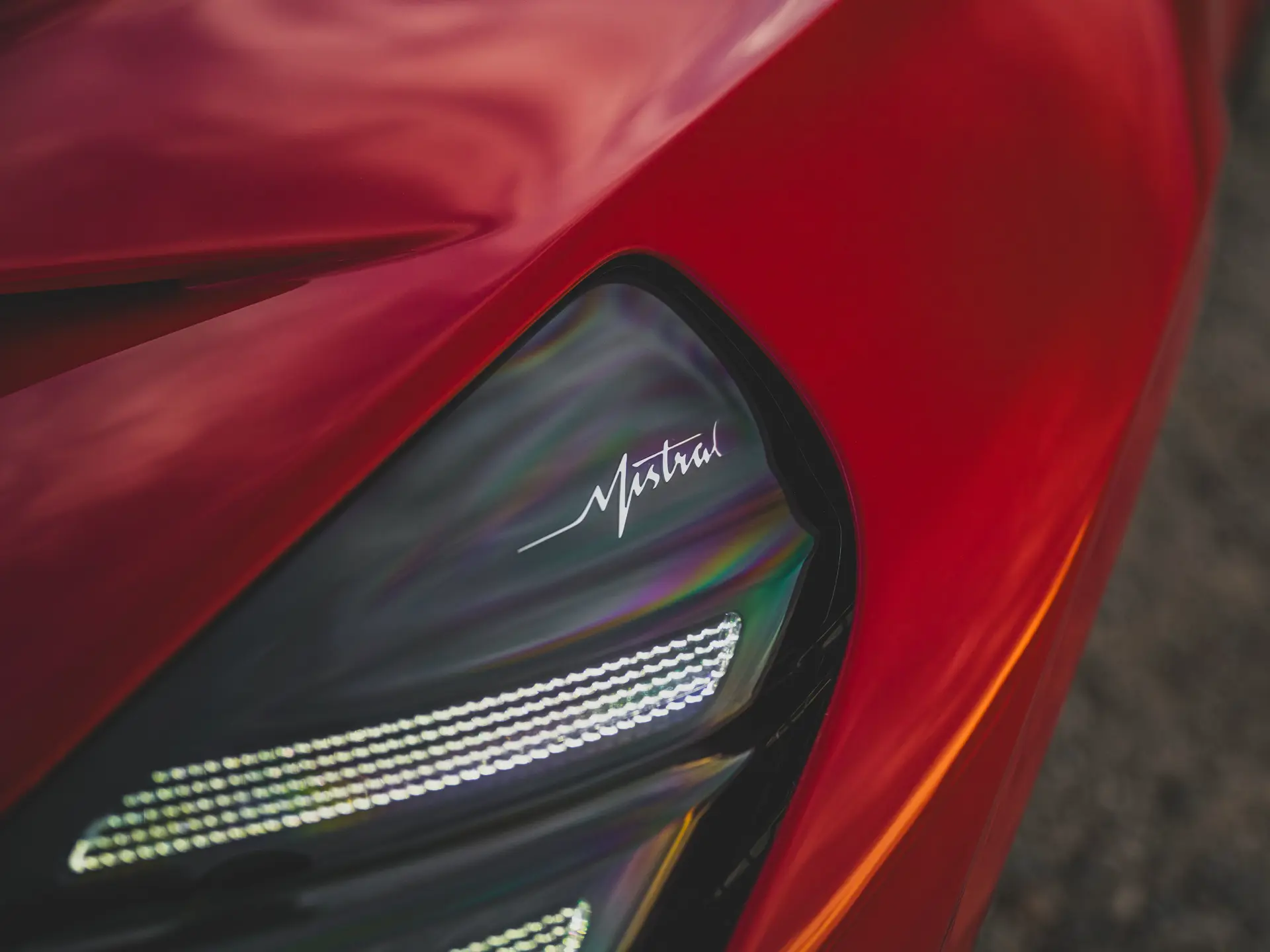
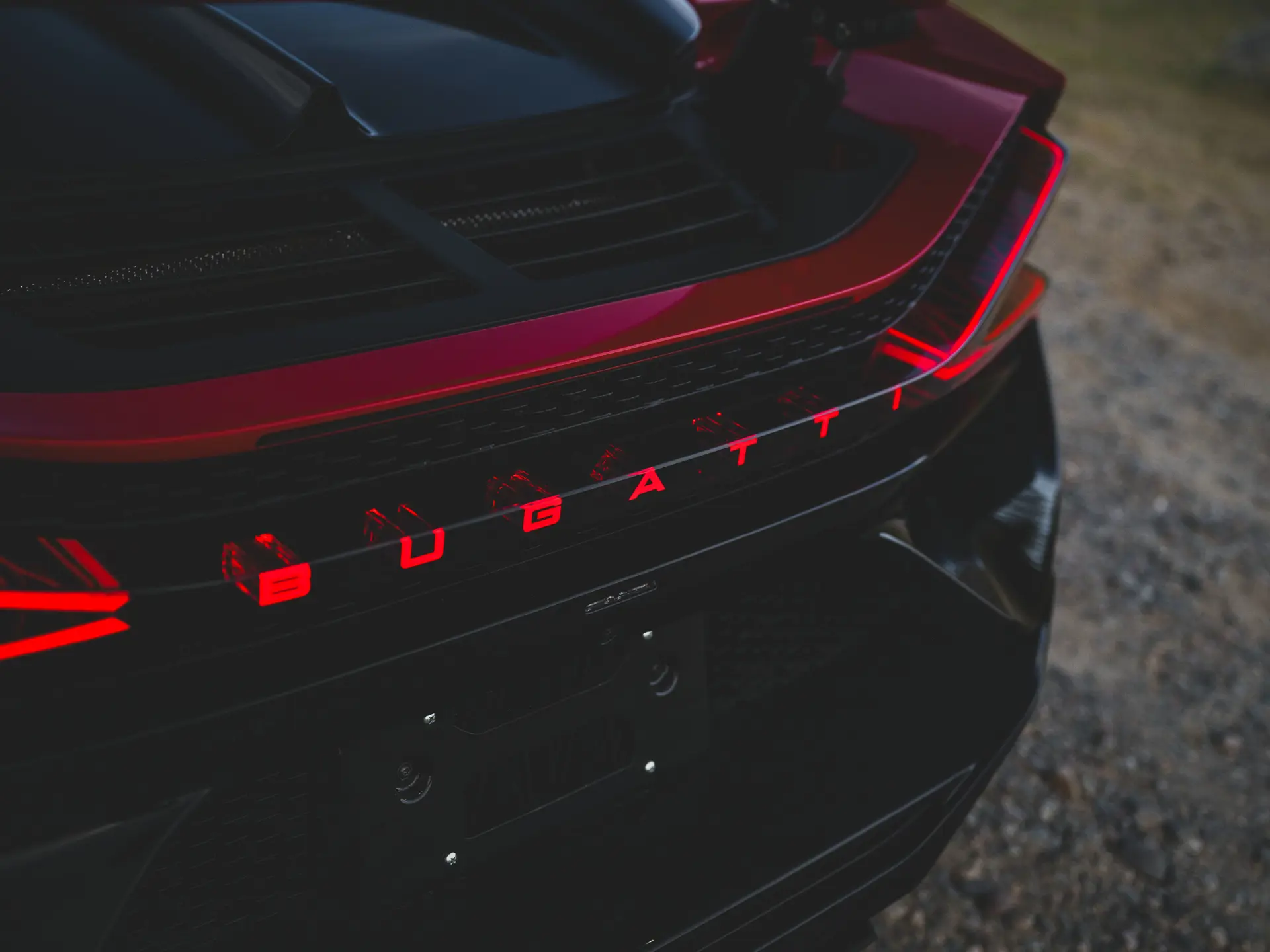
At the back, the X-shaped tail lights do cooling and aerodynamic work as well as identifying the model. At the front, four slender vertical LED elements replace a conventional headlight cluster. The horseshoe grille remains, as it has since the 1920s, and the name comes from the Mistral, the wind that runs down the Rhône valley to the Mediterranean coast of France.
The cabin, and the elephant in the gear lever
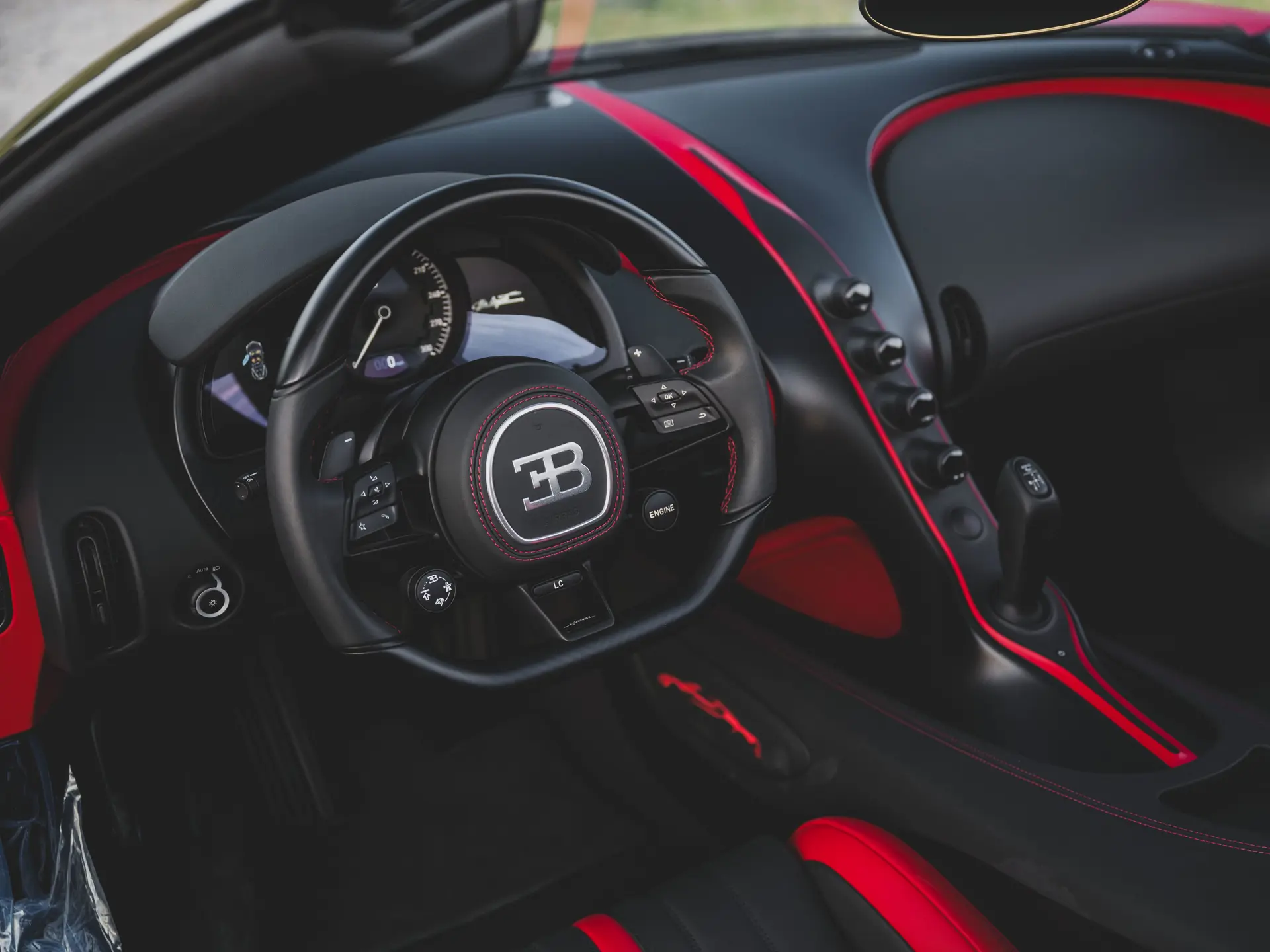
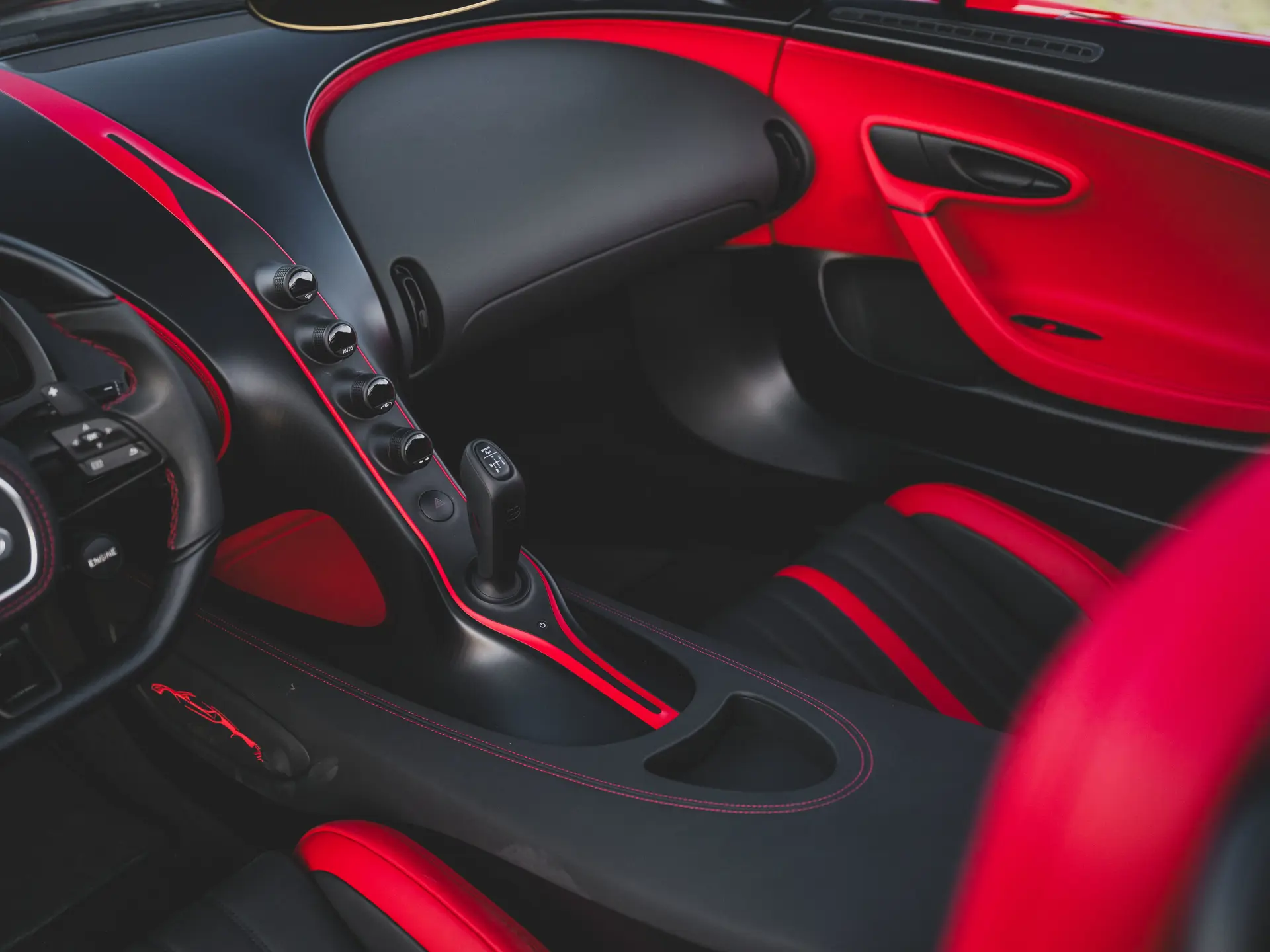
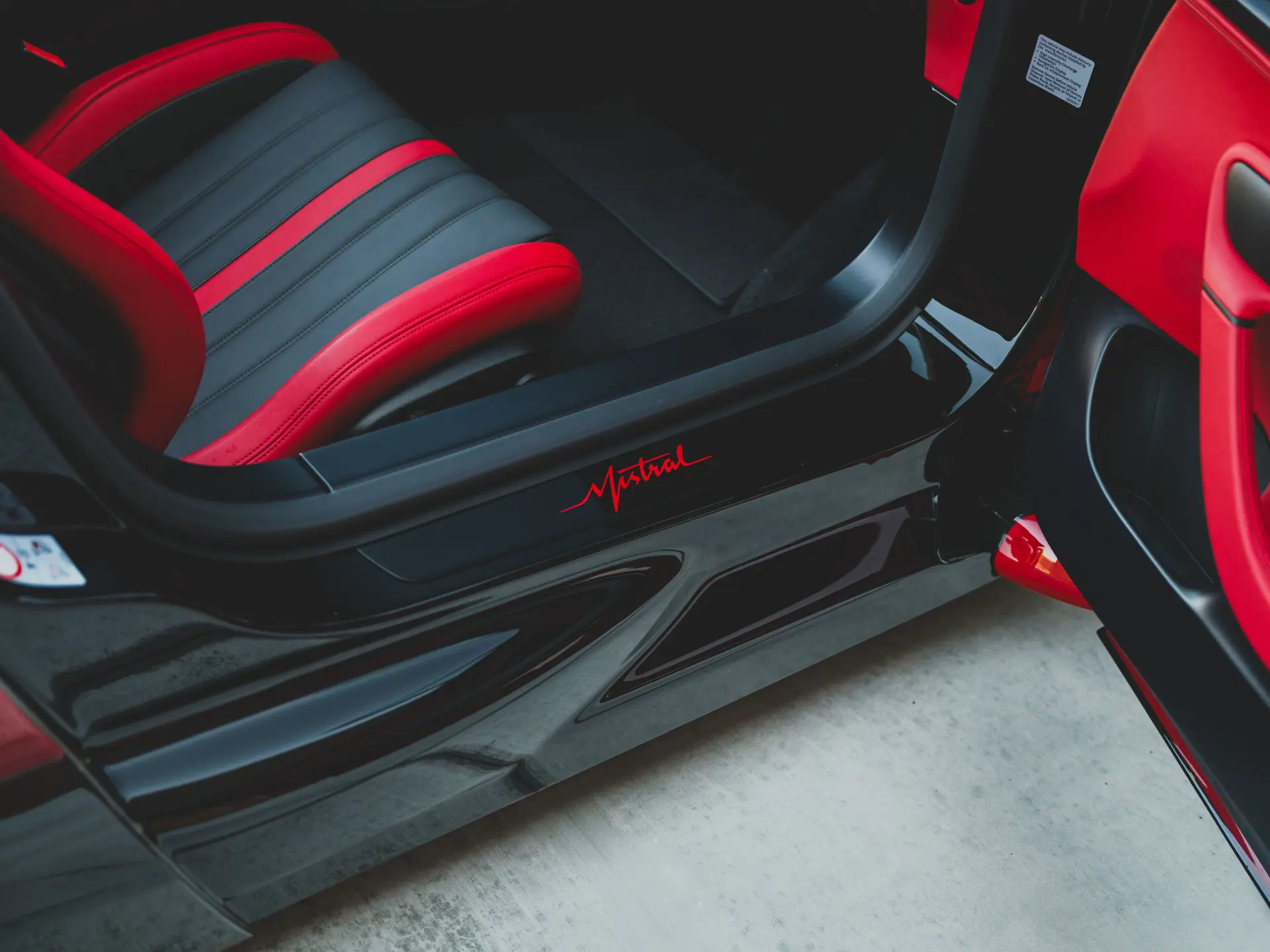
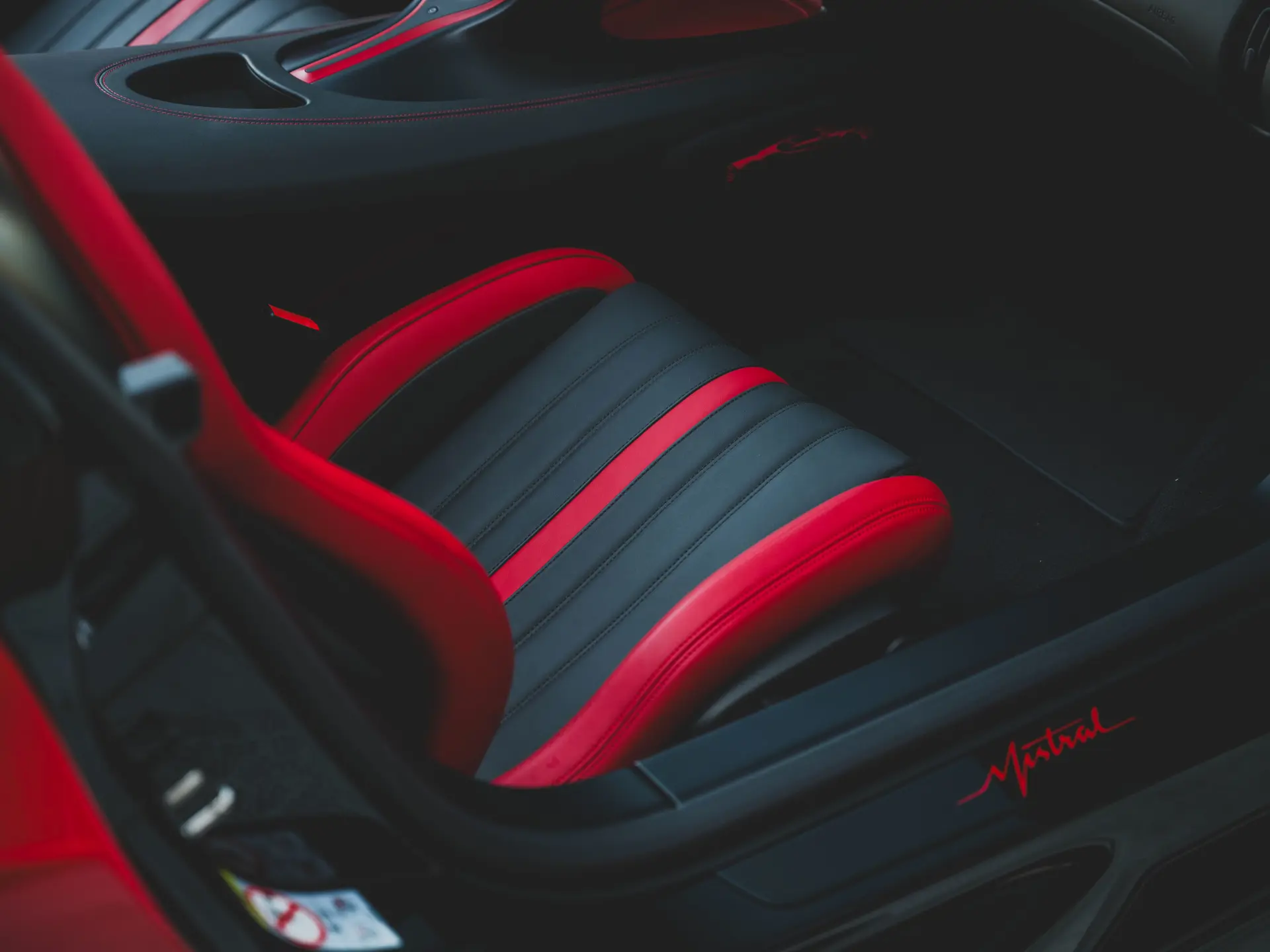
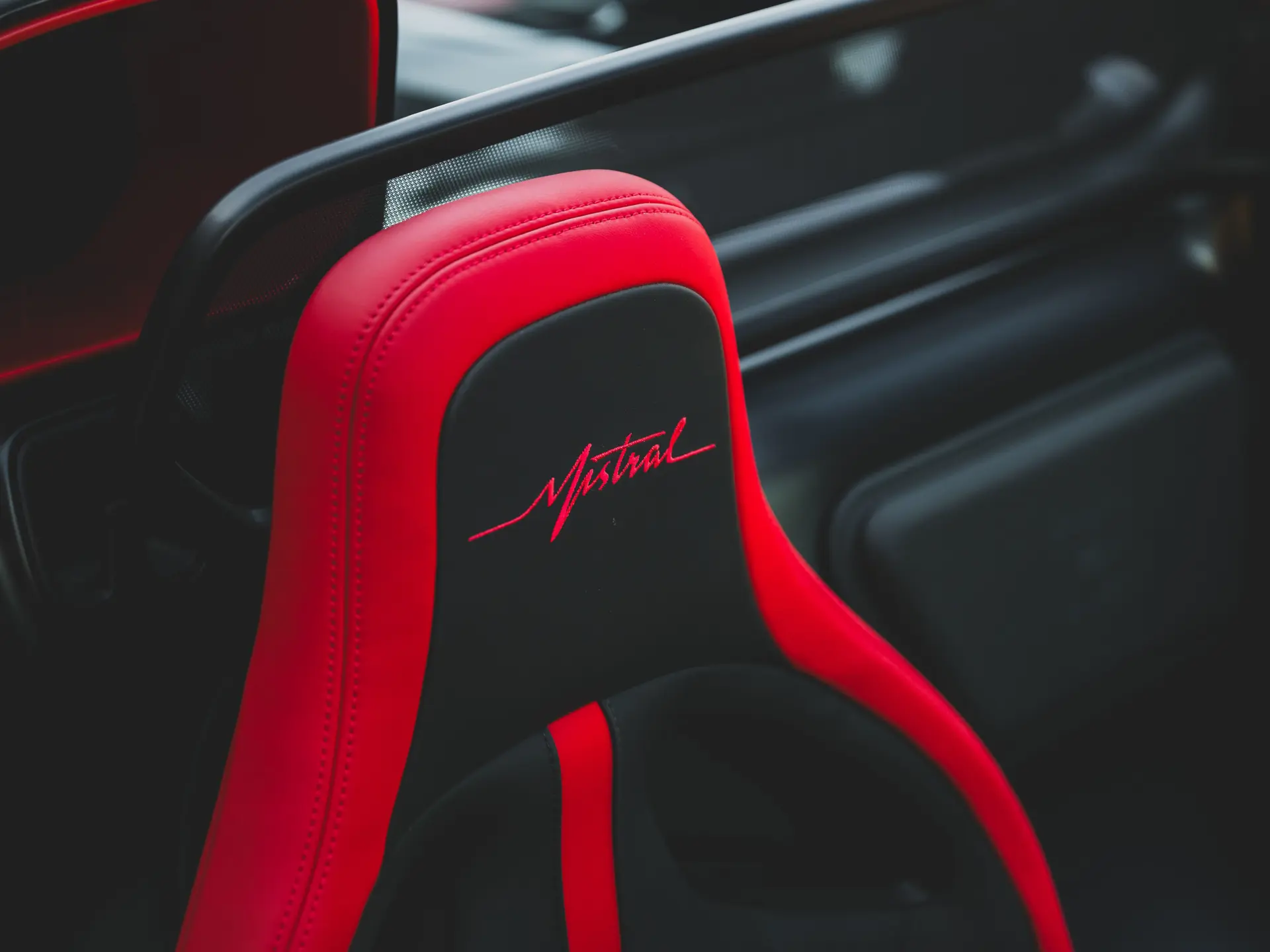
The interior is where Bugatti spends the part of the budget that does not show up in a performance figure. This car pairs Italian Red with Beluga Black leather, with the model name embroidered into the seats and set into the door sills.
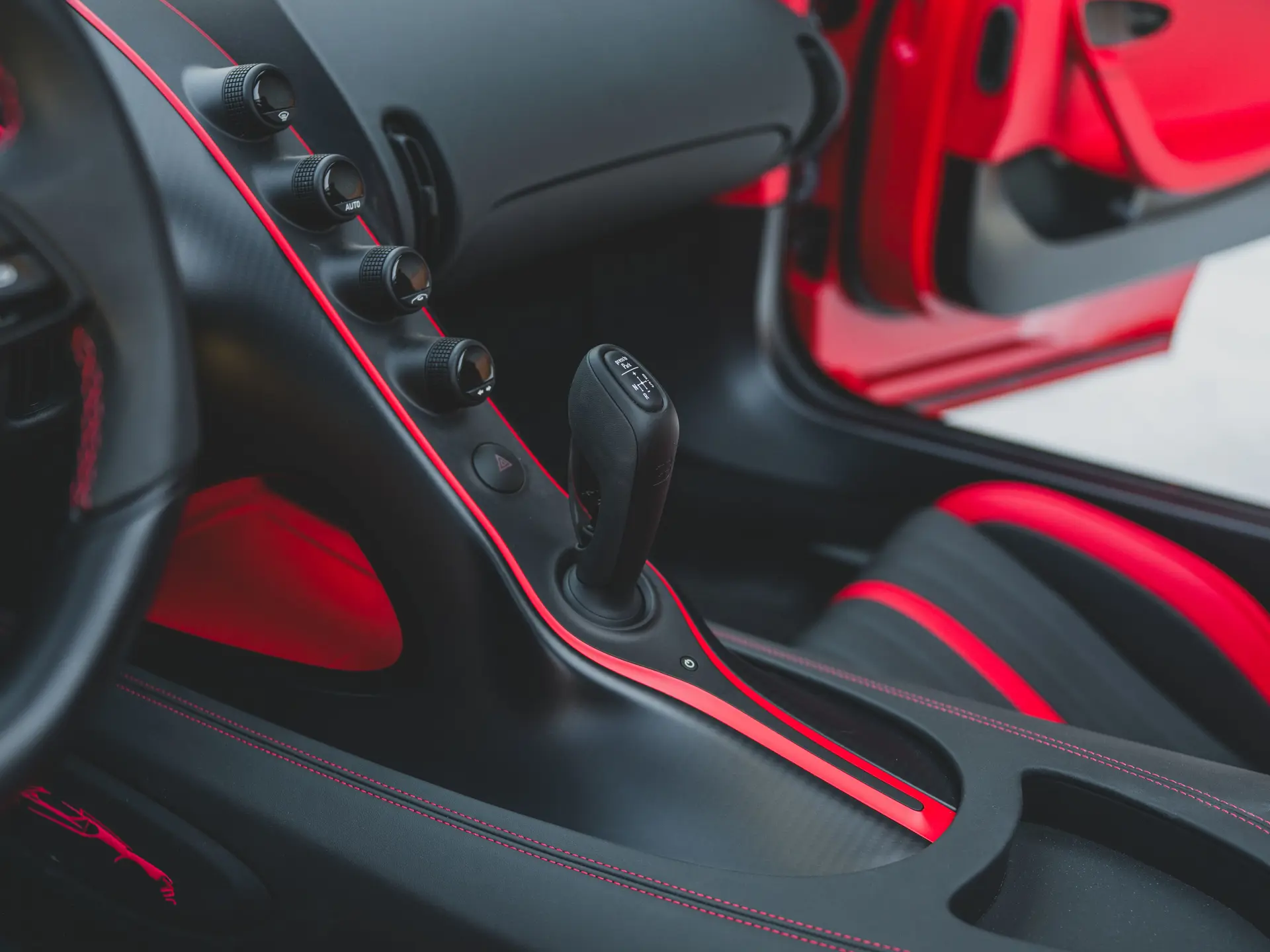
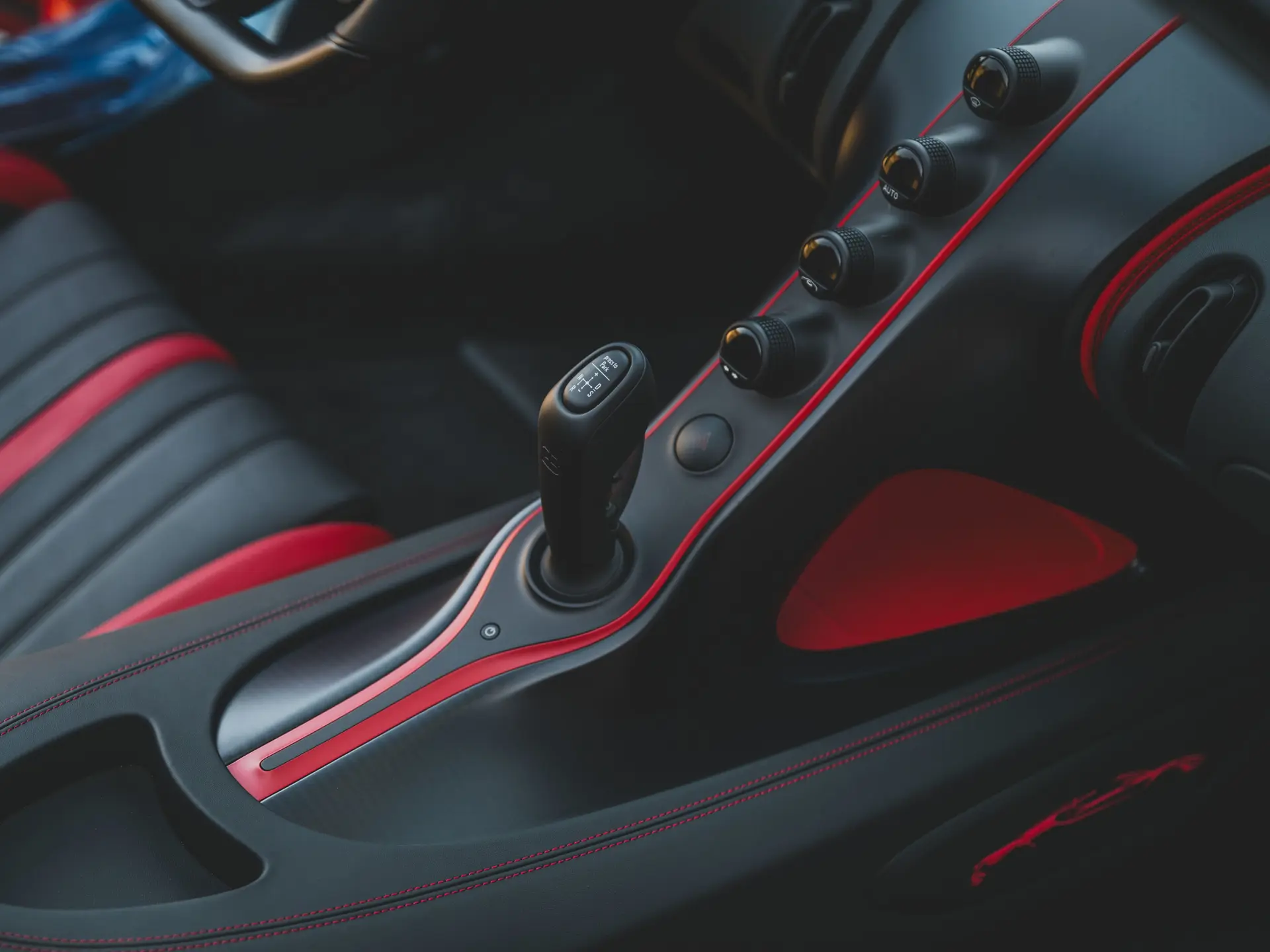
The detail people remember is the gear selector. It is machined from a single block of aluminium and carries an amber insert containing a miniature of Rembrandt Bugatti's Dancing Elephant. Rembrandt was Ettore Bugatti's brother and a sculptor; the elephant became the mascot of the Type 41 Royale. Putting it inside the shifter of the last W16 car is a deliberate bookend.
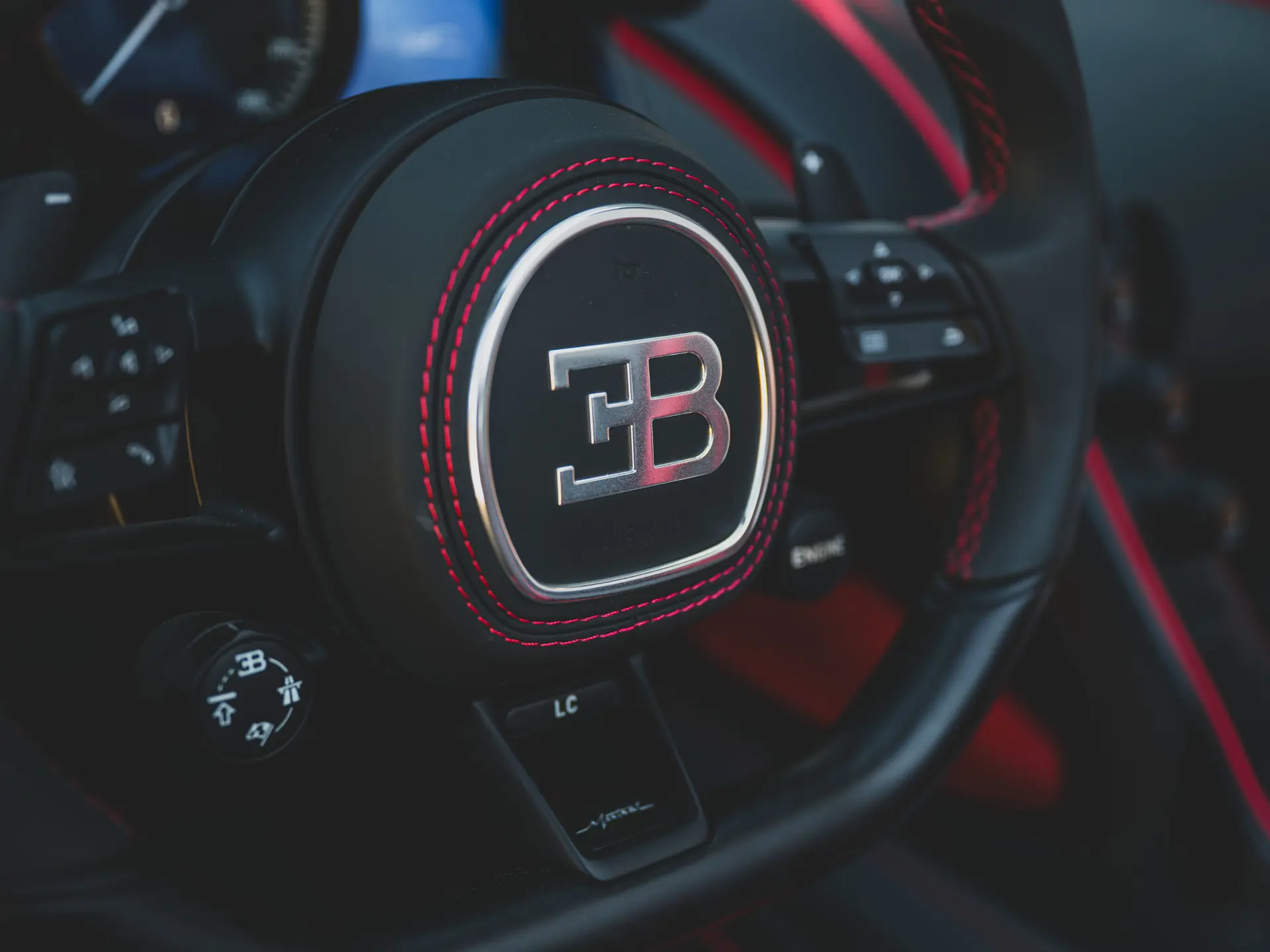
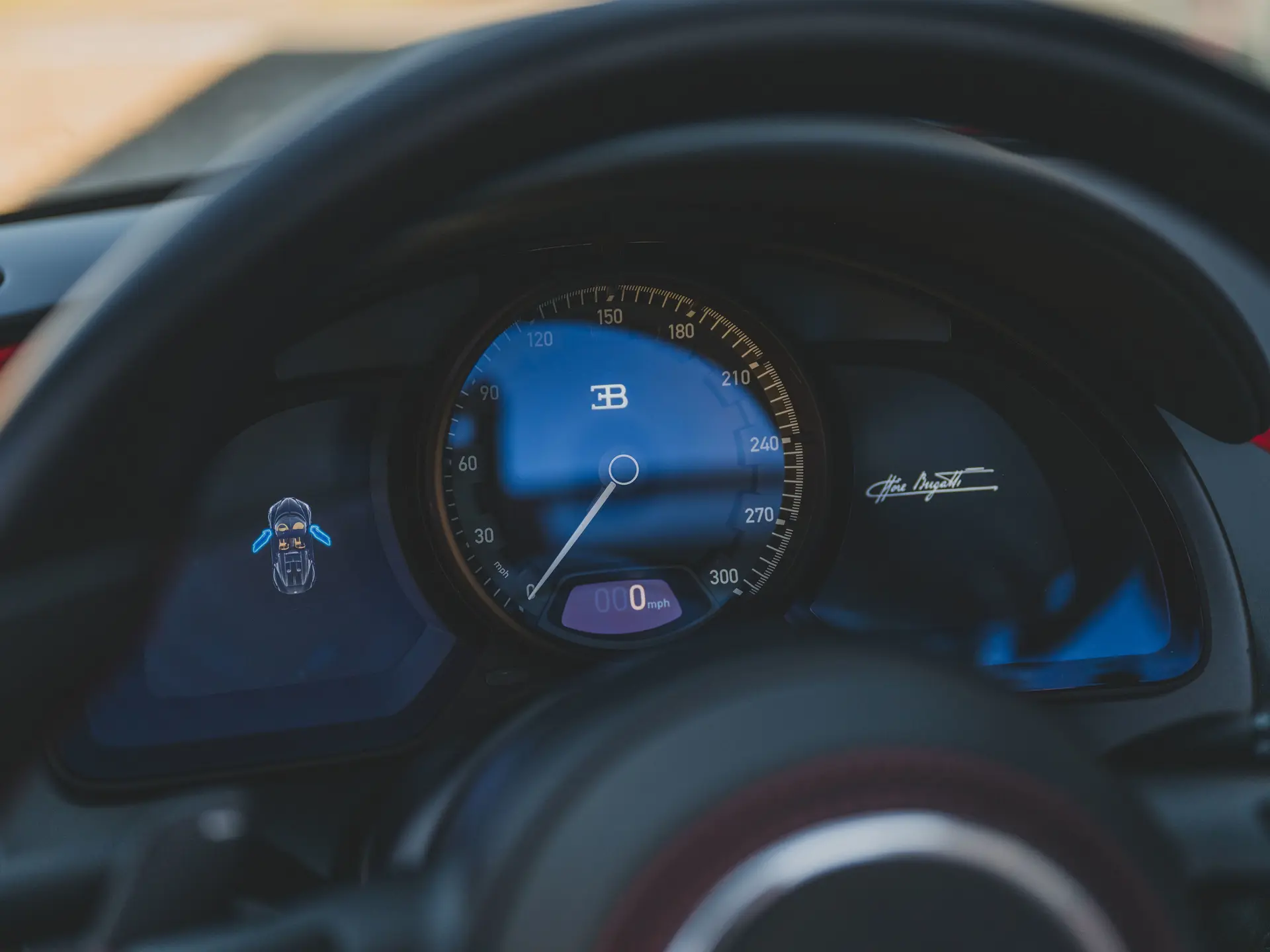
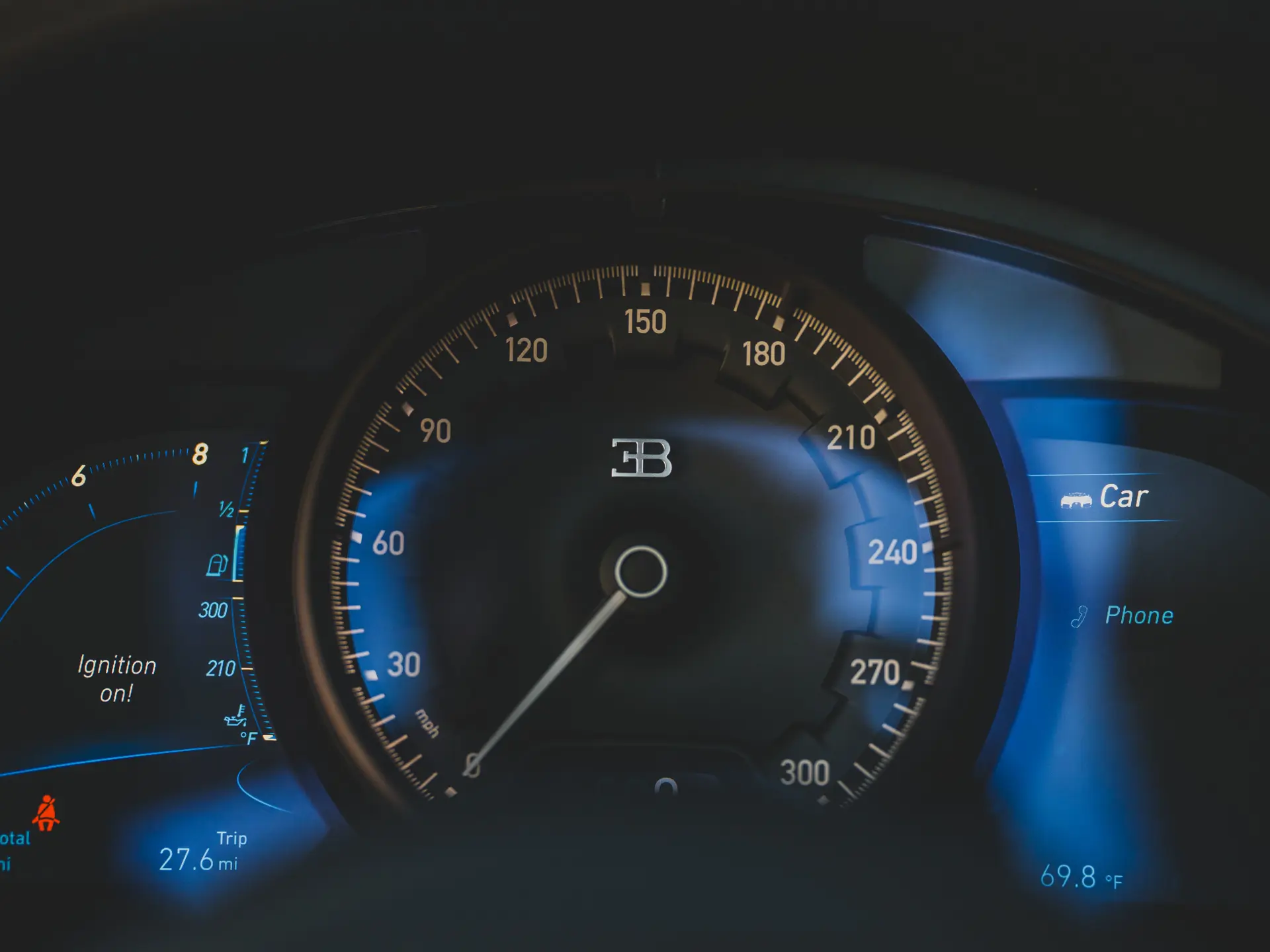
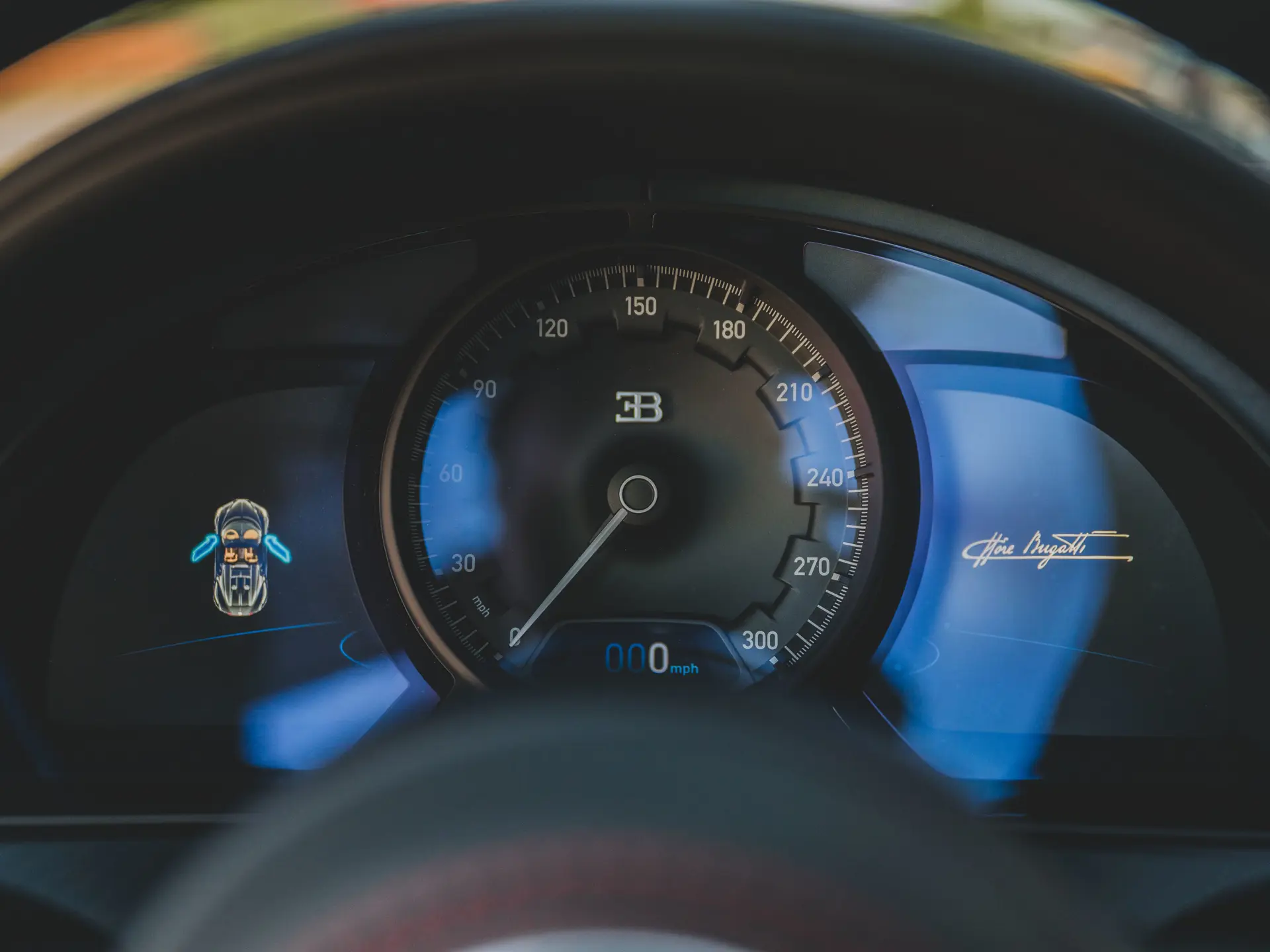
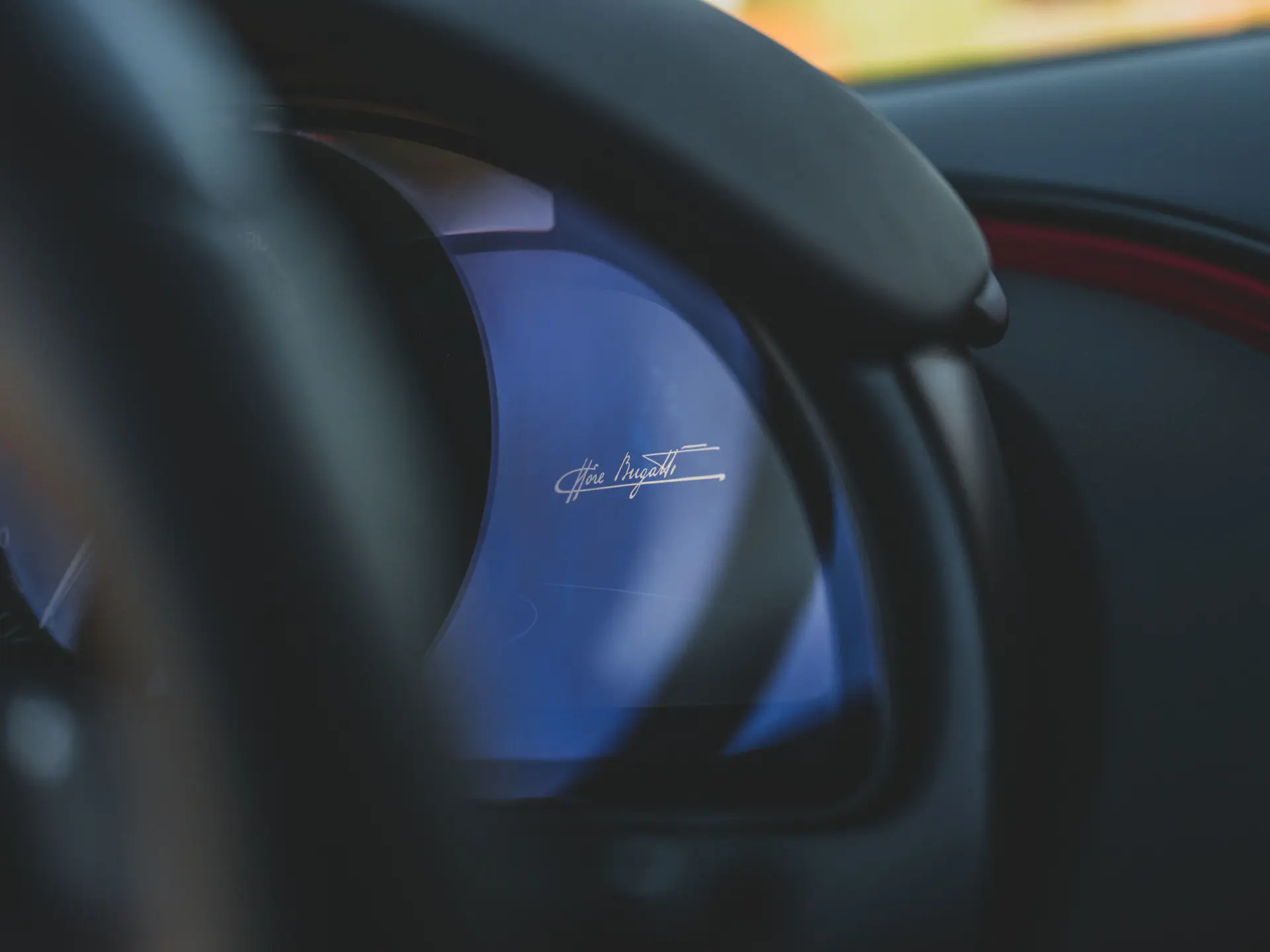
The instruments stay analogue in feel, with a central dial carrying the EB monogram and Ettore Bugatti's signature reproduced on the face. In a car with this much technology underneath, the cabin is notably restrained about showing it.
What to weigh before bidding
The case for the car is straightforward. It is the final chapter of an engine that defined two decades of hypercar engineering, it holds a genuine and verified speed record for open cars, it has covered 321 miles from one owner, and it carries a heavy factory options list that a later buyer cannot replicate.
The case against is equally simple to state. Ninety-nine cars is not a small number at this level, all of them exist, and the Mistral is recent enough that supply will keep arriving at auction for years. Cars bought as instant appreciation plays at the top of a model's hype cycle have a mixed record, and the last-of-line argument is one the market has already heard about several Bugattis.
The 14 August result will be a useful data point precisely because the estimate is not absurd. If a 321-mile Mistral with a strong specification settles near the middle of a $7.5 to $9.5 million range, that tells us the market is pricing the W16 farewell rationally rather than emotionally.