








 Deutsch
  Français
  Italiano
RM Sotheby's will offer McLaren F1 GTR chassis 10R as lot 328 of its Monterey Auction on Saturday 15 August 2026, with a stated value in excess of $35,000,000. If the car sells anywhere near that figure it will comfortably become the most expensive McLaren ever sold at public auction, beating the $20,465,000 paid for an F1 road car in 2021. What makes 10R unusual is not one headline fact but the way several of them stack: the first car built to 1996 specification, one of only two short-tail GTR prototypes retained by the factory, the only F1 GTR to wear this scarlet and yellow works livery, and a car Pink Floyd drummer Nick Mason owned for a quarter of a century.
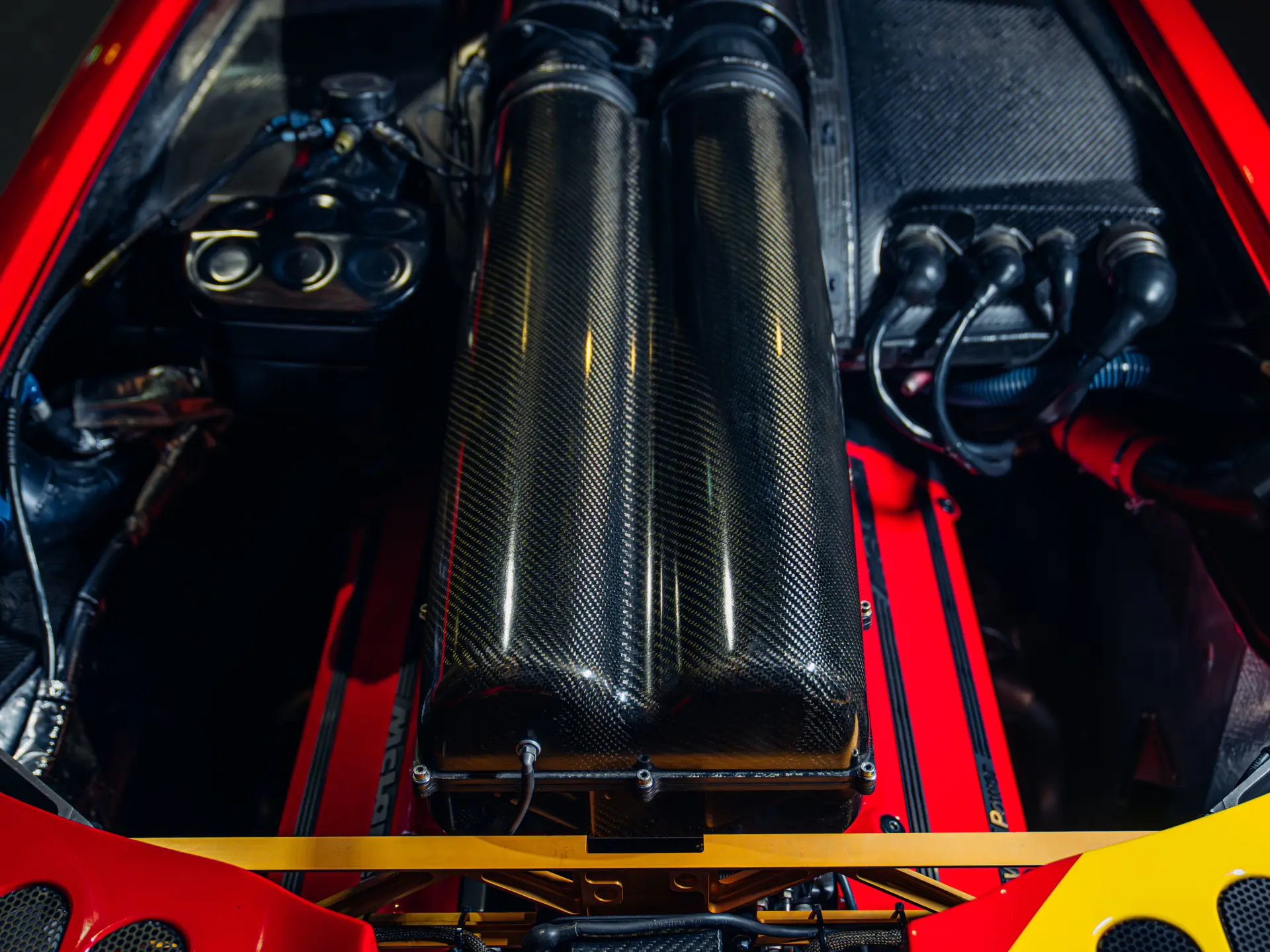
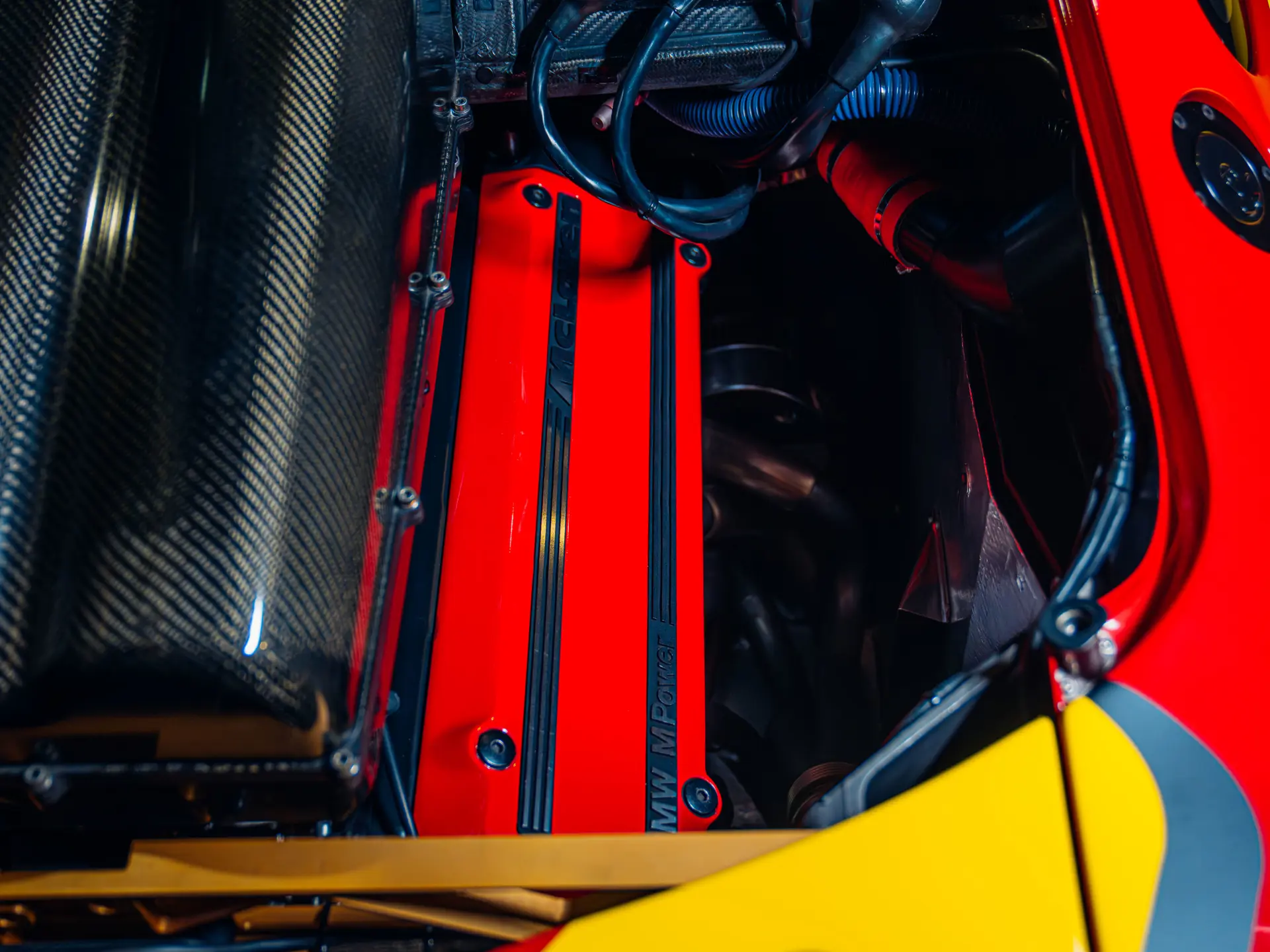
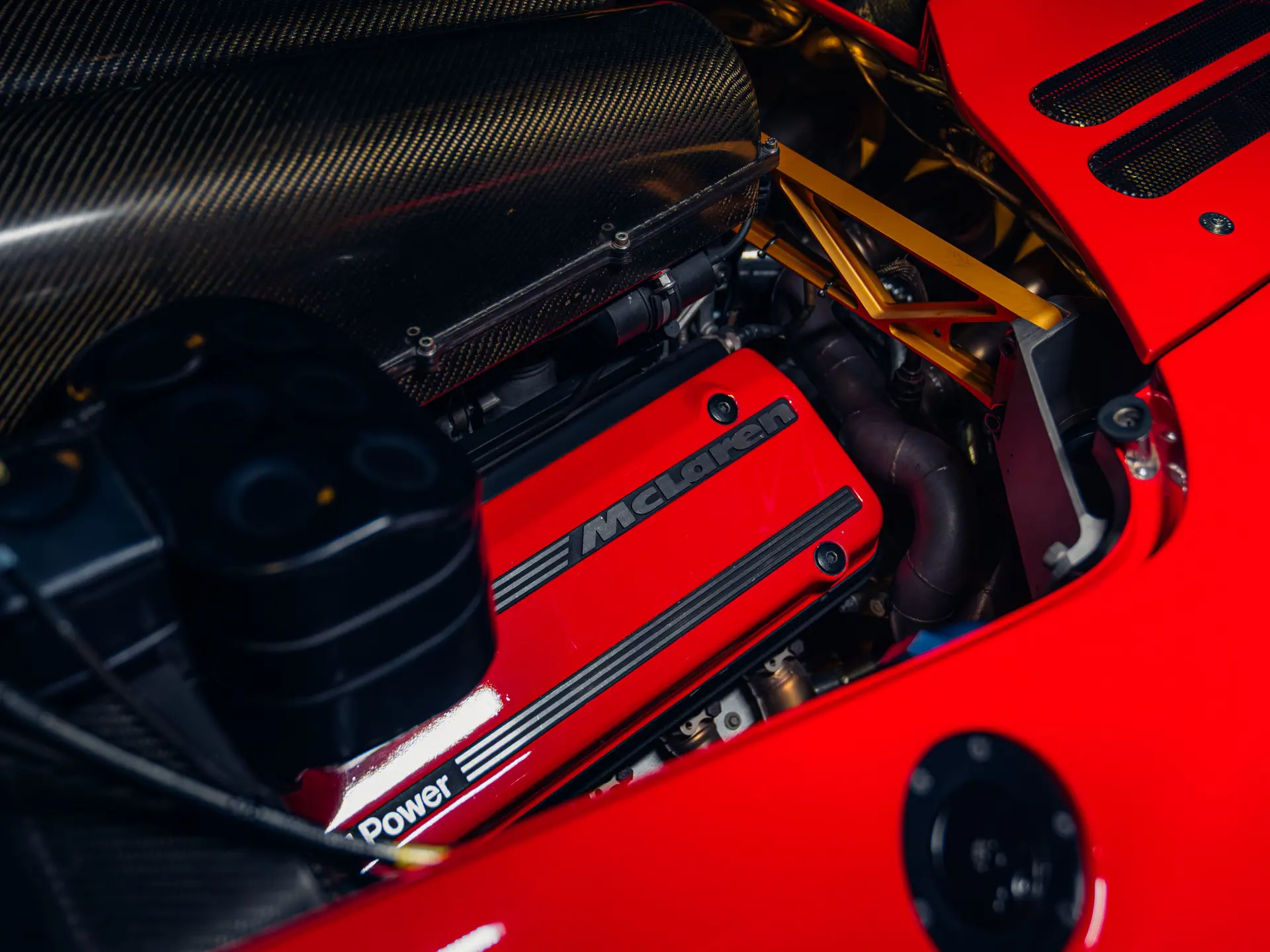
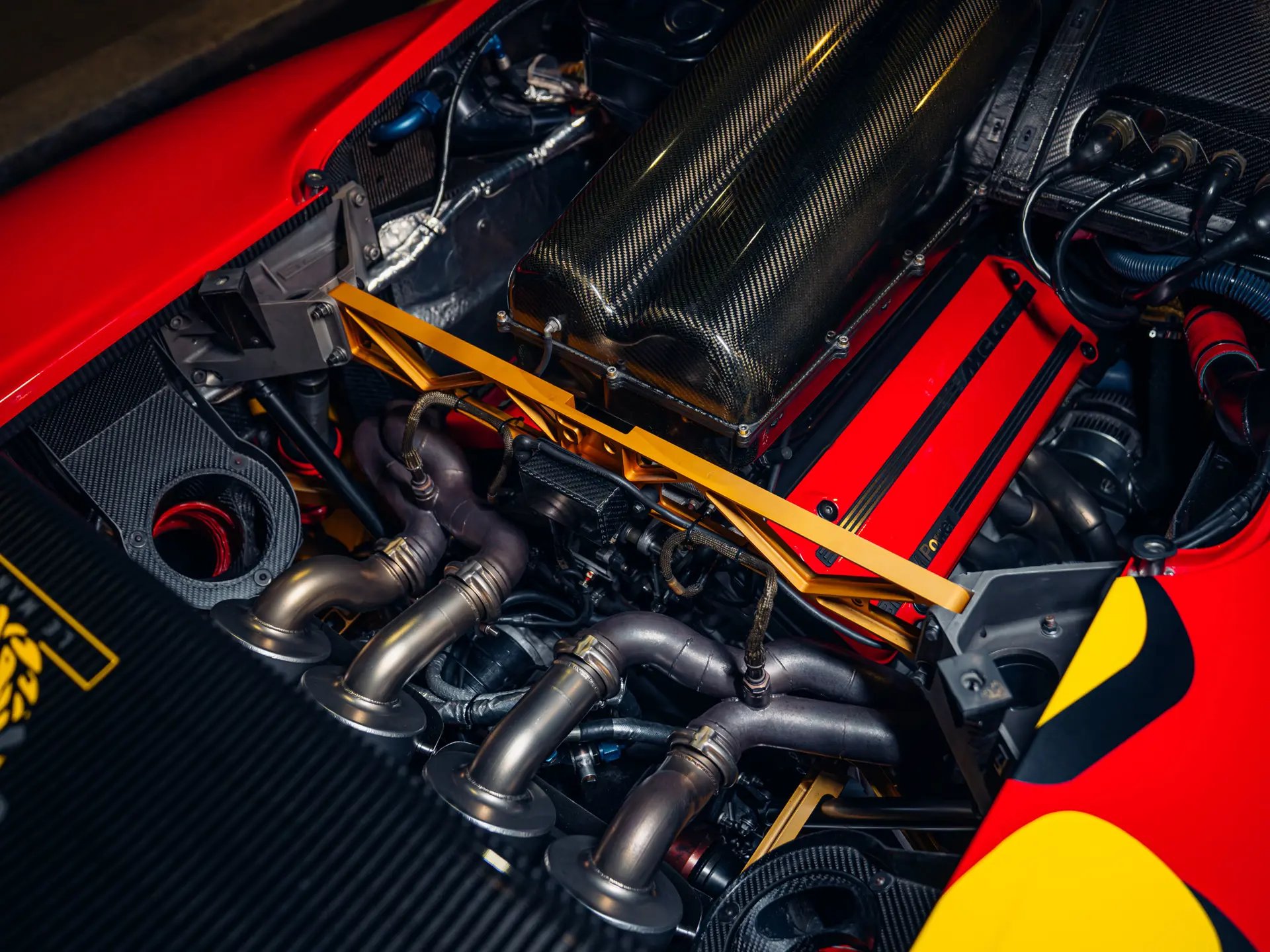
Every catalogue photograph of chassis 10R


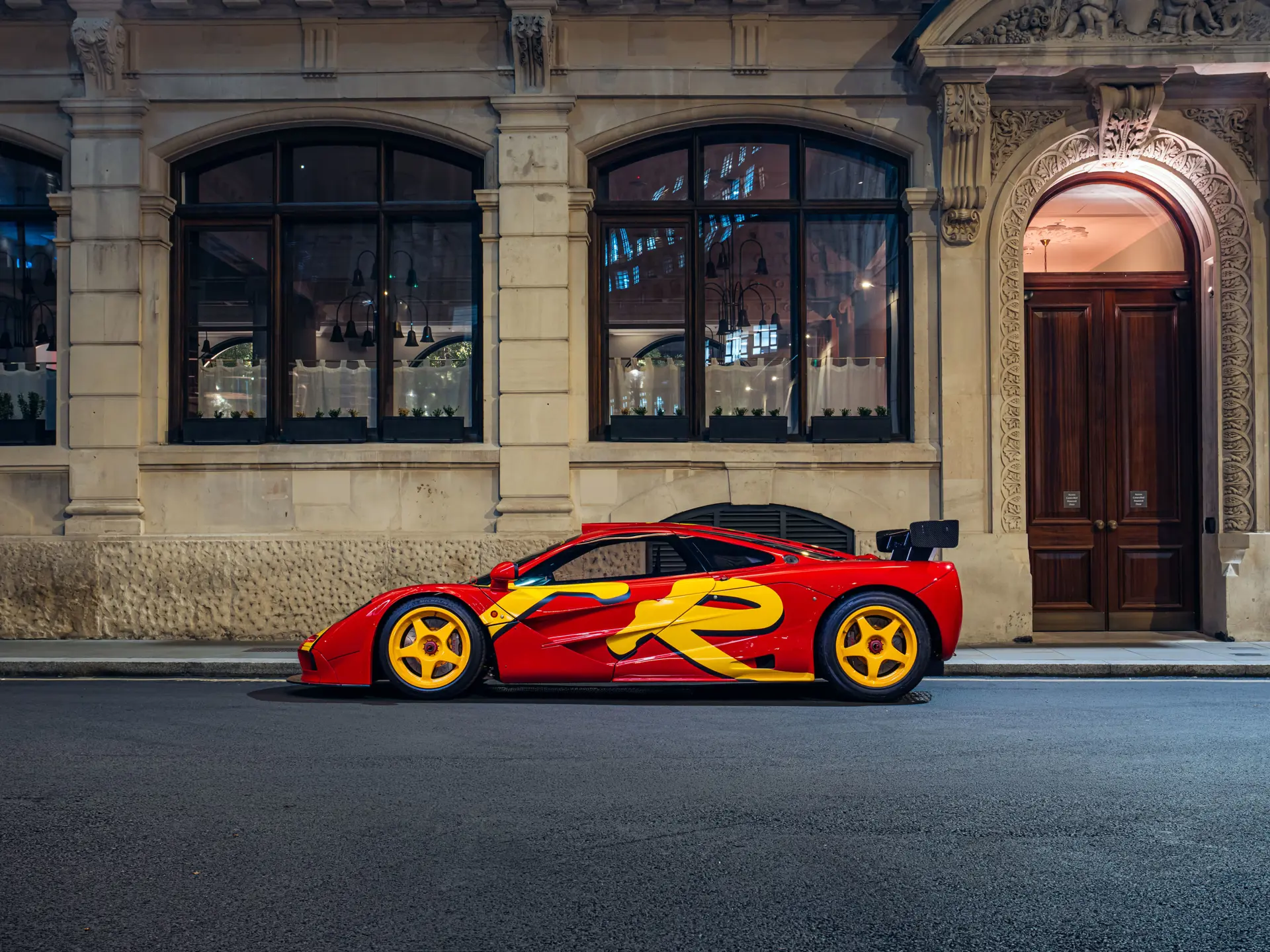


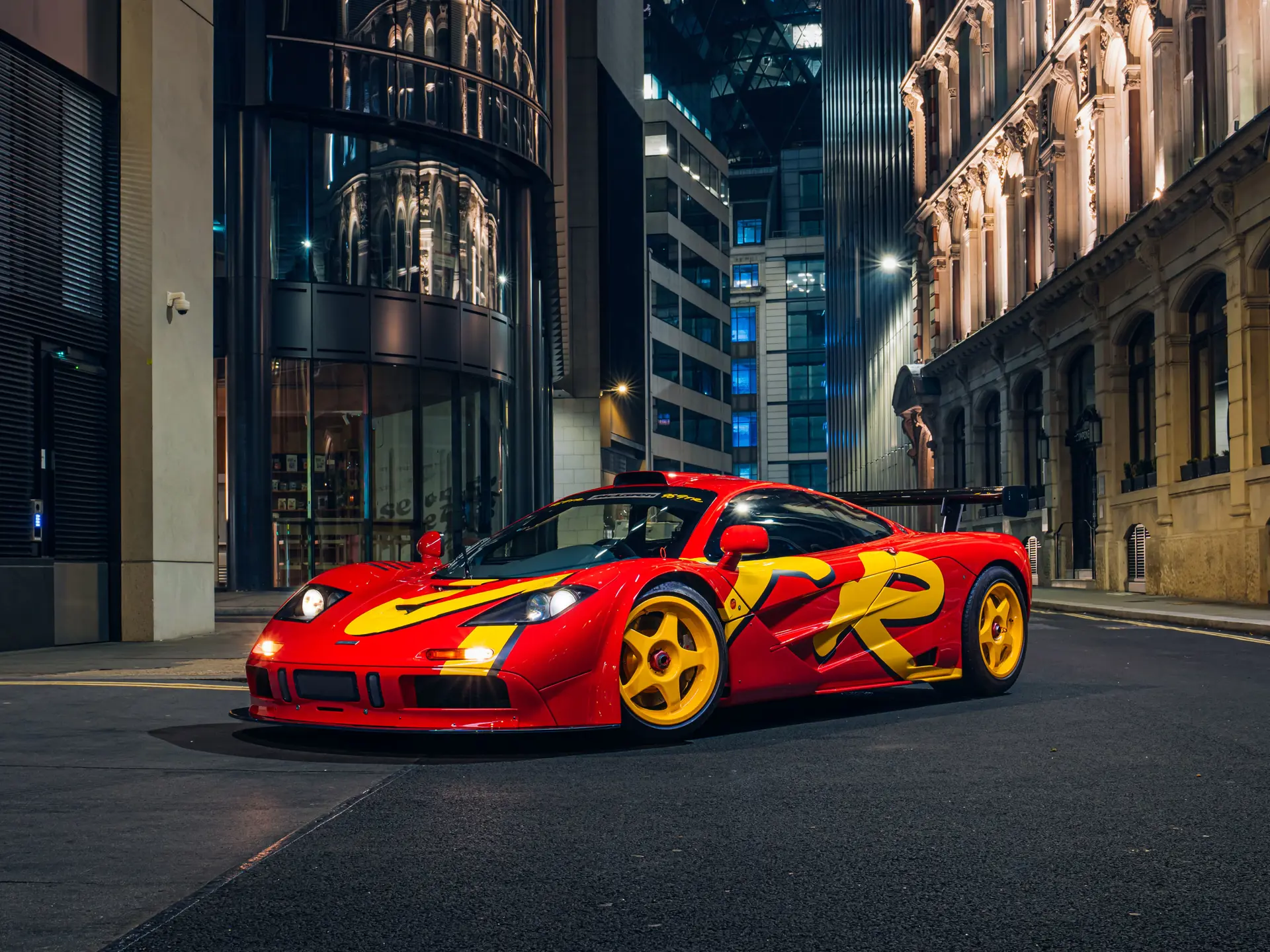

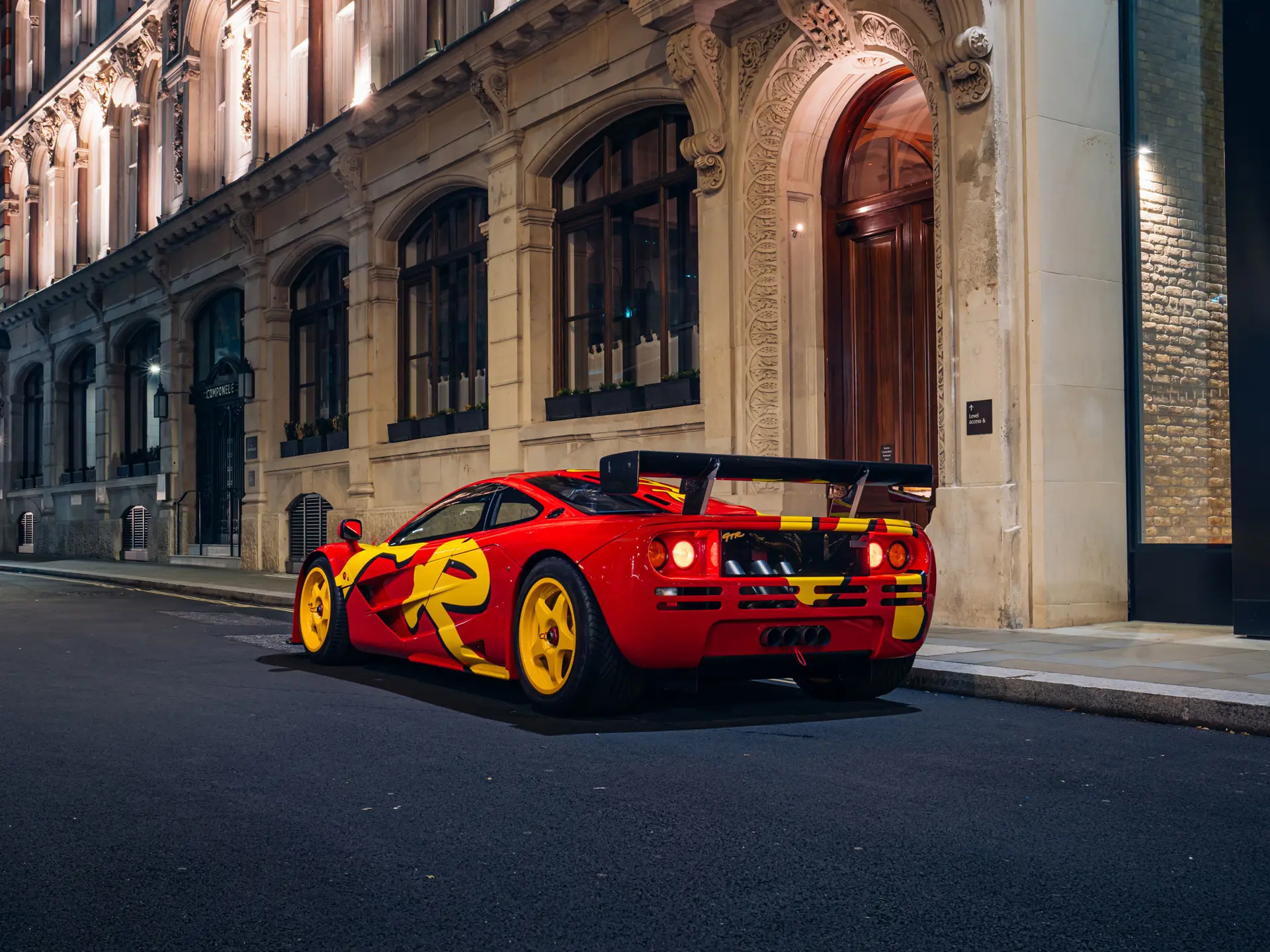
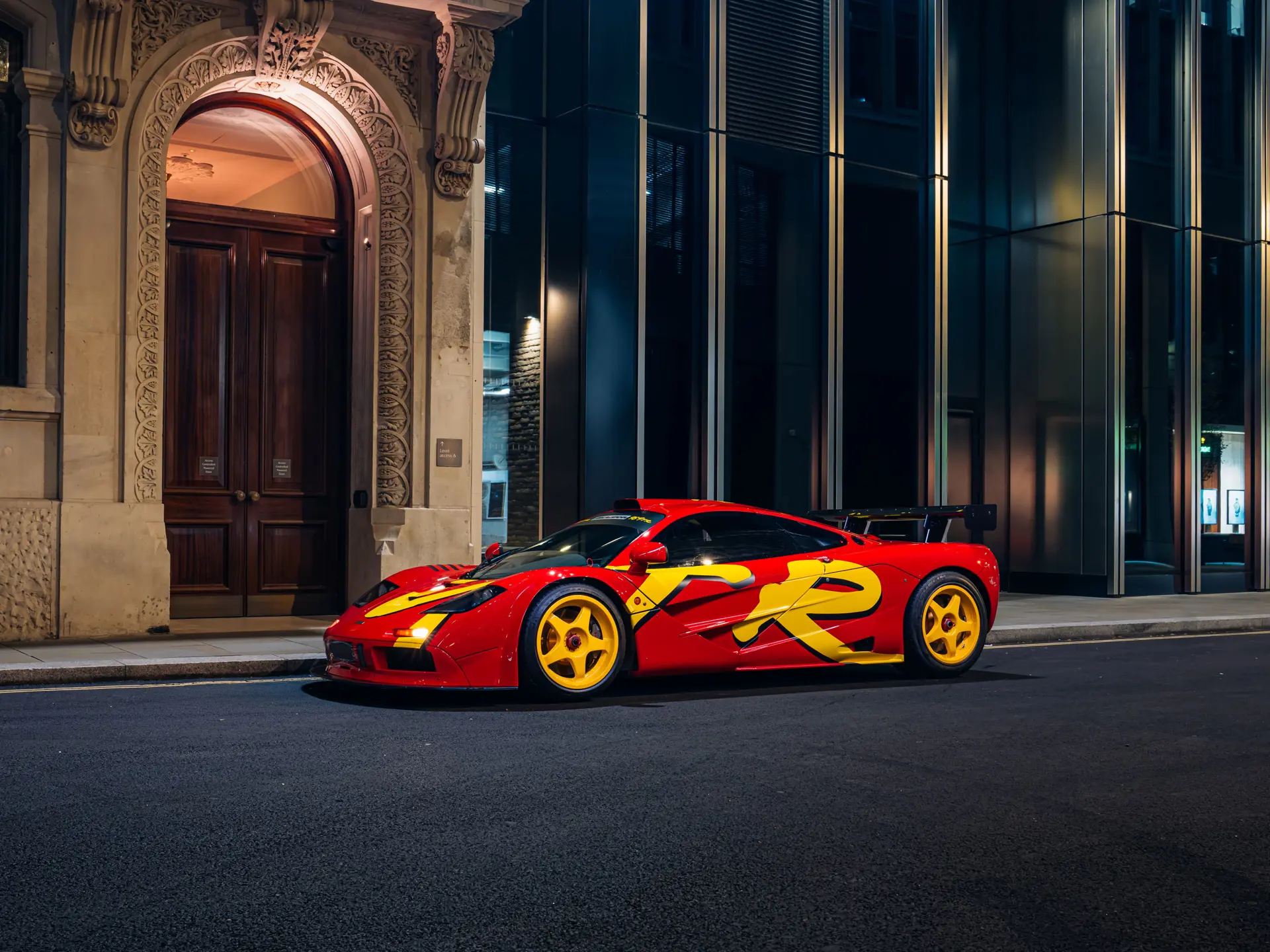



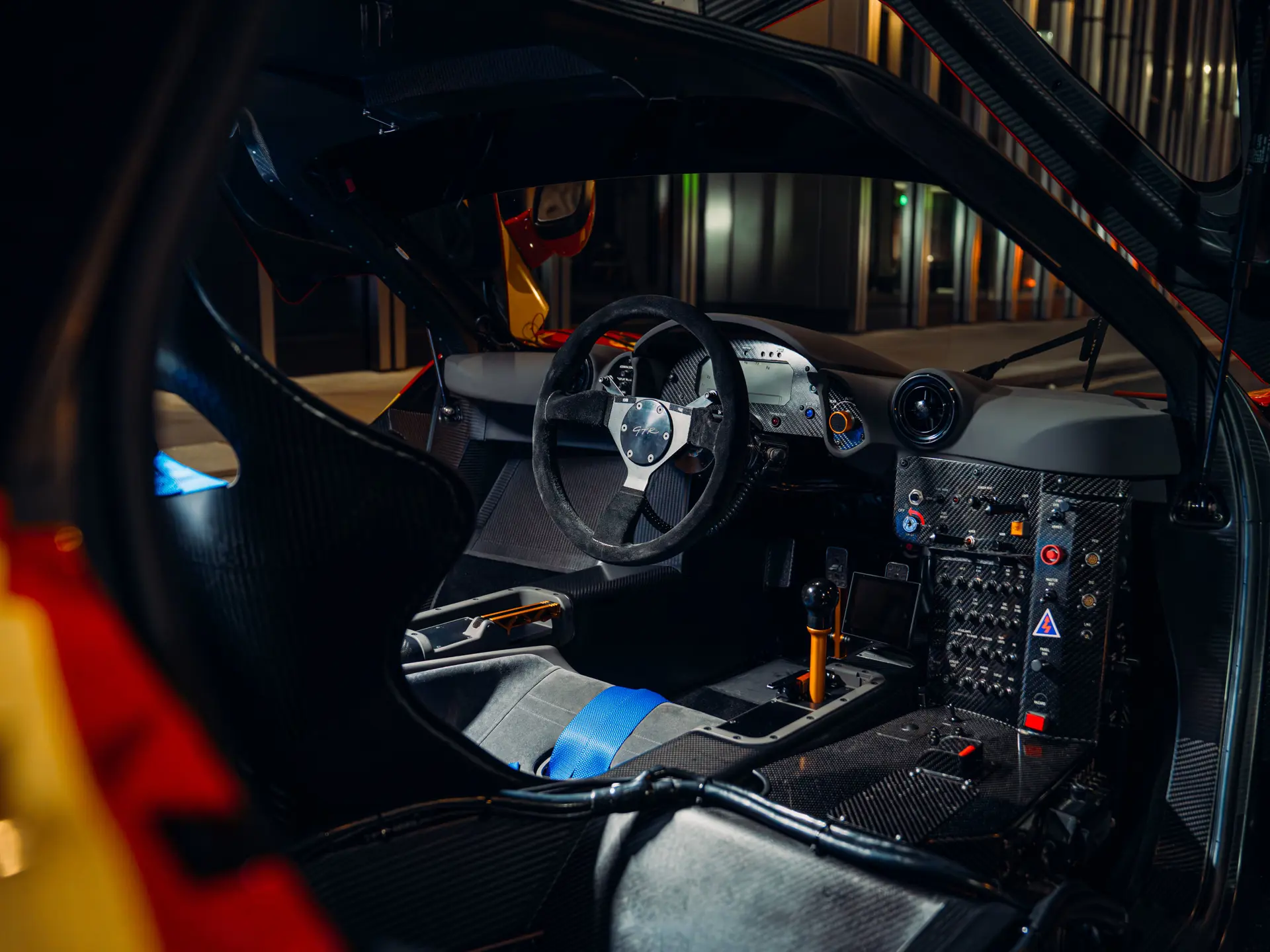
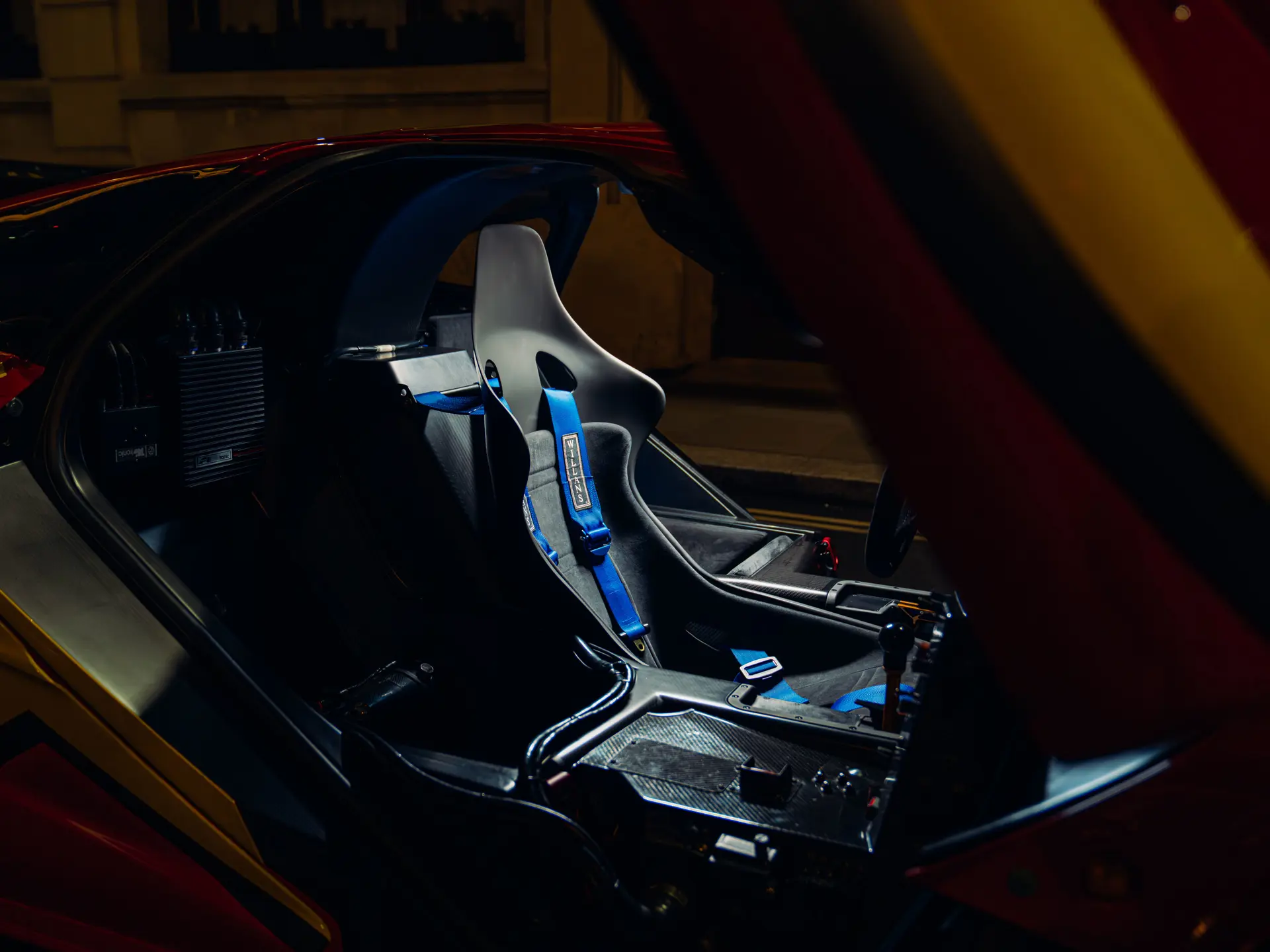


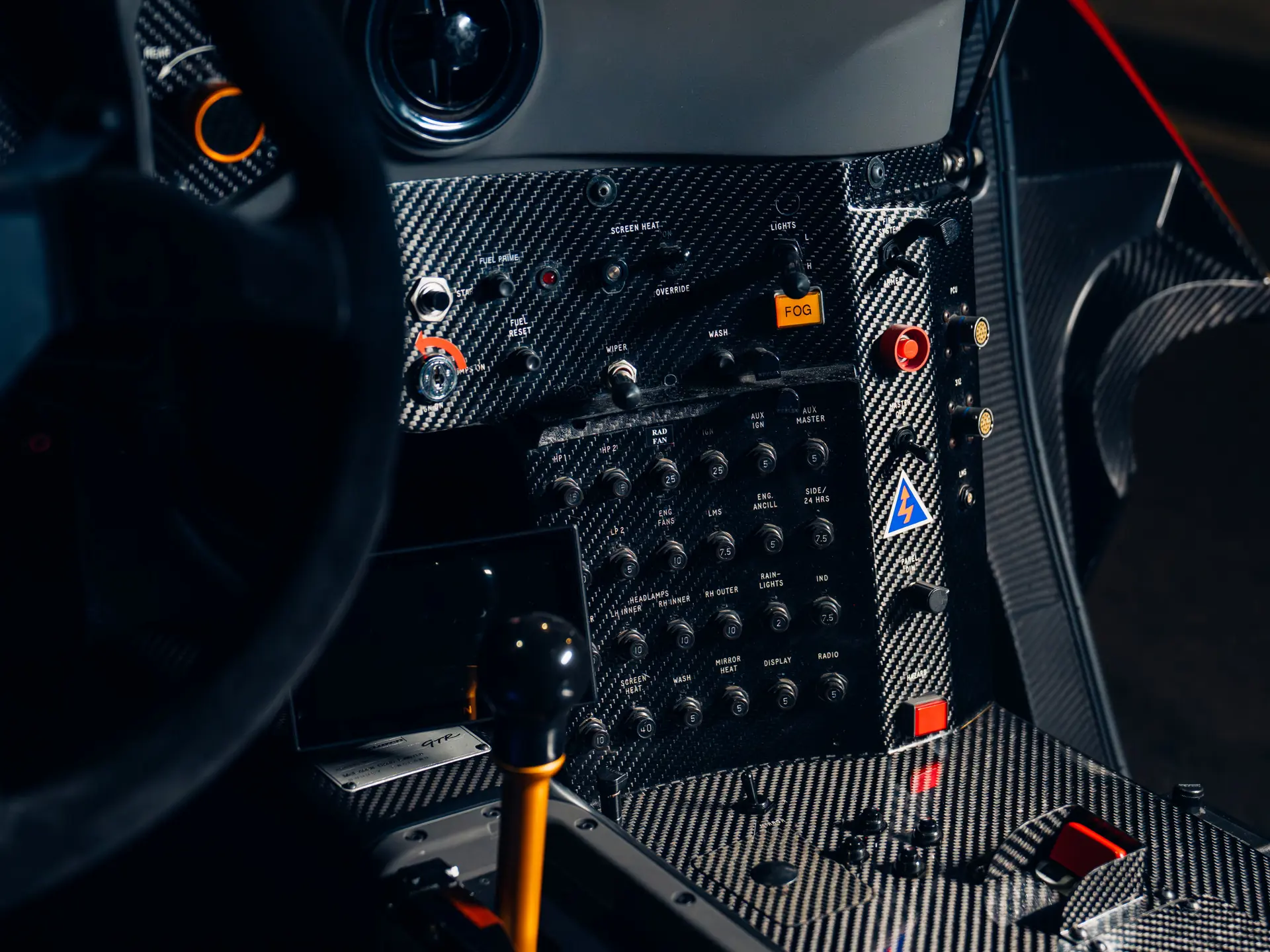
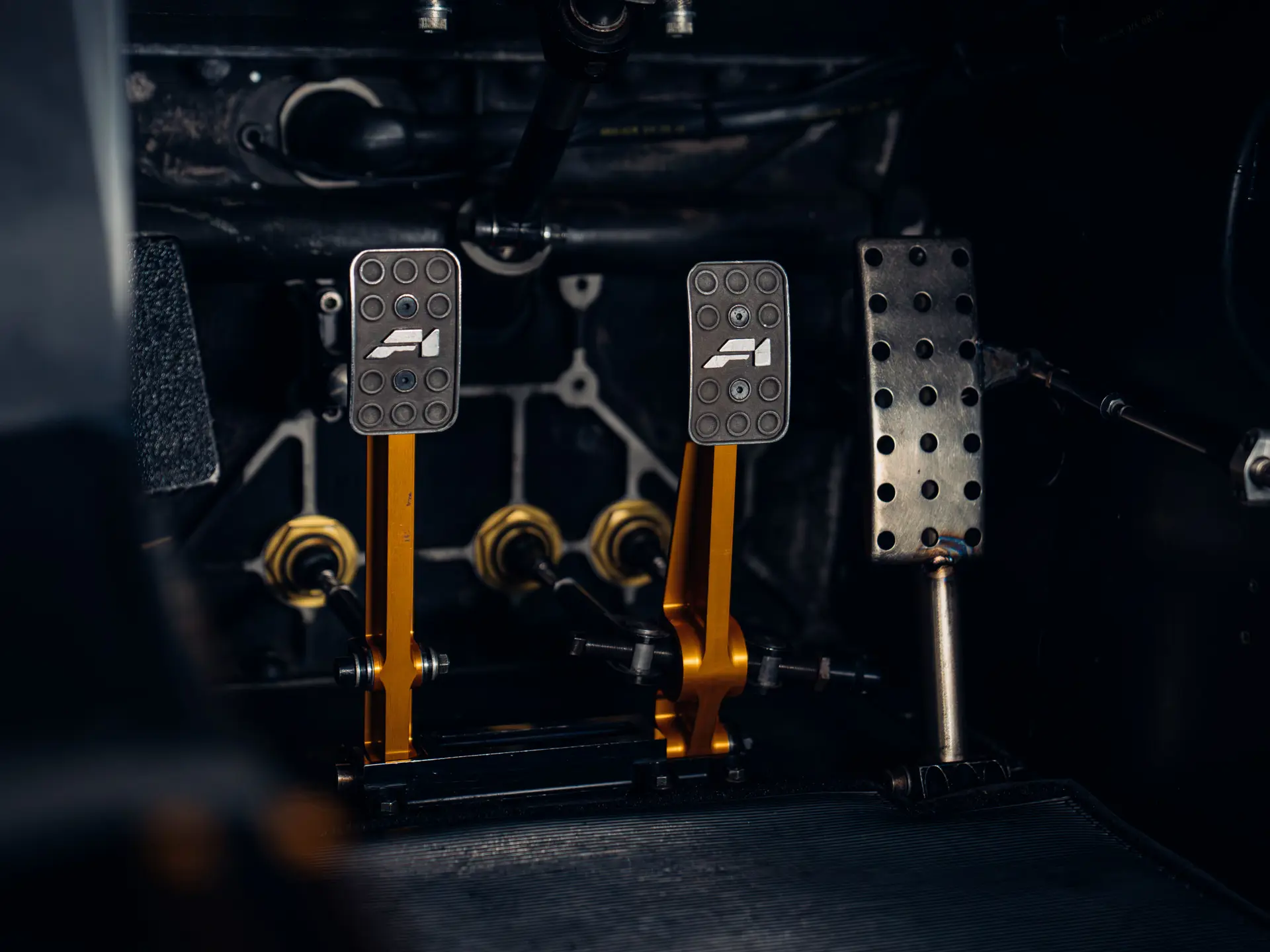







What is being sold, and for how much
The lot is a 1996 McLaren F1 GTR, chassis 10R, offered on a US title and located in Monterey, California. RM Sotheby's does not publish a conventional estimate for the car; instead it lists a value in excess of $35,000,000, with indicative equivalents of roughly €30,500,000, £26,000,000 and CHF 28,500,000. The sale takes place on the final day of the three-day Monterey auction during Monterey Car Week.
That framing matters. A “value in excess of” figure is a signal rather than a range, and it tells the market where the consignor and the auction house expect bidding to start being serious. For context, the current public-auction benchmark for the model line is the $20,465,000 achieved by F1 road car chassis 029 at Gooding & Company's Pebble Beach sale in August 2021, with an F1 LM-specification car having made $19,805,000 at RM Sotheby's in 2019.
A result above $35 million would therefore not be an incremental step. It would reprice the entire McLaren F1 family and place a 1990s racing car in the same conversation as the small group of Ferraris and Mercedes-Benz competition cars that occupy the very top of the collector market.
The road car behind the race car
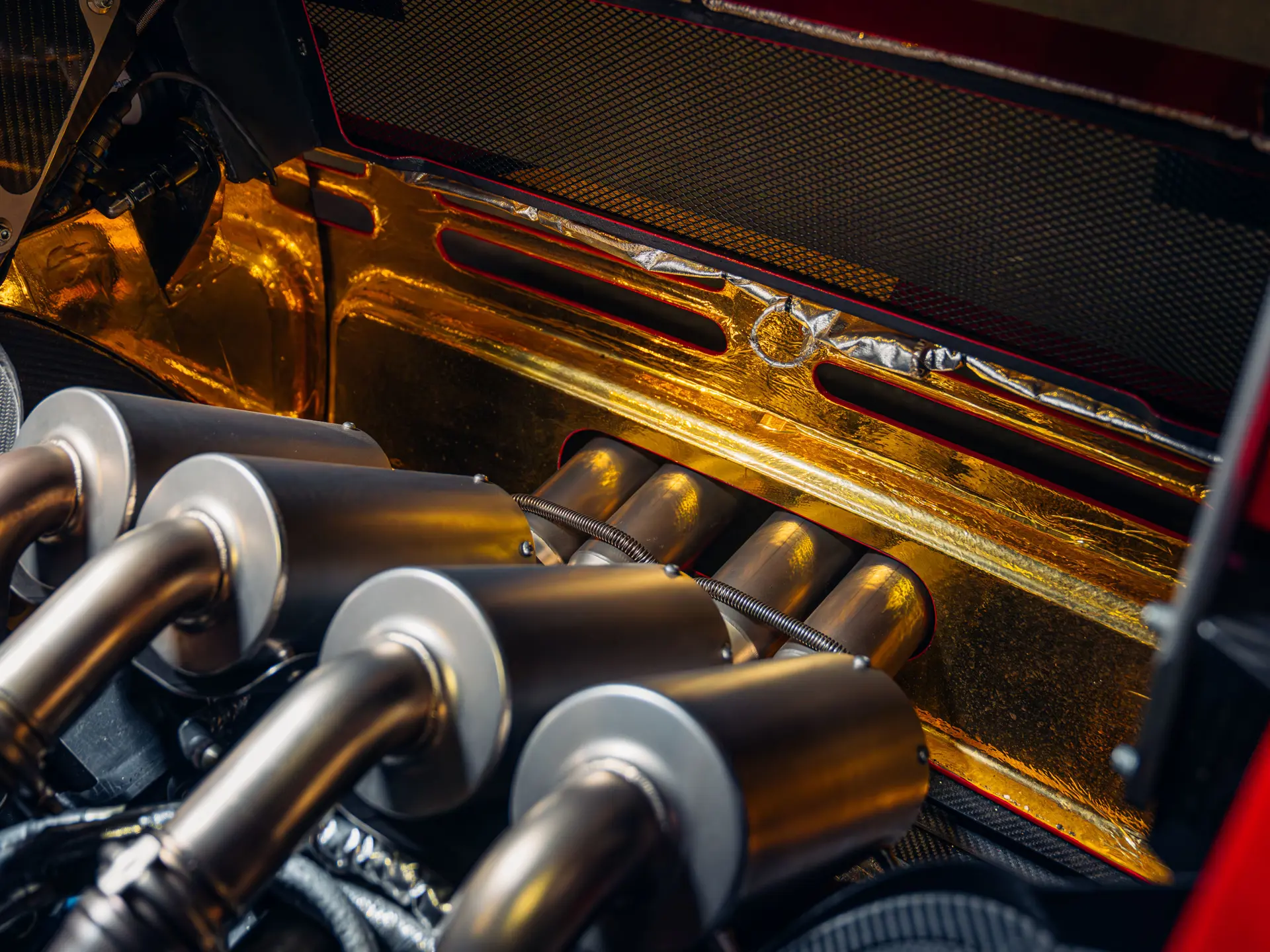
The GTR exists because of the McLaren F1, the road car Gordon Murray conceived and Peter Stevens drew, built at Woking between 1993 and 1998. It carried a naturally aspirated BMW S70/2 V12 of 6,064 cc producing 627 hp at 7,400 rpm and 651 Nm at 5,600 rpm, a carbon-fibre monocoque, a kerb weight of 1,140 kg and a central driving position with a passenger seat on either side. Gold foil lined the engine bay for heat insulation, at a reported 2,500 pounds a car.
It was, for seven years, the fastest production car in the world. On 31 March 1998 Andy Wallace took one to an official 391 km/h at the Volkswagen test track at Ehra-Lessien, a record that stood until the Koenigsegg CCR in 2005. The road car reached 100 km/h in 3.4 seconds and was sold new at 634,500 pounds, with the later LM at 850,000 pounds.
Production came to 106 cars in all: 64 standard road cars, five LM, two GT road cars, five prototypes and 28 racing chassis. The five LMs marked Le Mans, where five F1 GTRs finished first, third, fourth, fifth and thirteenth overall in 1995. Chassis 10R belongs to the racing 28, and to the two of those that McLaren kept for itself.
Why chassis 10R is different from every other F1 GTR
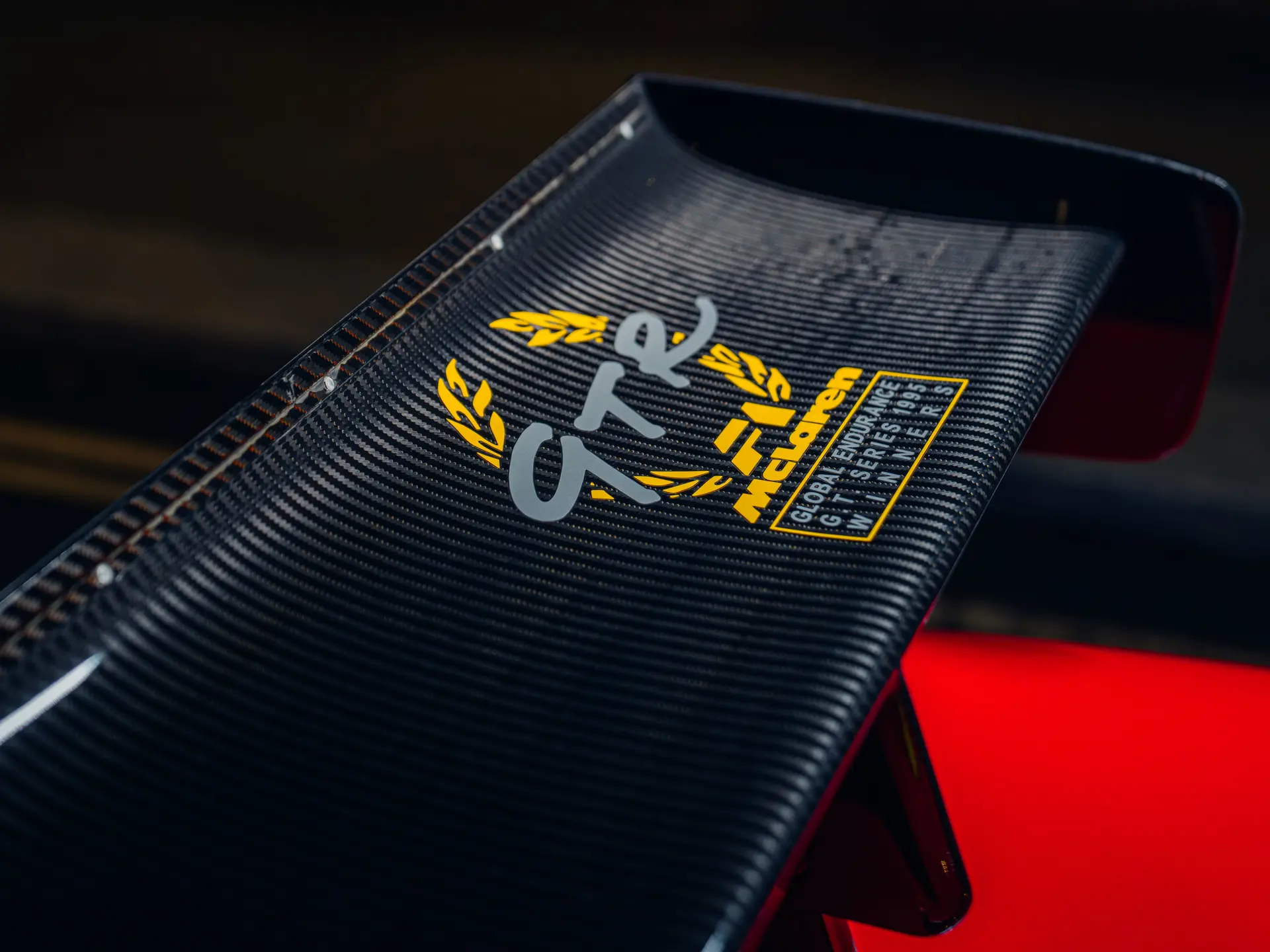
McLaren never intended the F1 to race. The GTR programme was a response to customer pressure and to the Global Endurance GT Series, and the first cars were essentially lightened road cars with new bodywork, a large rear wing and carbon-ceramic brakes. Twenty-eight GTR chassis were built in total across three specifications: nine in 1995, nine in 1996 and ten of the 1997 “Longtail”.
Chassis 10R left Woking in December 1995 as the first car assembled to the new 1996 specification. Like chassis 01R before it, McLaren kept the car rather than delivering it to a privateer team, using it as its own development and demonstration machine. That makes 10R one of only two short-tail GTR prototypes in existence, the other being the car that won Le Mans outright in 1995.
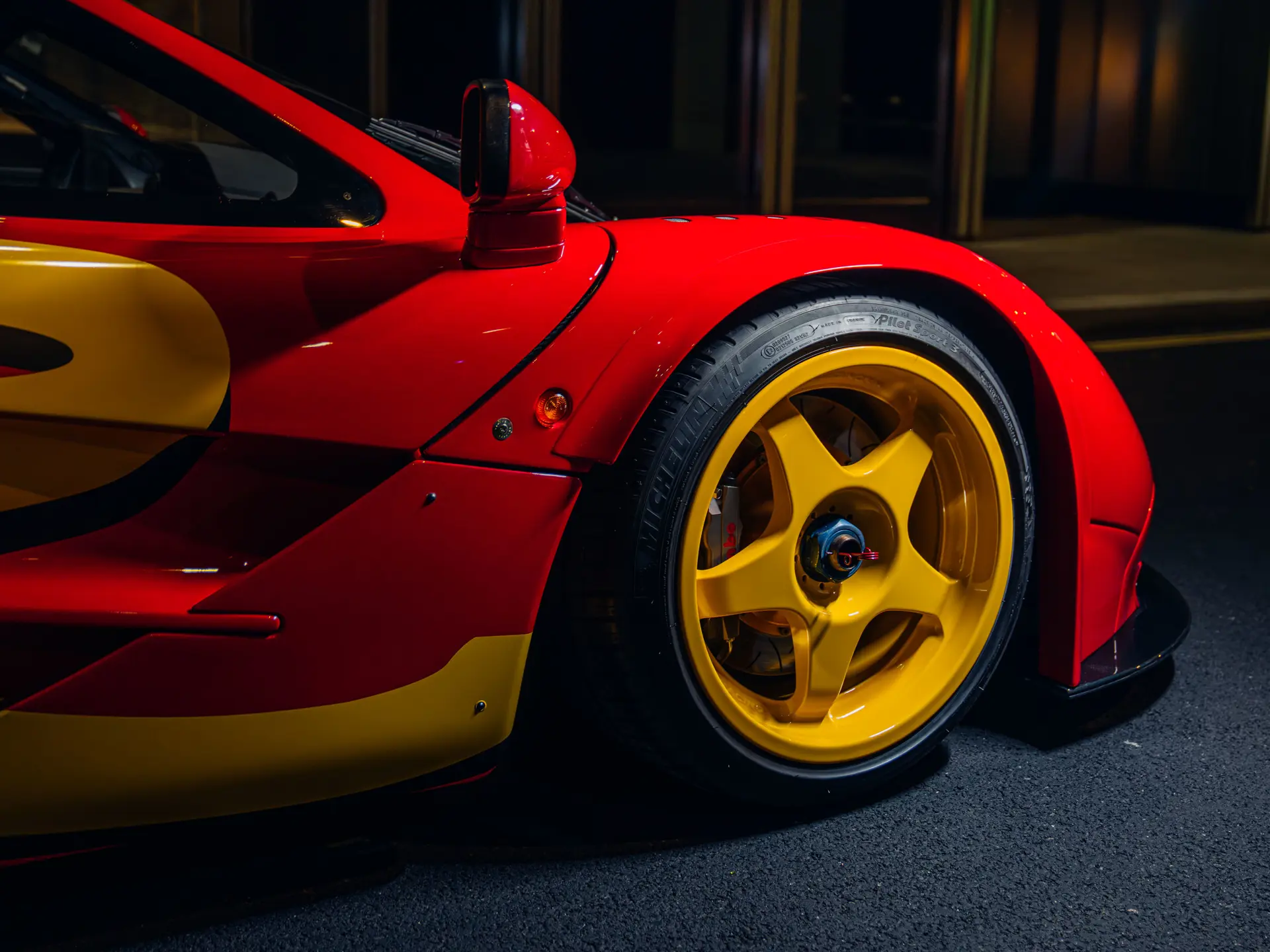
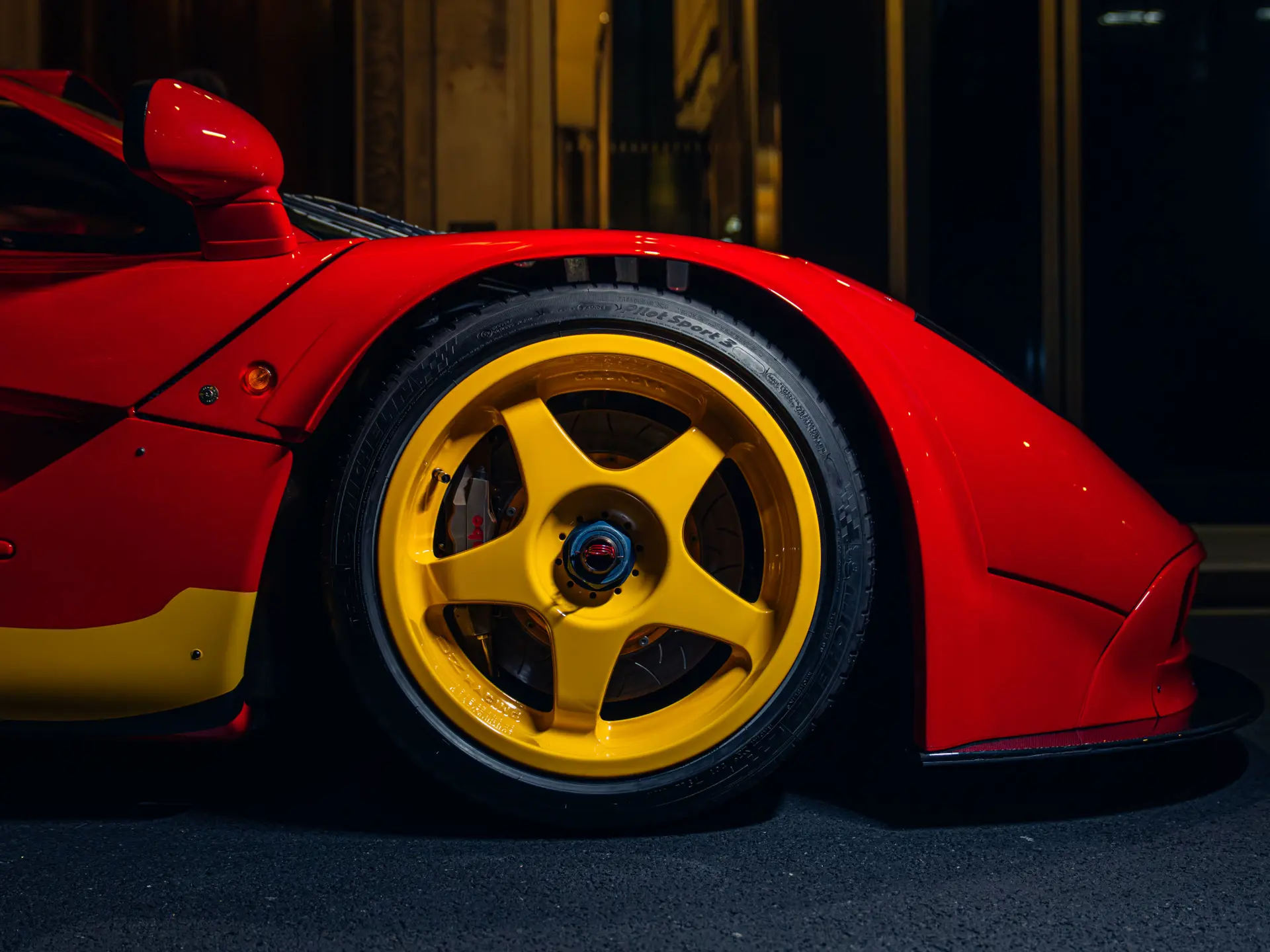
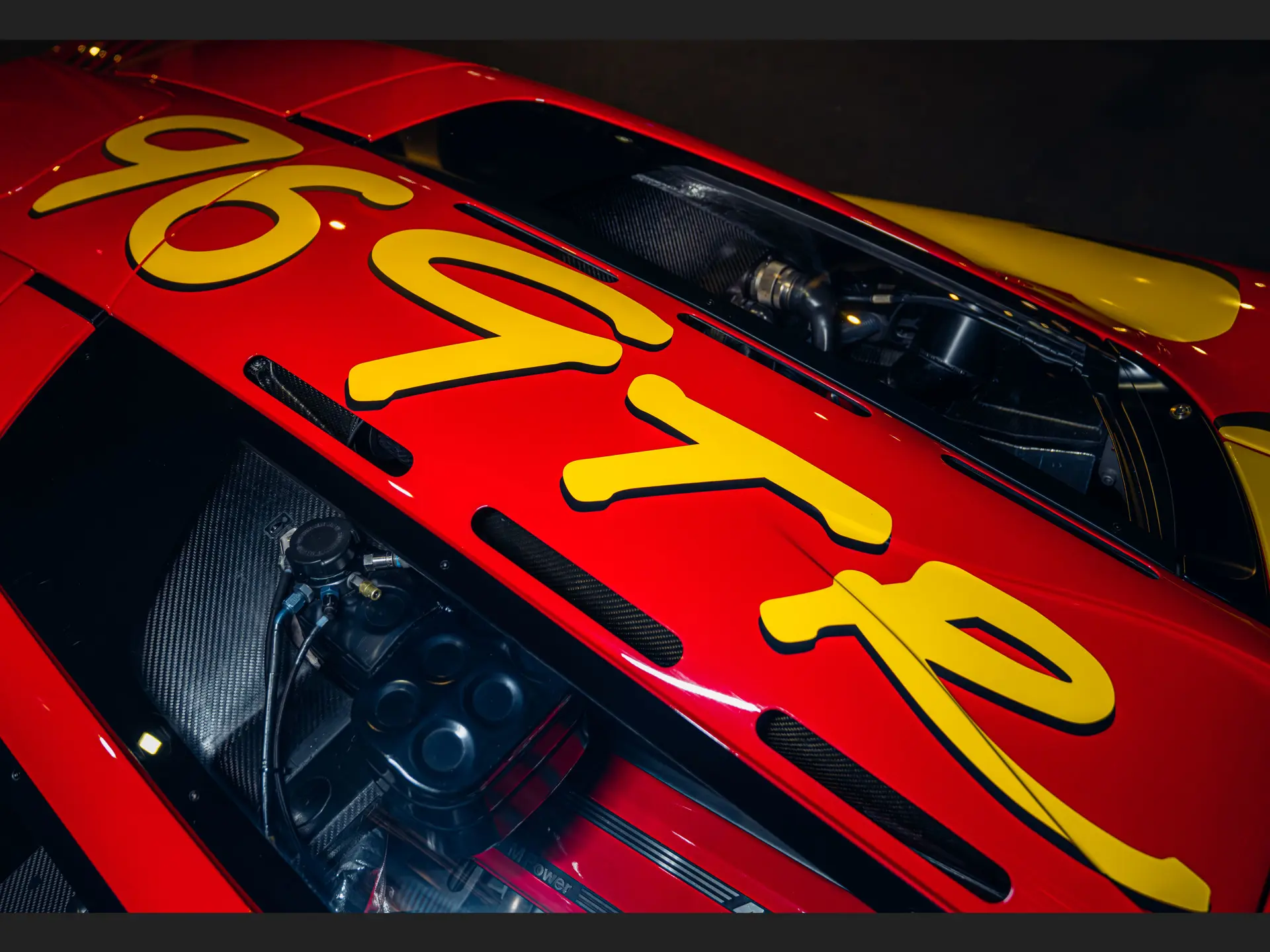
It is also the only F1 GTR to carry this particular factory livery: a scarlet body cut by broad yellow “96 GTR” graphics with black shadowing, matched to yellow magnesium wheels. The look belongs squarely to the mid-1990s and is the reason the car is now marketed as “The Pop Art F1”. Whatever one makes of the nickname, the practical effect is real: 10R is the most instantly identifiable McLaren F1 in existence, which is not a trivial quality in a market where recognisability drives value.
The 1996 specification was the fastest GTR McLaren built
The 1996 season brought purpose-built GT1 machinery, most obviously the Porsche 911 GT1, and McLaren had to answer it. The 1996 GTR received extended bodywork front and rear, a more aggressive front splitter that increased downforce, and a gearbox with a magnesium housing and strengthened internals. The overall saving was around 38 kilograms compared with the 1995 car.
The mechanical basis stayed familiar: a naturally aspirated BMW S70/2 V12 of 6,064 cc mounted behind the driver, restricted by regulation to roughly 600 PS, a six-speed manual transmission and a carbon-fibre monocoque. Air restrictors capped peak output, so the meaningful gains came from weight, aerodynamics and reliability rather than power.
The result is a car that is quicker in a straight line than the more aerodynamically sophisticated 1997 Longtail. The 1996 GTR was timed at around 330 km/h on the Mulsanne Straight at Le Mans, roughly 13 km/h faster than the long-tail car managed the following year. Collectors tend to describe the 1996 model as the balanced choice within the GTR family: the proportions and drivability of the original short-tail with the development work of a second season behind it.
Le Mans 1996: pre-qualifying, then a spectator's role
Chassis 10R spent the early part of 1996 as a works testing and promotional car, appearing at rounds of the BPR Global GT Series in its red and yellow colours. In April it completed twelve hours of testing in preparation for McLaren's Le Mans campaign.
Three weeks later it went to the Circuit de la Sarthe for Le Mans pre-qualifying, this time stripped of its graphics and running in plain red with graphite wheels under the Kokusai Kaihatsu Racing banner, the same entrant name that had won the race outright in 1995. David Brabham drove, and the car finished the session eighth in class and twentieth overall.
It never started the race. McLaren ran sister chassis 11R at Le Mans proper, and 10R returned to development and demonstration work. That distinction is worth stating plainly: 10R is a works prototype with genuine Le Mans testing history, not a car with a race record at La Sarthe. Buyers at this level price provenance precisely, and the catalogue is clear about which is which.
Nick Mason, and 25 years of a rock-and-roll McLaren
In 1999 McLaren sold chassis 10R directly to Nick Mason, the Pink Floyd drummer whose collection has long been among the most seriously assembled in Britain. Mason has owned a Ferrari 250 GTO, a Maserati 250F, a Bugatti Type 35, a Jaguar D-Type and a Porsche 962, and he has generally used them rather than stored them.
The pairing of the most visually striking McLaren F1 with a founding member of the band behind The Dark Side of the Moon is the story RM Sotheby's leans on hardest, and it is a fair one to tell. Both the car's livery and the album's prism artwork emerged from the same British graphic culture, and both became far more widely reproduced than their creators can have expected.
For the market, though, the more concrete point is the length and quality of the ownership. Mason kept the car for 25 years before it was sold privately in spring 2024 to an independent collector, who is the seller now. That is a short, legible ownership chain for a car of this age, and a long single-owner period is one of the most reliable indicators that a competition car has not been quietly rebuilt several times over.
Converted for the road by the factory, then by Lanzante
Before delivery to Mason, McLaren converted 10R for road use. It was registered “K40 MCL” in 1999, and further work was carried out by Paul Lanzante and his company Lanzante Limited. That name recurs throughout the F1 GTR story: Lanzante ran the Kokusai Kaihatsu Racing team that won Le Mans in 1995, on his first attempt at the race.
Chassis 10R was among the earliest of an estimated sixteen F1 GTRs converted for the road. The conversions are part of why the model occupies such an unusual place in the market: these are cars with full race specification (central driving position, carbon tub, harnesses, switch panels) that can legally be driven on public roads.
RM Sotheby's makes a broader historical claim about the type, describing the F1 GTR as the last outright Le Mans winner developed directly from a road-going hypercar, and therefore the end of an era in which a road car could be adapted to win the race overall. It is an argument rather than a fact, but a defensible one: every subsequent overall winner has been a purpose-built prototype.
Two accidents, two restorations, and an open chequebook
This is not a museum car with an unbroken surface. In 2009 the McLaren was tested by Autocar, and shortly afterwards another journalist lost control of it and ended up in a wheat field. Dean Lanzante, Paul's son, led the restoration that followed. Dean had worked on the 1995 Le Mans-winning effort alongside his father before establishing Lanzante Limited, which became a McLaren dealership and the recognised authority on converting McLaren racing cars for the road.
The car was damaged again in 2017, when Mason left the track during a GT1 demonstration at the 75th Goodwood Members' Meeting and struck a tyre wall. A second restoration by Dean Lanzante followed. Between and after those incidents the car was used: it was shown at Rétromobile in 2007, took part in the 106 Drivers Club's 750-kilometre anniversary tour, joined five other F1 GTRs for the club's Tour of Tuscany in 2014, and appeared at the Goodwood Festival of Speed in 2022.
The catalogue also records that the current owner maintained the car on what it describes as an open-chequebook basis, returning it to Lanzante after every significant drive. A recent Lanzante inspection is on file for prospective bidders. Any buyer at this level will want to read that report closely. With a car that has been crashed twice and restored twice, the inspection file is the difference between a repaired history and an unresolved one.
What a $35 million result would mean
The collector market has spent the past few years rewarding two things above all: single-ownership provenance and cars that cannot be replicated. Chassis 10R offers both, and it adds a third element that is harder to price: cultural recognition that reaches well beyond people who follow endurance racing.
There is a counter-argument, and it should be stated. Cars sold on their stories can be vulnerable when the story fades, and 10R did not race at Le Mans, has been damaged twice and has been restored twice. A bidder who values race results above all else may conclude that other GTRs, including chassis with genuine period race histories, represent better value.
The auction on 15 August 2026 will settle the question in public. Whatever the number, it will be the clearest signal yet on how the market values a 1990s racing McLaren against the established blue chips of the collector world, and it will reset expectations for the twenty-seven other F1 GTR chassis that exist.